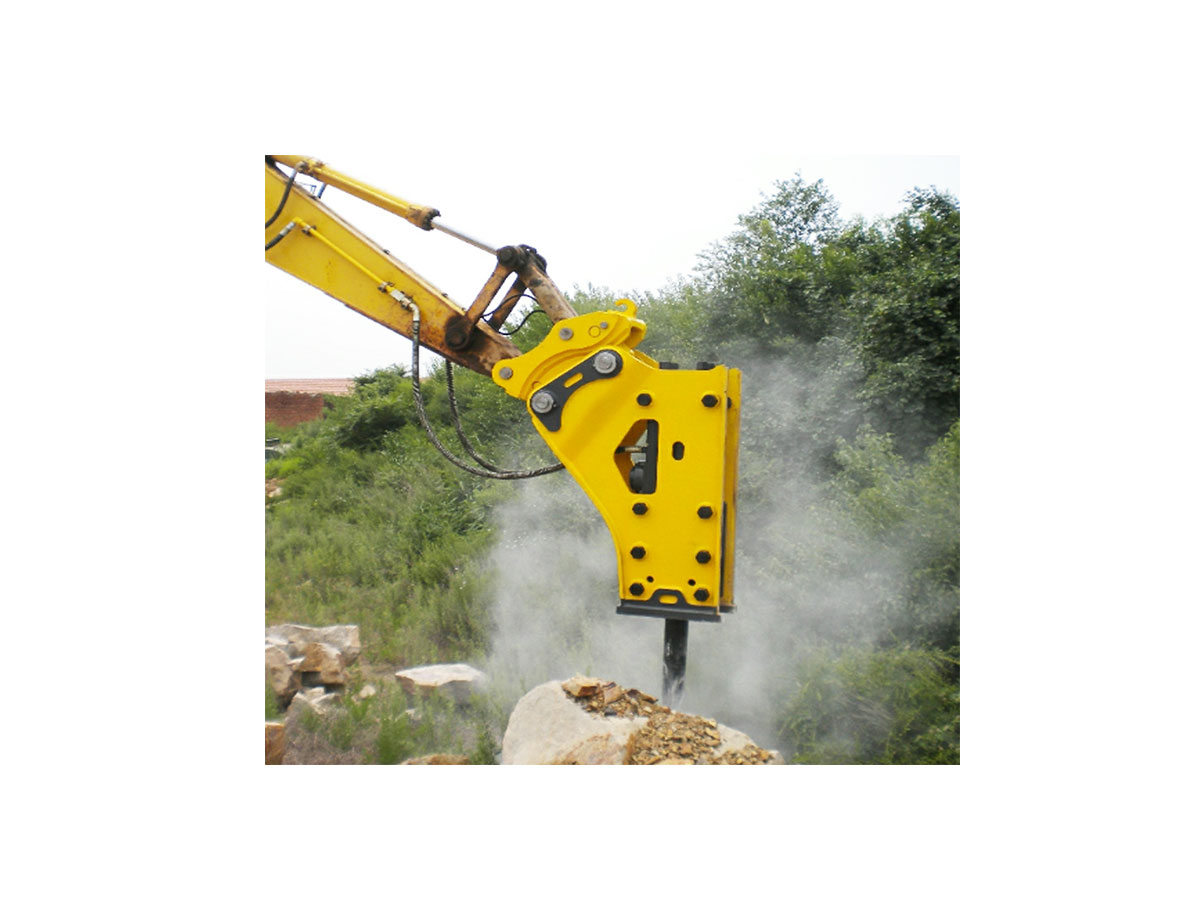

Faced with hard rocks and reinforced concrete, a high-performance breaker is the key to an excavator exerting its full power. Choosing a reliable hydraulic excavator hammer can not only greatly improve work efficiency, but also serve as the core for ensuring project progress and equipment safety. YG Machinery is committed to providing global engineering customers with professional crushing solutions that feature leading technology, precise matching, and long-lasting durability. You are welcome to contact us at any time for the latest rock breaker price!【WhatsApp/WeChat/Phone】+86 13837122632
YG Excavator Rock Breaker for Sale Parameters
Side type
| Item/Model | Unit | YGB100S | YGB200S | YGB300S | YGB400S | YGB600S | YGB800S | YGB900S | YGB1600S | YGB1900S | YGB3500S | YGB4500S | YGB5000S | YGB5500S | YGB6000S | YGB6500S |
| Weight | kg | 105 | 135 | 150 | 300 | 410 | 450 | 800 | 1600 | 1840 | 2800 | 3200 | 4000 | 5000 | 5700 | 6200 |
| Length | mm | 900 | 1100 | 1200 | 1347 | 1528 | 1920 | 2260 | 2695 | 2810 | 3152 | 3310 | 3400 | 3400 | 3420 | 3700 |
| Pressure | bar | 90-120 | 90-120 | 90-120 | 110-140 | 110-160 | 120-170 | 150-170 | 160-180 | 160-180 | 160-180 | 160-180 | 160-180 | 180-220 | 200-240 | 200-240 |
| Flow | lpm | 15-25 | 20-40 | 25-50 | 40-70 | 50-90 | 60-100 | 80-120 | 120-160 | 130-170 | 170-220 | 200-300 | 210-290 | 220-300 | 230-320 | 360-450 |
| Rate | bpm | 900-1400 | 700-1200 | 600-1100 | 500-900 | 500-800 | 400-700 | 400-700 | 400-700 | 400-600 | 250-400 | 250-350 | 200-350 | 200-250 | 150-200 | 150-200 |
| Hose | inch | 1/2 | 1/2 | 1/2 | 1/2 | 1/2 | 3/4 | 3/4 | 1 | 1 | 1 | 1¼ | 1¼ | 1¼ | 1¼ | 1¼ |
| Chisel | mm | 40 | 45 | 53 | 68/70 | 75 | 85 | 100 | 135 | 140 | 155 | 165 | 175 | 185 | 195 | 205 |
| Suit | ton | 0.8-2.0 | 1.2-3.0 | 2.5-4.5 | 4-7 | 6-9 | 7-14 | 11-16 | 19-26 | 19-26 | 28-40 | 36-45 | 40-55 | 50-60 | 55-65 | 65-100 |
Top type & box type
| Item/Model | Unit | YGB100 | YGB200 | YGB300 | YGB400 | YGB600 | YGB800 | YGB900 | YGB1600 | YGB1900 | YGB3500 | YGB4500 | YGB5000 | YGB5500 | YGB6000 | YGB6500 |
| Top Type Weight | kg | 85 | 140 | 160 | 355 | 440 | 640 | 900 | 1800 | 1970 | 2850 | 3160 | 4120 | 4800 | 5300 | 7200 |
| Box Type Weight | kg | 100 | 167 | 194 | 363 | 450 | 730 | 970 | 1950 | 2050 | 3000 | 3300 | 4250 | 4900 | 5400 | 7400 |
| Length | mm | 1000 | 1300 | 1400 | 1700 | 1750 | 2100 | 2400 | 2700 | 2860 | 3100 | 3286 | 3800 | 3700 | 4200 | 4300 |
| Pressure | bar | 90-120 | 90-120 | 90-120 | 110-140 | 110-160 | 120-170 | 150-170 | 160-180 | 160-180 | 160-180 | 160-180 | 160-180 | 180-220 | 200-240 | 200-240 |
| Flow | lpm | 15-25 | 20-40 | 25-50 | 40-70 | 50-90 | 60-100 | 80-120 | 120-160 | 130-170 | 170-220 | 200-300 | 210-290 | 220-300 | 230-320 | 360-450 |
| Rate | bpm | 900-1400 | 700-1200 | 600-1100 | 500-900 | 500-800 | 400-700 | 400-700 | 400-700 | 400-600 | 250-400 | 250-350 | 200-350 | 200-250 | 150-200 | 150-200 |
| Hose | inch | 1/2 | 1/2 | 1/2 | 1/2 | 1/2 | 3/4 | 3/4 | 1 | 1 | 1 | 1¼ | 1¼ | 1¼ | 1¼ | 1¼ |
| Chisel | mm | 40 | 45 | 53 | 68/70 | 75 | 85 | 100 | 135 | 140 | 155 | 165 | 175 | 185 | 195 | 205 |
| Suit | ton | 0.8-2.0 | 1.2-3.0 | 2.5-4.5 | 4-7 | 6-9 | 7-14 | 11-16 | 19-26 | 19-26 | 28-40 | 36-45 | 40-55 | 50-60 | 55-65 | 65-100 |
Working Principle of Hydraulic Excavator Hammer
The strong performance of YG’s hydraulic excavator hammer stems from the synergy of its three internal core technologies:
- Efficient Hydraulic Power Unit: The optimised internal structure provides stable and powerful power output, ensuring that the equipment can still maintain stable working performance and high work efficiency during continuous operation, and overcome power attenuation.
- Extended Impact Piston Design: The specially designed extended piston not only increases the impact force but also significantly absorbs and disperses the reaction force. The small recoil force effectively reduces the reaction force on the excavator and protects the excavator’s boom, arm, and hydraulic system.
- Advanced Oil Circuit and Accumulator System: The advanced design of energy storage and oil circuit commutation ensures high reliability, guaranteeing that the piston receives sufficient energy supplement in each impact cycle, maintains a stable and powerful impact state, and improves work continuity.
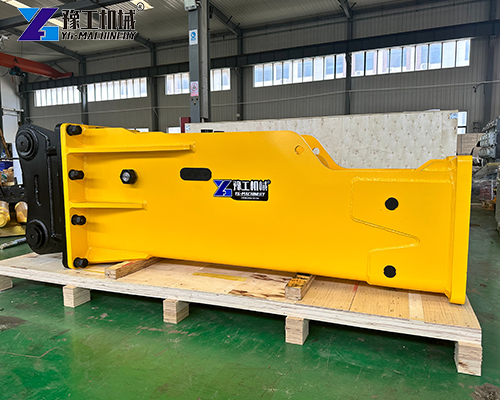
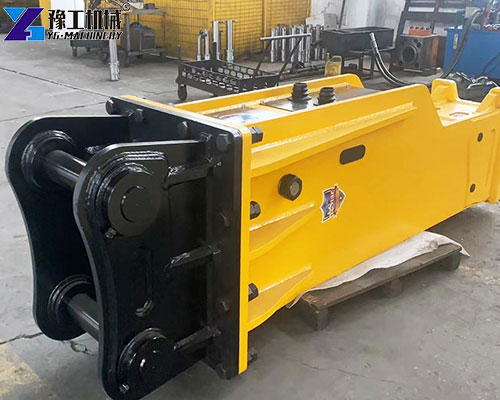
YG Triangular Type, Top Type, and Box Type Hydraulic Excavator Hammer
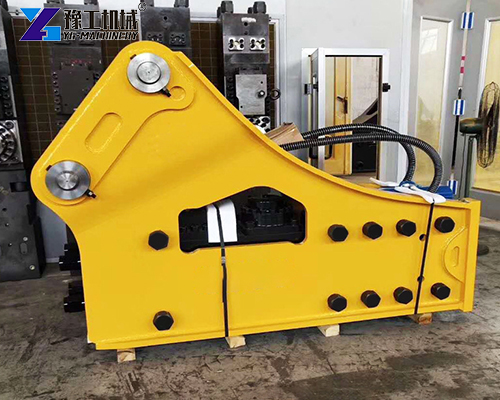
The side type hydraulic breaker features a triangular side plate structure with a compact housing. Its mounting points sit close to the excavator stick, delivering direct transmission of reaction impact force and powerful breaking performance. The open design fully exposes the internal mechanism, making chisel replacement and cylinder maintenance extremely easy. It is the most efficient choice for heavy-duty work, including mine exploitation, quarrying, and hard rock breaking. Its chisel diameters range from 40mm to 205mm, matching excavators weighing 0.8 to 100 tons.
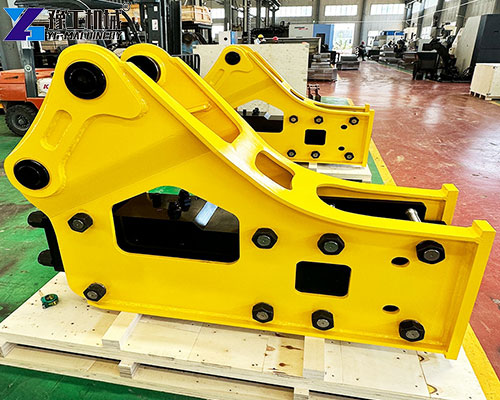
The top type hydraulic breaker is long and vertical, with mounting points on the top. It provides a longer working radius and larger elevation angle, ideal for high-position or wide-angle breaking tasks such as building demolition and tunnel roof trimming. Vertical downward strikes combine gravity and impact force for higher precision, yet they also create stronger vibration backlash on the excavator boom.
The box type hydraulic breaker comes with a fully enclosed box housing. High-elastic polyurethane shock-absorbing pads and sound-absorbing materials are built inside. Externally, it drastically cuts harsh noise; internally, it shields the core mechanism from rock fragments and sediment in all directions. Dual-way reaction force buffering greatly reduces boom cracking and bushing wear, making it the perfect pick for urban construction, night work, and eco-sensitive areas.
How to Pick the Right Model: Base Your Choice on Excavator Tonnage, Working Conditions, and Environmental Limits
First, strictly match your excavator weight against the “Suit” column (e.g., 4–7 ton excavators fit the YGB400 series). Overloading or underloading will damage the machine.
Second, select the type based on your working scenarios: For my hard rock and large-scale excavation, the Side Type stands unrivaled thanks to its direct breaking force and simple maintenance. For high-rise demolition, slope trimming, or jobs requiring a long working radius, Top Type excels with its long-arm layout and vertical striking power. For construction in downtown zones, residential areas, near hospitals, or night projects, Box Type (silent version) delivers low noise and superior protection. Though its upfront cost is slightly higher, it avoids fines, complaints, and work stoppages, bringing obvious long-term benefits.
Last, double-check whether the excavator’s actual working pressure and hydraulic flow fall within the recommended ranges in the parameter sheet (e.g., YGB800 requires 120–170bar and 60–100lpm) to achieve full striking frequency and breaking efficiency.
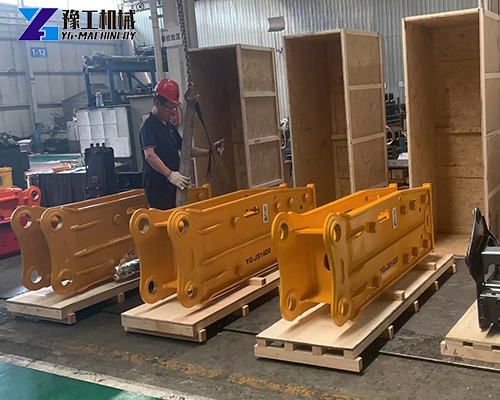
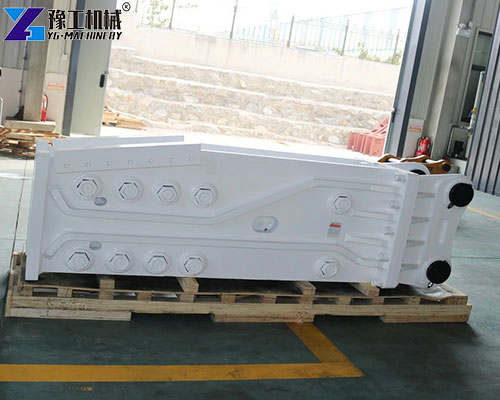
One Hydraulic Excavator Hammer, Multiple Engineering Solutions
I. Mining & Quarrying
It acts as an indispensable frontline workhorse in mines and quarries.
- Secondary Crushing (reducing large ore lumps): This is the core mining application. Oversized ore blocks left after blasting must be crushed down to feedable sizes. Large open-pit mines generally use heavy-duty side type hydraulic breakers fitted on excavators of 40 tons or above. YG’s YGB4500S (fits 36–45 ton excavators, 165mm chisel) and YGB5500S (fits 50–60 ton excavators, 185mm chisel) are purpose-built for this task and easily handle extra-hard ore.
- Open-pit Mining & Overburden Stripping: For softer mineral layers that can be crushed and loaded directly, the YGB3500S (fits 28–40 ton excavators, 155mm chisel) is recommended to deliver steady, high-efficiency continuous operation.
- Underground Mine Operations: Underground tunnels have tight confined spaces. side type hydraulic breakers are more suitable thanks to their shorter body length. Models including the YGB1600S (fits 19–26 ton excavators) and YGB800S (fits 7–14 ton excavators) deliver powerful impact force while fitting narrow underground work zones.
II. Demolition & Municipal Works
It stands as the most efficient demolition tool for urban renewal projects, yet noise limits in downtown areas greatly influence equipment selection.
- Building & Structure Demolition: side type hydraulic breakers, such as the YGB1600S (fits 19–26 ton excavators), work well for ground-floor and low-rise buildings. For high-rise structures or jobs requiring steep upward working angles, switch to the top type hydraulic breaker YGB1600. Its vertical downward striking force, combined with gravity, brings superior working efficiency.
- Road & Floor Breaking: The YGB800S (fits 7–14 ton excavators) suffices for regular pavement demolition. If construction takes place next to residential areas or after dark, the box type hydraulic breaker YGB800 is mandatory to cut noise down to environmental protection standards.
- Interior Demolition: Mini excavators are required here, paired with compact small models like the YGB200S (fits 1.2–3 ton mini excavators) or YGB300S (fits 2.5–4.5 ton mini excavators). Their compact size lets them pass through doorways to break floor slabs and tear down interior walls, with far less vibration impact.
III. Earthworks & Infrastructure
When digging foundation pits and pipeline trenches, operators often encounter semi-hard rock or weathered stone that standard digging buckets cannot break through. These hard materials must first be shattered by hydraulic breakers before cleanup.
- Hard Rock Excavation: The YGB900S (fits 11–16 ton excavators) and YGB1600S (fits 19–26 ton excavators) are widely used for medium-sized foundation pits, both maintaining consistent, stable striking frequency.
- Frozen Ground Breaking: Critical for construction in frigid zones or winter jobs. The YGB600S (fits 6–9 ton excavators) features high-frequency blows and a lightweight build, ideal for layered breaking when mounted on small excavators.
- Pile Head Trimming: Hydraulic breakers remove excess concrete from pile tops, a procedure demanding high precision. The medium-tonnage YGB800S is the standard choice. Skilled operators control striking depth to level pile heads neatly without damaging main steel rebars.
IV. Transportation & Water Conservancy
For large-scale projects including road building, dam construction and mountain excavation, its main functions are shaping and trimming rock surfaces.
- Tunnel Excavation & Profiling: Hydraulic breakers replace blasting on sections where explosives are unsafe, boosting overall site safety. After blasting, they clear loose overhead rock and smooth tunnel contours. side type hydraulic breakers, such as the YGB800S, perform well on tunnel floors and side walls. When tackling overhead rock faces, top type hydraulic breaker (e.g., YGB800 top type) is more popular due to stronger vertical striking power.
- Slope Cutting & Trimming: The YGB900S and YGB1600S are commonly deployed for mountain slope works along highways and railways. Fitted on long-reach excavators, they deliver precise breaking without ruining the designed slope lines.
- Water Channel & Dam Construction: Used for bedrock excavation and hard boulder breaking. Underwater or high-humidity sites require superior sealing performance. YG box-type breakers (YGB800 box type, YGB1600 box type) feature fully sealed casings that block mud and water effectively. Built-in dual-direction buffer structures protect host machines, making them perfect for high-intensity continuous core procedures such as dam foundation construction.
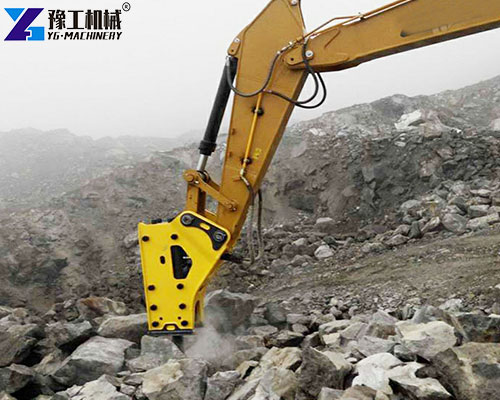
Why Can YG’s Hydraulic Excavator Hammer Provide Better Return on Investment?
Performance under real working conditions is the ultimate criterion for testing a hydraulic breaker machine. Through optimized design, YG products demonstrate significant advantages in practical use: their efficient impact force can complete crushing tasks faster, directly increasing the daily output value; at the same time, the excellent reliability and excavator-friendly low recoil design greatly reduce equipment failure rates and the risk of main machine damage. It improves users’ return on investment from both aspects of creating income and saving maintenance costs, and this is where its value lies.
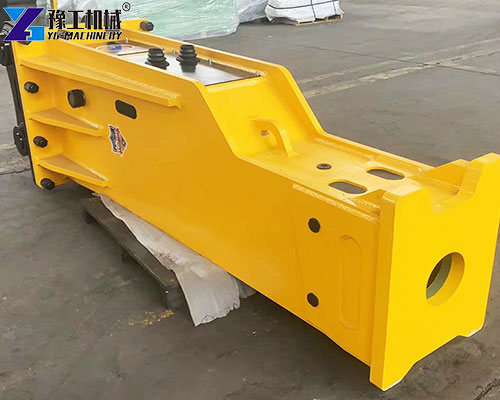
FAQ about the Hydraulic Breaker Machine
Q1: Which chisel type (Moil, Wedge, or Blunt) should I choose?
The chisel is the core component that transfers impact energy directly for hydraulic breakers. Different tip shapes suit different working conditions, with rock type and operation goals as the main selection standards:
Moil Point (Conical Tip). Its cone shape concentrates force on a single point to split rock surfaces with exceptional penetration. It works best for hard rock, ultra-hard stone and reinforced concrete breaking. Pick Moil Point if you are dealing with high-strength granite or reinforced concrete structures.
Wedge/Chisel (Flat Wedge Tip). It easily wedges into rock cracks, perfect for digging, trenching, and grooving soft or layered rock. Its cutting edges create splitting effects on materials for directional breaking tasks.
Blunt (Flat Tip). It bears force evenly and transfers energy efficiently. It is used for secondary crushing and shaping medium-hard stones to break large rocks into smaller pieces. Choose a blunt tip when you need to smash rather than split materials.
Q2: Does a larger chisel diameter mean better performance?
Not necessarily. The chisel diameter must precisely match the hydraulic breaker model and excavator tonnage. With fixed impact piston size and initial striking speed, a wider chisel expands contact area and boosts breaking capacity. However, bigger chisels speed up piston rebound and lower impact energy utilization. Moreover, overlong or overly thick chisels alter the mechanical operating angle of the hydraulic breaker machine. Long-term operation under improper angles will drastically shorten the service life of the boom and stick.
Q3: What spare parts are included in a standard hydraulic breaker machine package?
The standard package includes: 1 unit hydraulic breaker machine main body, 2 chisels, 2 high-pressure oil hoses, 1 set nitrogen filling tool (nitrogen cylinder + pressure gauge), 1 portable toolbox (with common maintenance tools), and 1 operation manual.
Q4: Key daily maintenance guidelines
Regular maintenance of the hydraulic breaker machine directly determines its service life and failure rate. Carry out systematic inspections daily, weekly, and monthly:
Before daily work
Check hydraulic oil level (keep it at the middle mark on the dipstick) and oil pipe joints for leaks; measure the gap between chisel and guide bushing (standard: 0.5–1.2mm); inspect all fastening bolts.
During operation
Keep the chisel perpendicular to the working surface (deviation ≤15°); avoid continuous striking longer than 30 seconds at a time; never dry-fire (do not activate the breaker if the chisel does not touch materials); maintain hydraulic oil temperature between 30–65℃.
After daily work
Clear debris off the chisel and housing; inject dedicated lithium extreme-pressure grease into the chisel bushing.
Weekly maintenance
Test nitrogen pressure (standard: 14±0.5bar); inspect accumulator performance and piston rod surface.
Monthly maintenance
Replace the return oil filter; conduct ultrasonic inspection on key housing welds.
Important Warning: Cut off power and release hydraulic pressure before maintenance. Do not adjust hydraulic pressure without authorization; only use original factory seal parts.
Contact Us
If you are looking for a reliable channel for excavator rock breaker for sale, or have questions about model selection, the professional team of YG Machinery is ready to serve you at any time. We do not just provide a product list, but recommend the most suitable hydraulic breaker machine solution for you based on your specific equipment model (brand, tonnage), main construction materials, and work intensity, and provide a detailed quotation with competitiveness. Please contact us to obtain exclusive technical consultation and purchase guidance.【WhatsApp/WeChat/Phone】+86 13837122632