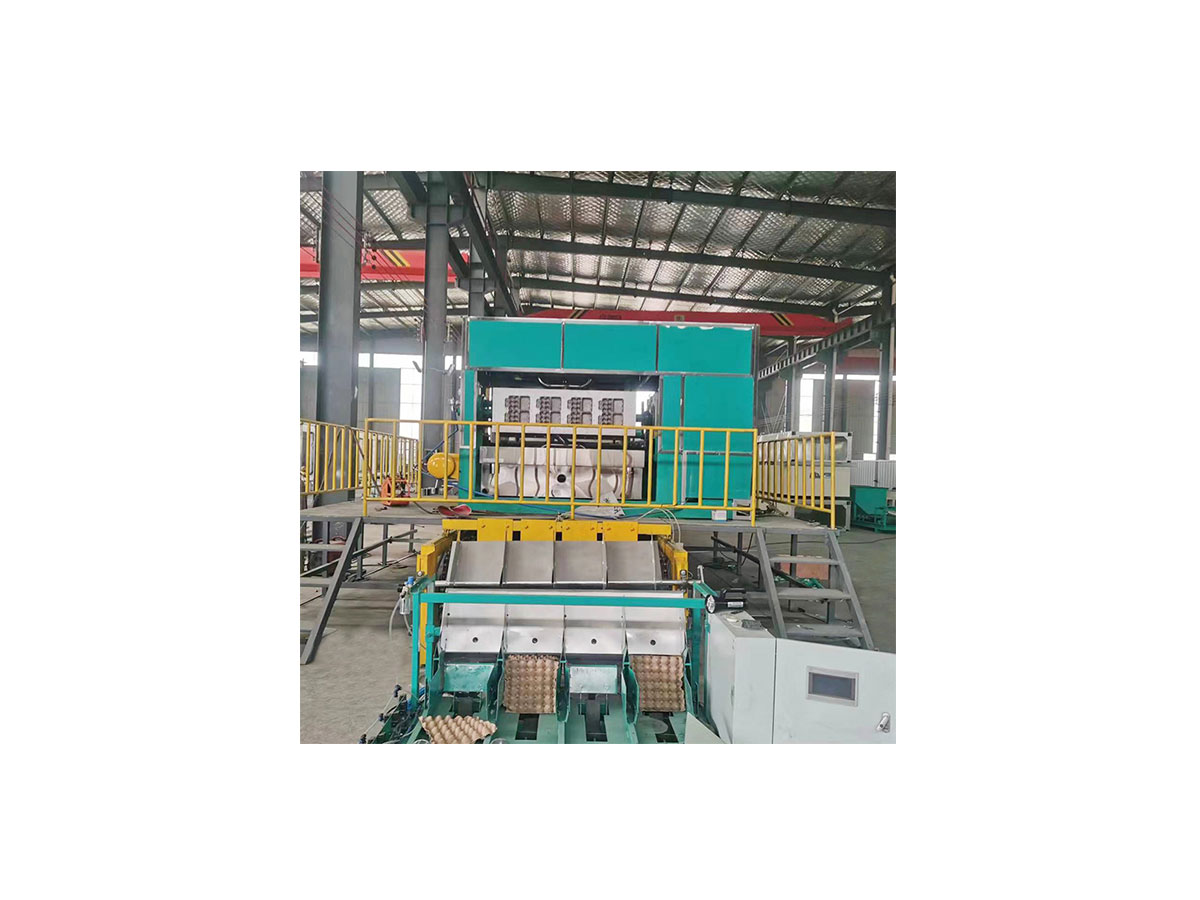

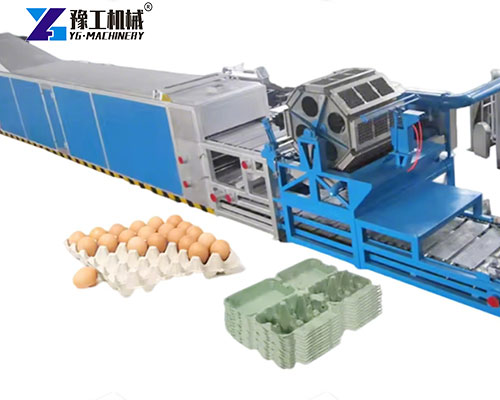
What happens between waste paper and egg trays? The answer lies in three core steps: pulping, forming, and drying. Connecting these steps together is a well-designed egg tray production line. In this process, the pulping system turns waste paper into fiber pulp, the forming system uses vacuum to shape the product, and the drying system removes moisture to make it solid. Each step directly affects the final product quality and production cost.【WhatsApp/WeChat/Phone】+86 13837122632
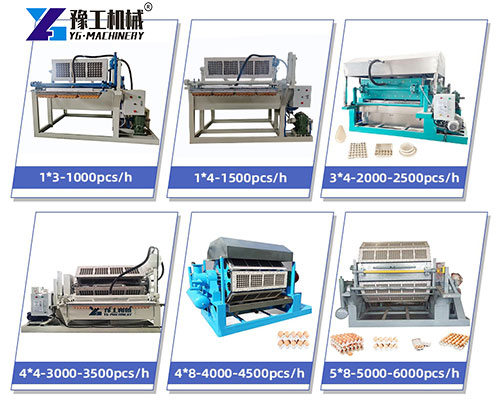
Different Capacities of Egg Tray Manufacturing Machine – Parameter Comparison
| Model | Capacity/H | Power/hour | Paper Consumption/H | Water Consumption/H |
| YG-1500 – 4X1 | 1500pcs/h | 38kw | 120kg | 240kg |
| YG-2500 – 3X4 | 2500pcs/h | 55kw | 200kg | 400kg |
| YG-3000 – 4X4 | 3000pcs/h | 60kw | 240kg | 480kg |
| YG-4000 – 4X8 | 4000pcs/h | 95kw | 320kg | 640kg |
| YG-5000 -5X8 | 5000pcs/h | 95kw | 400kg | 800kg |
| YG-7000 -6X8 | 7000pcs/h | 120kw | 480kg | 960kg |
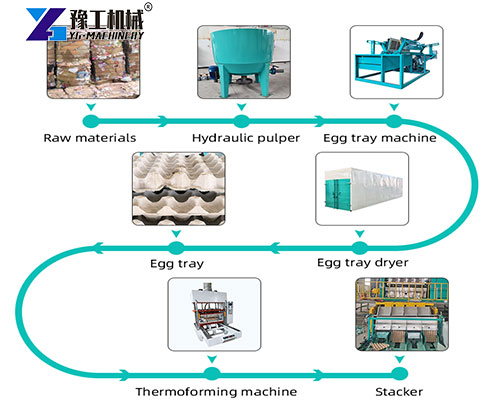
Core Production Process of Egg Tray Production Line
A standard egg tray production line usually includes three key steps: pulping, forming, and drying. How well these steps work together directly determines the final product quality and production efficiency.
The pulping system is the foundation of the whole line. It takes raw materials like waste paper, old newspapers, cardboard, and printing plant scraps, breaks them down using a hydrapulper, then screens and mixes them to create pulp at the right consistency. Depending on product requirements, additional equipment like vibrating screens and refiners can be added to improve pulp quality.
The forming system uses vacuum to evenly distribute the pulp onto specially made molds, forming wet egg tray shapes. This step requires high mold precision, as it directly affects how uniform and well-shaped the trays are.
The drying system removes moisture from the wet trays. There are two main drying methods: brick kiln drying and metal drying, each suited for different situations.
The Importance of the Egg Tray Moulding Machine in the Forming Process
1. The role of the forming step in the whole production line
- The forming system is a key connection point in the egg tray production line
- It receives the prepared pulp from the pulping system upstream
- It supplies uniform, well-shaped wet trays to the drying system downstream
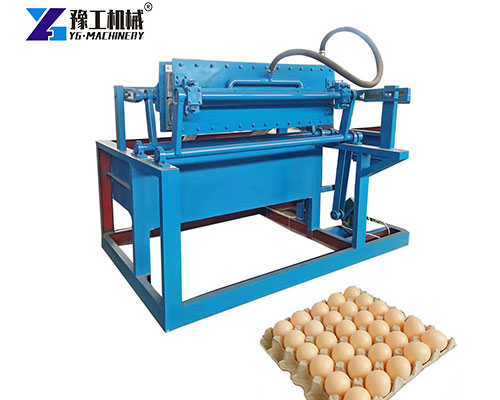
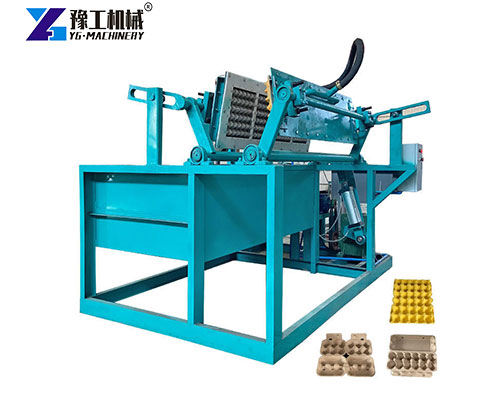
2. How the YG egg tray manufacturing machine works
- Uses vacuum adsorption to evenly coat the pulp onto the forming mold
- A vacuum pump creates negative pressure, pulling pulp fibers onto the mold screen
- Excess water is removed, leaving a wet tray with enough strength
3. Key factors that affect forming quality
- Vacuum stability: Fluctuations in vacuum pressure can cause uneven thickness and missing edges
- Mold precision: The smoothness and hole uniformity of the mold directly affect tray appearance and how easily it releases
- Forming time control: Too short leaves the wet tray loose; too long slows down production
4. Technical advantages of the YG egg tray manufacturing machine
- Equipped with high-precision molds to ensure uniform thickness and clean edges on every wet tray
- A stable vacuum system provides even suction, reducing defects
- Smooth transfer between forming and next steps reduces quality variations caused by manual handling
5. How forming quality affects downstream steps
- The more uniform the wet tray, the more evenly hot air flows during drying, lowering energy use
- Trays with clean edges are less likely to warp during drying, leading to higher yield
- Consistent forming reduces waste rate and directly improves overall line efficiency
Brick Kiln Drying Vs. Metal Drying: How to Choose?
Drying uses the most energy in the production line, so choosing the right drying method has a big impact on operating costs.
Brick kiln drying has lower investment cost, high thermal efficiency, and is very durable. It can use many types of fuel, including natural gas, coal, anthracite, biomass pellets, even firewood and bamboo scraps. It is a good choice if your area has low-cost fuel available.
Metal drying uses hot air (180–220°C) to dry quickly, with higher efficiency. Metal drying lines come in single-layer and multi-layer versions. A single-layer line takes up more floor space—the workshop needs to be at least 70 meters long. A multi-layer line is more compact—workshop length ≤40 meters and height ≥4.5 meters—which saves space and reduces heat loss. If your workshop space is limited, a multi-layer metal drying line is a better option.
Fully Automatic Vs. Semi-Automatic Egg Tray Production Line: Which Suits You Better?
The level of automation in a paper egg tray making machine directly affects labor costs. A fully automatic line can run continuously from pulping, forming, and drying to stacking. It is ideal for large-scale, standardized production, with minimal labor needs, but has a higher upfront cost.
A semi-automatic line requires some manual work during forming and drying. It is suitable for small to medium-scale production or areas with lower labor costs. For first-time investors, a semi-automatic line has a lower entry cost and a more manageable payback period.
How to Choose Based on Workshop Space?
Workshop size is an important factor when selecting an egg tray production line. If you plan to use a metal drying line, check these requirements:
- For a single-layer drying line: workshop length ≥ 70 meters
- For a multi-layer drying line: workshop length ≤ 40 meters, height ≥ 4.5 meters
Brick kiln drying is more flexible with workshop height, but you need enough space for the kiln and fuel storage. You can communicate with YG about your workshop layout.
The Importance of Paper Egg Tray Making Machine Molds and How to Maintain Them
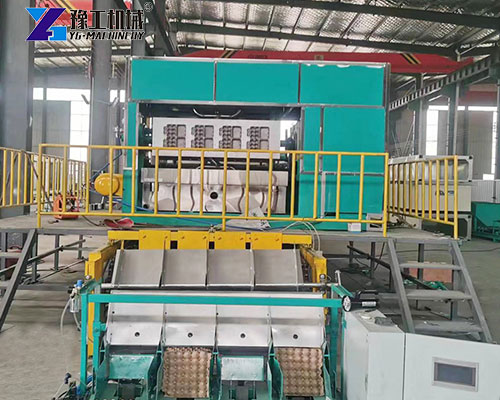
The mold is the core part of an egg tray moulding machine. It determines the shape, size, and surface finish of the trays. Different customers may have custom needs for the number of pockets, thickness, or edge curves, so molds often need to be changed based on orders.
In daily maintenance, regularly clean pulp fibers from the mold surface to avoid clogging the vacuum holes. Also check the mold seal to ensure the vacuum suction stays stable. A well-maintained mold can last more than 30% longer.
How to Choose the Right Egg Tray Production Line for Your Needs
Choosing the right production line requires looking at several factors:
- Expected capacity: Pick a model that matches your target market size
- Drying method: Choose brick kiln or metal drying based on local fuel prices and workshop space
- Level of automation: Balance labor costs and equipment investment between fully automatic and semi-automatic
- Raw material supply: Make sure waste paper is available at a stable and reasonable cost
- Mold setup: Prepare molds for the types of products you want to make, and keep up with regular maintenance
Pulp molding equipment can produce more than just egg trays. By changing molds, it can also make fruit trays, coffee cup carriers, shoe inserts, electronic product packaging, and other biodegradable paper products. As plastic bans continue around the world, demand in this industry keeps growing. For more technical questions, feel free to reach out to YG for more details.