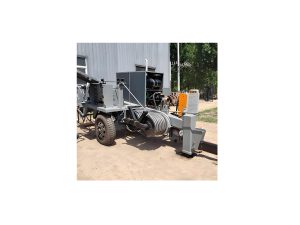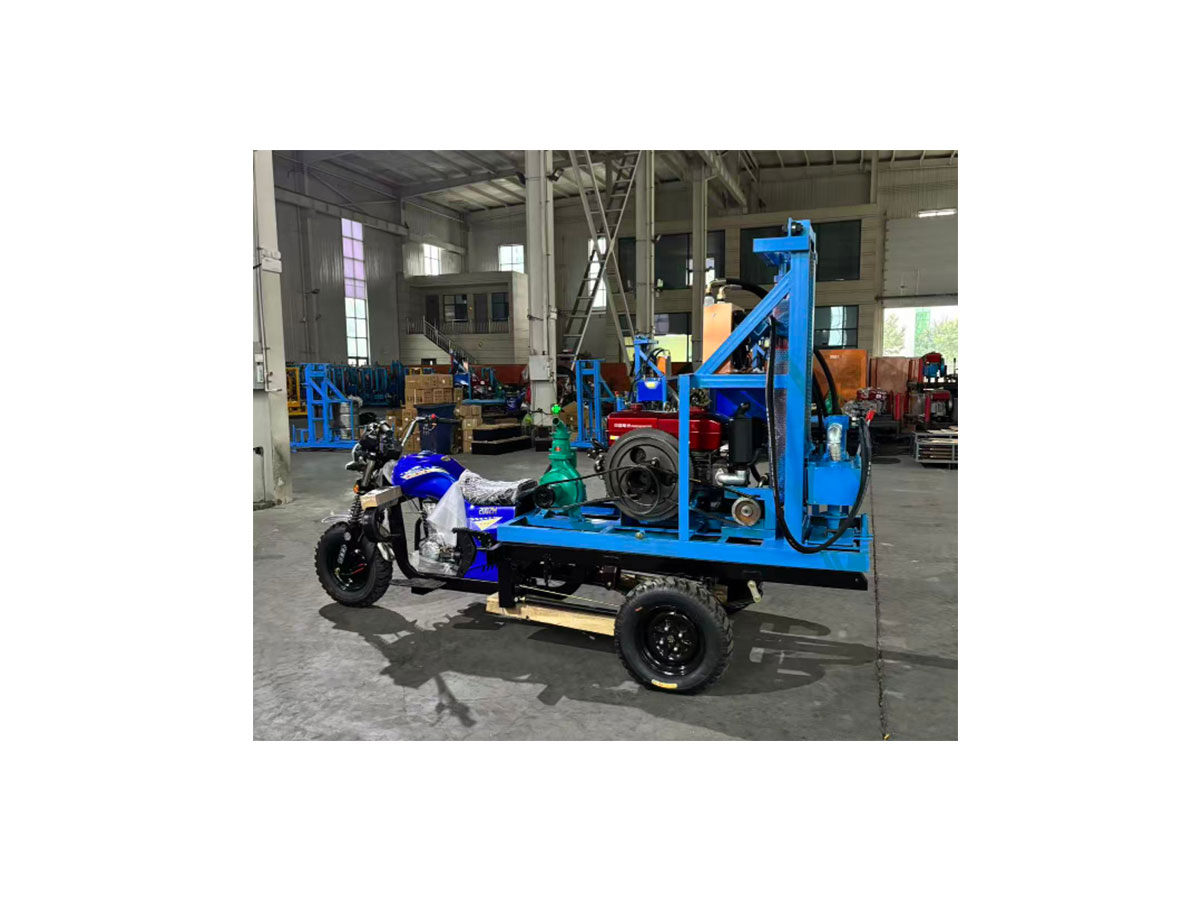

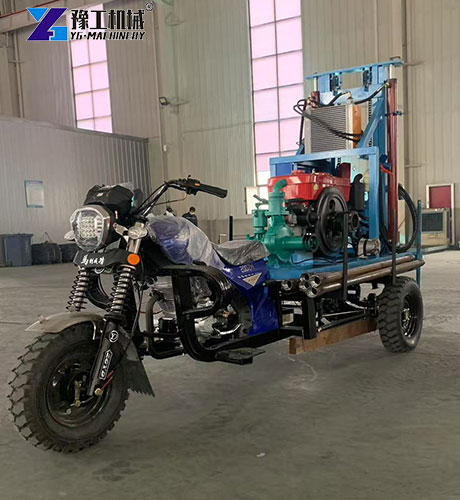
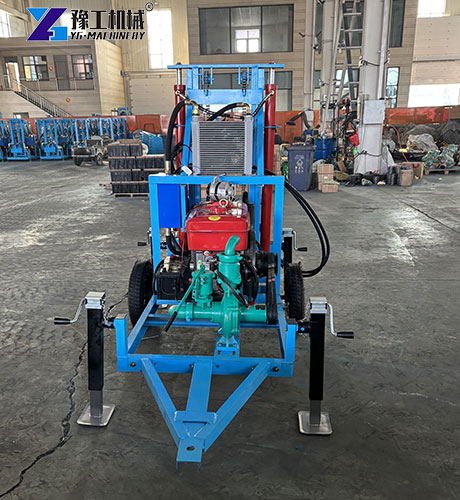
Instead of relying on costly large-scale projects or uncertain external water supply, investing in your own portable water well drilling equipment is a more controllable option. It is not just a one-time cost, but a reliable asset that adds value to your property or project and supplies a long-term independent water source.【WhatsApp/WeChat/Phone】+86 13837122632
Parameters of YG Portable Well Drilling Machine for Sale
Below are the parameters of YG’s latest motorcycle-type portable water drilling machine:
| MAX. DRILLING DEPTH | 180m |
| MAX. DRILLING DIAMETER OF BIT | 70–300mm |
| DRILL ROD DIAMETER | 50mm |
| DRILL ROD LENGTH | 1.5m/pc |
| DRILLING SPEED | 160rpm/min |
| ENGINE POWER | Engine: Diesel 22HP (customizable), Walking Engine: 8HP |
| HEAD | 35m |
| FLOW RATE | 65 cubic meters per hours |
| POWER | 4km |
| SPEED | 2900r/m |
| NET WEIGHT | 23kg |
| WEIGHT | 1150kg |
| SIZE | 2700*1300*2000mm |
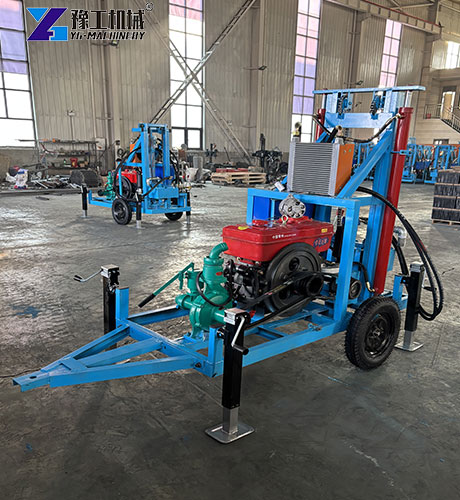
How Does Portable Water Well Drilling Equipment Balance Portability and Drilling Capacity?
A great portable water drilling machine is never a simple compromise on functions, but a delicate balance achieved in its design.
- Modular integrated design: The diesel engine, gearbox, winch and mud pump are highly integrated on a compact chassis.
- Optimized power and transmission: A 22HP single-cylinder diesel engine is adopted, which delivers enough power to drive drill pipes for common soil and sandstone layers, while ensuring fuel economy and reliability—this is the core of portable water well drilling equipment.
- Sectional drill pipe system: Lightweight drill pipes with a standard length of 1.5 meters are used and added one by one as the drilling depth increases. This design not only ensures a practical drilling depth of 180 meters, but also keeps the weight of each component manageable, greatly reducing the labor intensity of handling and operation.
Standardized Construction Process for Portable Water Well Drilling Equipment
Carrying out standardized operations with a small water drilling machine is the guarantee for successfully drilling a water well.
- On-site survey and positioning: Confirm the well location, avoid underground pipelines, and assess the general geological conditions.
- Equipment positioning and leveling: Move the drilling rig to the designated spot, stabilize the outriggers and ensure the drill tower is vertical—this is the key to guaranteeing borehole verticality.
- Mud circulation drilling: Start the diesel engine and mud pump, and adopt the positive circulation drilling method. The drill bit crushes rock and soil, and high-pressure mud carries cuttings from the hole bottom to the ground for sedimentation, while the mud protects the borehole wall to prevent collapse.
- Pipe lowering and gravel filling: After reaching the target depth, immediately lower the well pipes (filter pipes and solid pipes), and fill gravel around the pipe wall to stabilize the well wall and filter groundwater.
- Well flushing and pumping test: Use the high-flow centrifugal pump equipped with the rig for intensive well flushing until the discharged water is clear, then conduct a test pumping to measure water output and water level.
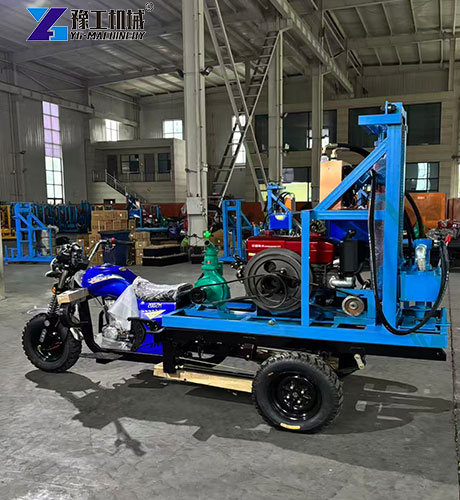
4 Tips to Boost the Efficiency of Portable Water Well Drilling Equipment
Mastering these tips can make your portable well drilling machine for sale perform to its full potential.
- Adjust parameters by “judging strata from sound”: Determine stratum changes through engine sound and drilling speed. Increase the drilling speed appropriately for soft layers, and raise pressure while reducing speed for hard layers to protect the drill bit.
- Match drill bits to strata: Equip with a variety of drill bits (e.g., three-wing scraper bits for soil layers, roller cone bits for rock layers) and replace them quickly according to stratum hardness—this is a direct way to improve efficiency.
- Optimize mud performance: Add an appropriate amount of clay or polymer to ordinary water to prepare mud with suitable viscosity, which can significantly enhance cuttings carrying capacity and borehole wall protection, reducing the risk of drill pipe sticking.
- Team coordinated operation: A two-person team works most efficiently—one person focuses on operating the rig, and the other is responsible for pipe connection and monitoring mud and equipment status to achieve seamless cooperation.
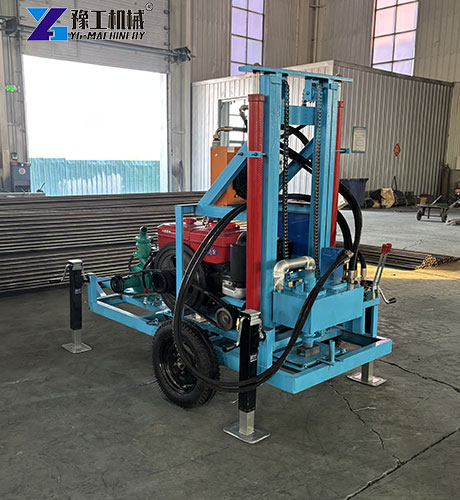
How to Double the Service Life of Your Small Water Drilling Machine?
Good maintenance directly determines the return on investment cycle of this portable water drilling machine.
- Three must-dos after operation: After daily construction, thoroughly clean the mud pump and pipelines with clean water through circular flushing to prevent solidification and blockage; check the tightness of all bolts; clean the drill pipe threads and apply grease.
- Key points of regular maintenance: Replace the diesel filter, engine oil and air filter strictly according to the engine’s operating hours; regularly check for leaks in the hydraulic system (if equipped) and keep the hydraulic oil clean.
- Avoid rough operation: Never force rotation or lifting when the drill pipe is stuck; instead, loosen it through positive and negative circulation. Always ensure the rig operates in a stable and level state to reduce structural stress.
- Seasonal storage: Before long-term idle storage, drain the engine cooling water, perform anti-rust treatment on the entire rig, and park the equipment in a dry and flat place.
If you are looking for a professional drilling rig that combines depth, efficiency and true portability, please feel free to contact us. Based on your specific geological conditions and water demand, we will provide the most professional product recommendations and technical consulting, helping you drill a “well of prosperity” efficiently.【WhatsApp/WeChat/Phone】+86 13837122632