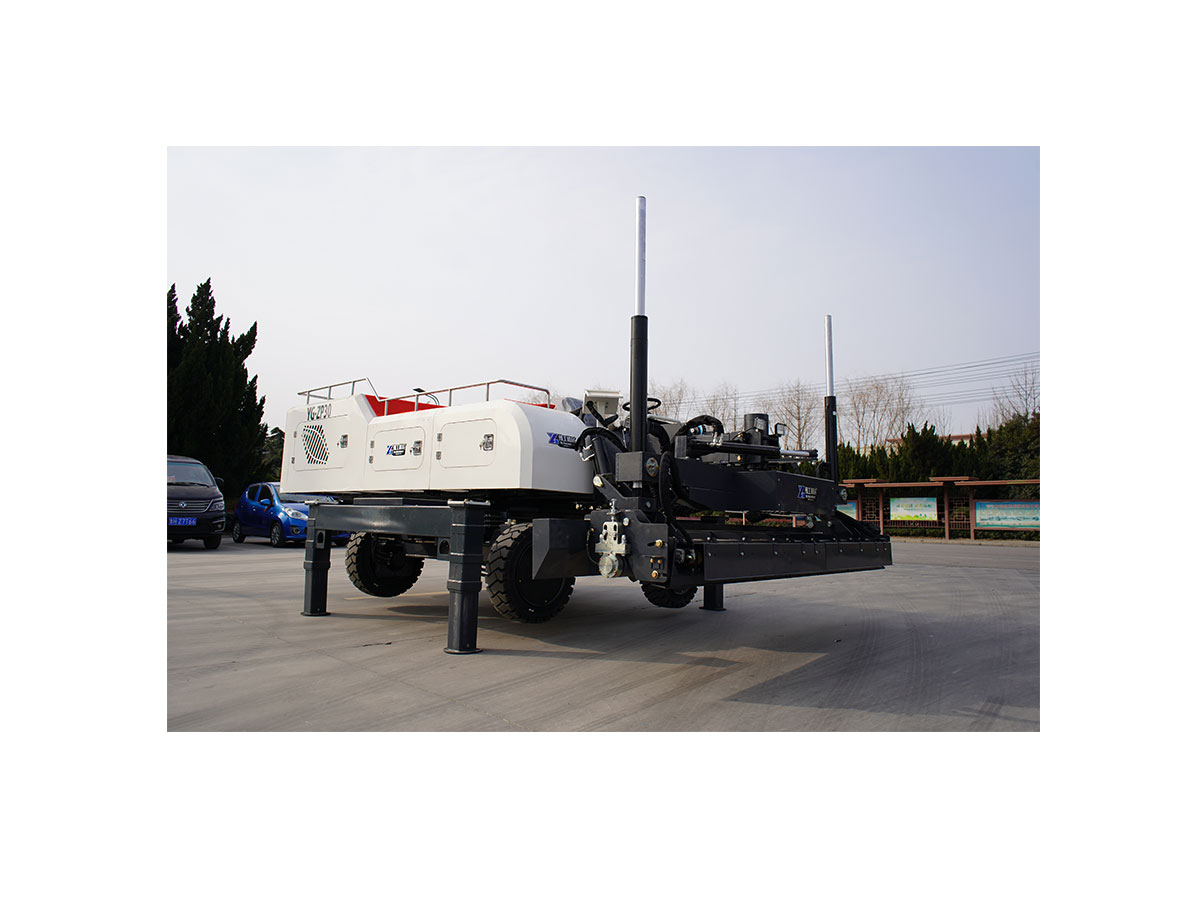

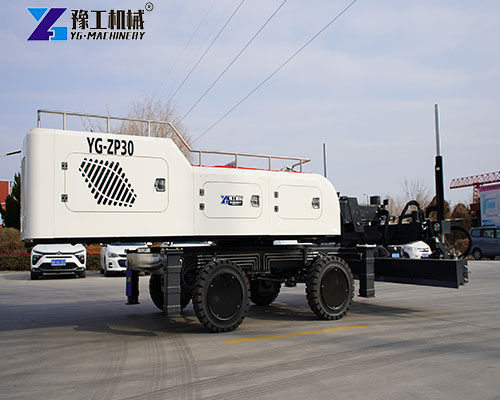
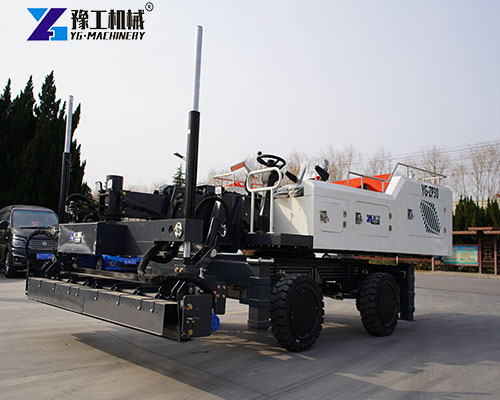
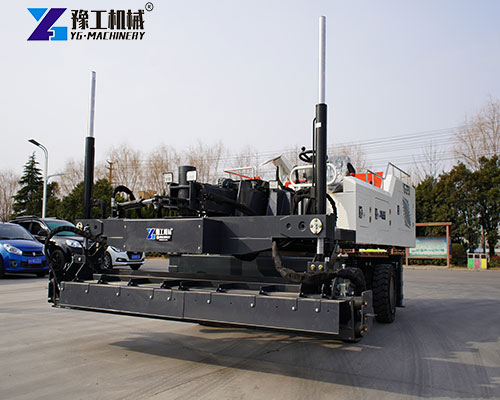
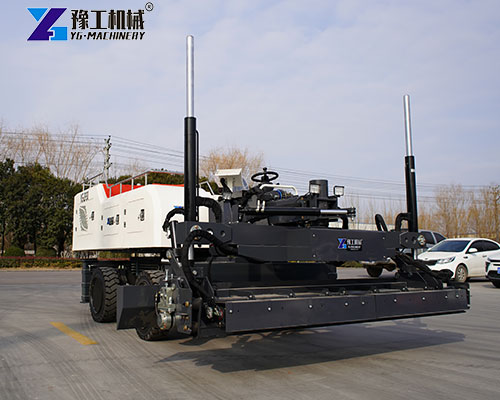
A laser screed is a type of construction machinery that achieves high-precision integrated operations of spreading, compacting and leveling fresh concrete through laser measurement and control technology and an automatic control system. It replaces the traditional construction method that relies on workers holding screeding bars and straightedges by hand, bringing floor construction into a new era of digitalization and mechanization.【WhatsApp/WeChat/Phone】+86 13837122632
Laser Screed for Sale Specifications
| YG-ZP30 | |
| Engine brand model | Yanmar 4TNV94L |
| Type | Diesel |
| Power | 35.5KW/48hp |
| Fuel tank volume | 100L |
| Hydraulic oil volume | 150L |
| Hydraulic system | Danfoss |
| Laser transmitter | American Tempo |
| Laser receiver | German Mopar |
| Laser system control effect | Flat, inclined or double slope (3D) |
| Laser system control method | Microcomputer laser scanning |
| Trapping method | Hydraulic Cage Paving |
| Auger power | Hydraulic motor |
| Advantages of Jiaobanlong | Flip up and down for easy cleaning, left and right switching, blades made of highly wear-resistant material, more durable |
| Reach length | 6000mm |
| Vibrating plate width | 3100mm |
| Leveling thickness | 100-450mm |
| Walking weight/working speed | 4-8km/h 24m/min |
| Walking drive form | Hydraulic four-wheel drive Outrigger |
| Steering method | One-touch four-leg self-leveling |
| Walking tires | Front wheel + four wheels + crab walk |
| Cleaning machine flow | 15L/min |
| Body size | 5350x3650x2040mm |
| Weight | 5500 kgs |
How does a Laser Screed Work?
- Establish a benchmark: An independent laser transmitter rotates on-site, emitting a laser control surface covering the construction area to provide the machine with a precise elevation reference.
- Sensing and calculation: The laser receiver on the machine captures laser signals in real time and transmits height data to the on-board computer control system. The system immediately compares and calculates the real-time data with the preset elevation.
- Execution and leveling: The computer drives the hydraulic servo system to automatically and quickly adjust the height of the screeding head. At the same time, the vibration unit under the screeding head efficiently compacts the concrete, and the scraper completes precise screeding in one go.
Outstanding Features of a Laser Screed
- Excellent precision: Adopting closed-loop control technology, the laser signal is independent without cumulative errors, and the flatness control can reach the millimeter level, easily meeting the super-flat floor standard.
- High efficiency and versatility: The operation efficiency is dozens of times that of manual work, and it can complete spreading, compacting and leveling at one time. It can not only handle flat surfaces but also automatically complete complex sloped floors through system settings.
- Durable and robust: Equipped with solid puncture-proof tires, the equipment can walk and work directly on laid steel mesh, with strong adaptability. Its key components are often made of wear-resistant materials for long service life.
Differences Between a Laser Screed and Traditional Manual Leveling
- Precision level: Manual leveling relies on workers’ experience and physical strength, resulting in large quality fluctuations and easy cumulative errors. A laser screed works with a constant laser benchmark and automatic control system, ensuring stable and reliable precision.
- Efficiency level: Manual construction is slow, severely limited by the initial setting time of concrete, and prone to cold joints. Laser leveling is fast and continuous, greatly reducing construction joints and improving floor integrity.
- Benefit level: Manual construction has high labor costs and a high probability of later repairs. Although using a laser screed requires equipment investment, its high construction quality, fast speed and more economical concrete usage result in more advantageous long-term comprehensive costs.
A More Powerful Choice: Laser Screed Machine with Telescopic Arm
- Expandability and flexibility: For models like YG-ZP30, the boom can extend (up to 6 meters), the machine body can rotate 360°, and the leveling mechanism can swing 120°, easily reaching narrow areas and achieving “no dead angle” construction.
- Intelligence and stability: Lifting uses dedicated guide columns to prevent eccentric wear and oil leakage; movement features soft start and stop functions; four hydraulic outriggers can be leveled with one button, ensuring stable operation of the equipment on various foundations.
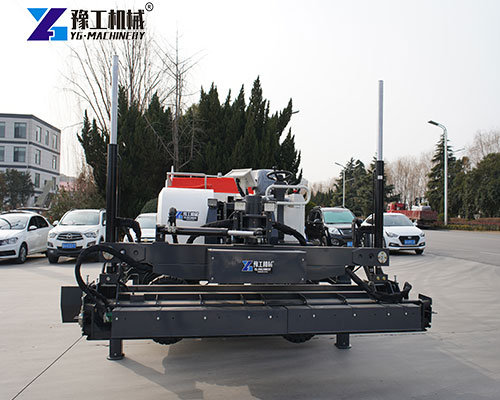
- User-friendly design: The leveling beam can be flipped at a large angle for thorough cleaning; it is equipped with a closed storage box for convenient tool storage. These features make professional users pay special attention to such high-performance models when considering laser screed for sale information.
How to Choose the Right Concrete Laser Screed?
- Clarify project requirements: Initially determine the model range based on the usual construction floor area, precision requirements (such as ordinary flatness or super-flat standard), and whether there are slope requirements.
- Inspect core performance: Pay attention to the equipment’s working width, leveling thickness range, engine power and brand (such as Yanmar 35.5KW diesel engine), hydraulic system (such as Danfoss), and the reliability of the laser control system (such as American and German brands).
- Evaluate extended functions: Determine whether telescopic arms, four-wheel drive, one-key leveling and other functions are needed to cope with complex working conditions.
- Plan investment method: According to the business volume, you can choose to buy directly (focus on reliable laser screed for sale channels) or rent a laser screed machine to optimize fund usage.
How to Perform Daily Maintenance of the Equipment?
- Clean immediately after operation: After each construction, be sure to use a high-pressure water gun to thoroughly remove residual concrete from the screeding head, scraper and tires. This is the key to preventing concrete solidification from damaging the equipment.
- Regular inspection and replacement: Regularly check the hydraulic oil level and quality, replace hydraulic oil and filters according to the specified cycle; clean the lenses of the laser transmitter and receiver; add lubricating oil to all lubrication points.
- Storage when not in use: Before long-term storage, thoroughly clean and dry the equipment, prop up the screeding head to release tire pressure, perform anti-rust treatment on exposed metal parts, and park it in a dry room.
In summary, a laser screed represents the direction of technological progress in the field of floor construction. It essentially solves the bottlenecks of traditional manual construction in precision, efficiency and quality consistency. Whether building warehouse floors that bear heavy shelves or modern workshops with strict flatness requirements, understanding and properly using this equipment is a key step to ensuring project quality and improving project benefits.【WhatsApp/WeChat/Phone】+86 13837122632