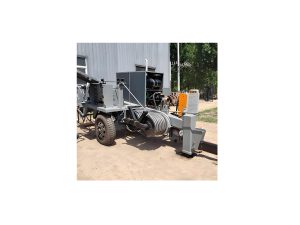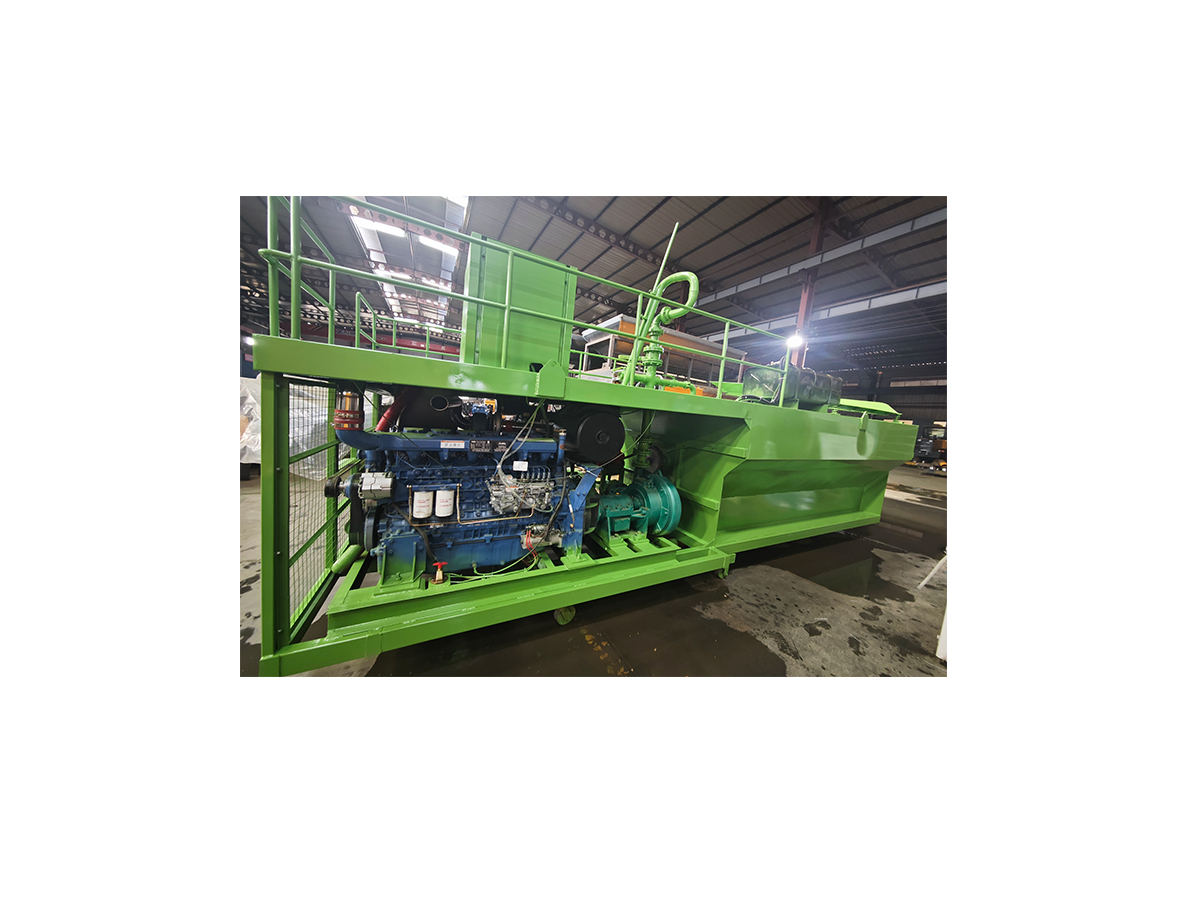

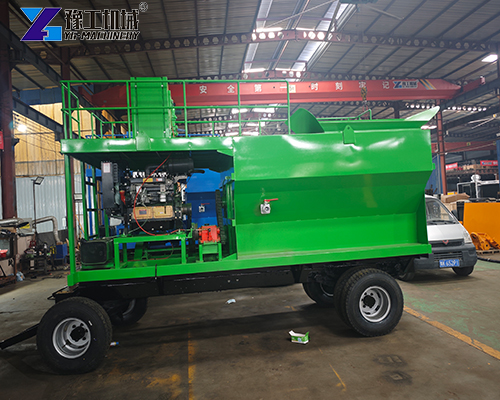
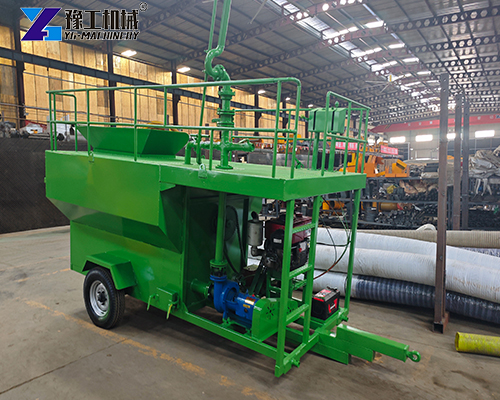
In slope greening, mine restoration, and urban landscape construction, how to quickly and evenly restore green cover on bare land has always been the top concern of engineering contractors. Traditional manual sowing is not only low in efficiency but also leads to uneven germination rates, and it becomes far more difficult when working on steep slopes or infertile soil. The emergence of hydroseeding technology completely changed this situation — soil, grass seeds, wood fiber, water retaining agent, adhesive, and fertilizer are blended into a slurry in proportion, then sprayed onto the soil surface via a high-pressure pump to form an even protective covering layer. This method is much faster than conventional sowing, enabling grass seeds to germinate and grow into uniform turf in a shorter time. If you are looking for a reliable and efficient hydroseeding machine for sale, learning the parameters and applicable scenarios of different models is the first step to making a sound investment decision.
YG-2, YG-4, YG-6: Compact and Flexible Small Hydroseeding Machine
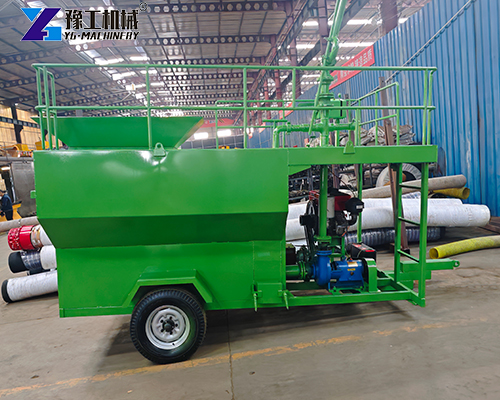
For small-scale greening projects, turf repair, and residential yard works, a lightweight small hydroseeding machine is often more practical than large equipment. YG-2, YG-4, and YG-6 in the YG series are specially built for such purposes. The tank volumes of the three models are 2m³, 4m³, and 6m³, respectively. Each full tank covers a hydroseeding area of 200 to 1,200 square meters, with a maximum horizontal direct spraying distance of 15 to 30 meters and a maximum horizontal delivery distance via extension hose of 100 meters. Below are the detailed specifications of these three compact models:
| Parameter | YG-2 | YG-4 | YG-6 |
| Tank Volume (m³) | 2 | 4 | 6 |
| Max Particle Size (mm) | 10 | 10 | 10 |
| Slurry Pump Flow Rate (m³/h) | 40 | 40 | 40 |
| Maximum Solid Content (%) | 20-30 | 20-30 | 20-30 |
| Power (KW) | 23 | 23 | 23+8 |
| Engine Speed (rpm) | 2200 | 2200 | 2200 |
| Mixing System | Mechanical Mixing | Mechanical Mixing | Mechanical Mixing |
| Mixing Speed & Direction | Variable speed 0-100 rpm, forward & reverse dual-direction mixing | Variable speed 0-100 rpm, forward & reverse dual-direction mixing | Variable speed 0-100 rpm, forward & reverse dual-direction mixing |
| Nozzle Configuration | 1 round nozzle: 20mm diameter; 1 fan nozzle: 20mm diameter | 1 round nozzle: 20mm diameter; 1 fan nozzle: 20mm diameter | 1 round nozzle: 20mm diameter; 1 fan nozzle: 20mm diameter |
| Hydroseeding Area per Tank (㎡) | 200-400 | 500-800 | 800-1200 |
| Horizontal Direct Spray Distance (m) | 15-25 | 15-25 | 15-30 |
| Horizontal Delivery via Extension Hose (m) | 60-90 | 60-90 | 70-100 |
| Vertical Lift via Extension Hose (m) | 20-40 | 20-40 | 20-45 |
| Weight (KG) | 1500 | 1800 | 2750 |
| Overall Dimension (mm) | 2660×1500×2000 | 3420×1700×2300 | 4170×1900×2300 |
All three models adopt a mechanical mixing system with infinitely variable speed ranging from 0 to 100 rpm and support forward and reverse mixing. The reverse rotation function delivers great practical value on construction sites. When the mixer gets jammed by excess materials, short reverse rotation can clear blockages quickly to resume machine operation. Alternating forward and reverse rotation pulls floating top-layer materials down to the blade zone, ensuring thorough mixing without dead corners.
YG-88, YG-146, YG-247: High-Capacity Slope Hydroseeder for Sale
YG-88, YG-146, and YG-247 are professional hydroseeders for rock slope, designed exclusively for large-scale projects. They can mix soil, seeds, fertilizer, and binders into a thick slurry. Relying on its powerful pumping system, the machine sprays the mixture directly onto bare rock faces or steep slopes, effectively weaving a green coat over the barren landscape. Their tank volumes reach 6m³ and 8m³; each full tank covers a hydroseeding area of 210 to 320 square meters with a spraying thickness of 5-8mm. Detailed specifications of these three large models are listed below:
| Parameter | YG-88 | YG-146 | YG-247 |
| Tank Capacity (m³) | 6 | 8 | 8 |
| Tank Volume (L) | 6000 | 8000 | 8000 |
| Mixing Mode | Mechanical chain variable speed mixing + horizontal shaft inclined blade mixing + circulating jet mixing | Mechanical chain variable speed mixing + horizontal shaft inclined blade mixing + circulating jet mixing | Mechanical chain variable speed mixing + horizontal shaft inclined blade mixing + circulating jet mixing |
| Mixing Direction | Forward & reverse dual rotation | Forward & reverse dual rotation | Forward & reverse dual rotation |
| Mixer Shaft Speed (rpm) | Variable speed 10-100 rpm | Variable speed 10-100 rpm | Variable speed 10-100 rpm |
| Slurry Pump Flow Rate (m³/h) | 50 | 70 | 70 |
| Outlet Pressure (MPa) | 1.1 | 1.4 | 1.6 |
| Transmission Mode | Mechanical clutch V-belt drive | Mechanical clutch V-belt drive | Mechanical clutch V-belt drive |
| Maximum Solid Content (%) | 70 | 70 | 70 |
| Max Particle Size (mm) | 20 | 20 | 20 |
| Power (KW/HP) | 88KW/120hp | 146KW/199hp | 247KW/336hp |
| Engine Speed (rpm) | 2200 | 2200 | 2200 |
| Spraying Method | Universal spray gun + extension hose gun (optional) | Universal spray gun + extension hose gun (optional) | Universal spray gun + extension hose gun (optional) |
| High-pressure Recirculation System | In-tank high-pressure recirculation, flow rate 1000L/min, for tank cleaning and pressure relief | In-tank high-pressure recirculation, flow rate 1000L/min, for tank cleaning and pressure relief | In-tank high-pressure recirculation, flow rate 1000L/min, for tank cleaning and pressure relief |
| Nozzle Configuration | 2 round nozzles (30mm & 40mm diameter) + 1 fan nozzle | 2 round nozzles (30mm & 40mm diameter) + 1 fan nozzle | 2 round nozzles (30mm & 40mm diameter) + 1 fan nozzle |
| Horizontal Direct Spray Distance (m) | 30-40 | 40-50 | 60-70 |
| Horizontal Delivery via Extension Hose (m) | 100-160 | 150-200 | 180-280 |
| Vertical Lift via Extension Hose (m) | 30-70 | 50-100 | 80-140 |
| Guardrail Platform | Equipped | Equipped | Equipped |
| Weight (KG) | 4300 | 4800 | 5400 |
| Overall Dimension (mm) | 4880×2200×2500 | 5600×2200×2500 | 6100×2200×2500 |
| Spraying Area per Tank (㎡) | 160-240 | 210-320 | 210-320 |
| Spraying Time per Tank (min) | 8 (direct spray); 18 (hose spray) | 8 (direct spray); 18 (hose spray) | 8 (direct spray); 18 (hose spray) |
The standout technical feature of these three models is their three-dimensional mixing system, which combines mechanical chain variable speed mixing, horizontal shaft inclined blade mixing, and circulating jet mixing to deliver full-range all-around blending. A standard 360° rotating universal spray head comes with combined nozzles and hose valves for easy switching to fit different working surfaces.
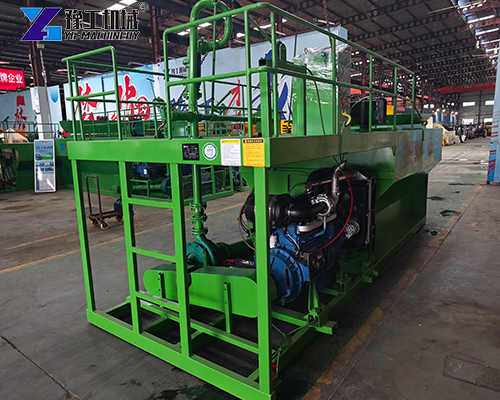
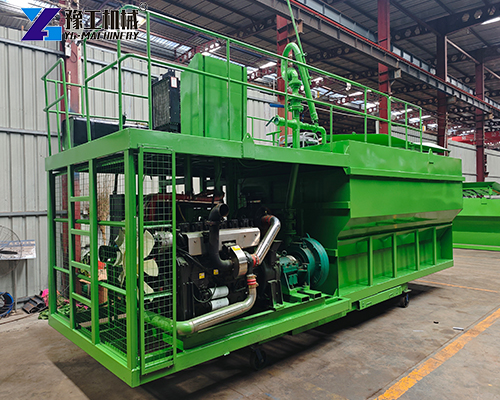
How to Choose Between the Two Types of Hydroseeding Machines for Sale?
Many customers ask when facing the six YG series models: “Which one should I pick?” Two core factors need to be considered to select the right model:
1. Select Models Based on Slope Conditions
Slope height and gradient are key factors for model selection, directly determining the required engine power and spraying pressure:
- Low, gentle slopes (height below 5m, gradient under 30°): These surfaces pose low construction difficulty. YG-2 or YG-4 can handle the work easily. Their compact size and flexible operation, paired with a 15-25m horizontal direct spray range, fully cover low slope requirements.
- Medium-height slopes (height 5-15m, gradient 30°-45°): YG-6 or YG-88 are recommended. Both deliver stronger power output and longer spray distances. YG-88 reaches a 30-40m horizontal direct spray distance and a 30-70m vertical lift via extension hose, making it ideal for moderately challenging slope greening projects.
- High steep slopes (height over 15m, gradient 45°-50°): Large hydromulching machines such as YG-146 or YG-247 are mandatory choices. Their horizontal direct spray distances hit 40-50m and 60-70m, respectively, with vertical hose lift ranges of 50-100m and 80-140m. Boasting powerful 247KW power, YG-247 stands as the top pick for complex slope rehabilitation. Additionally, the standard guardrail platform on large units offers operators a safer standing position for high-steep slope operations.
2. Select Models Based on Required Spraying Thickness
Thicker spray layers do not always equal better results; thickness is determined by project standards and surface soil quality:
- Thin-layer hydroseeding (2-3mm): Completed by three compact small hydroseeding machines: YG-2, YG-4, and YG-6. Suitable for good-soil slopes, landscape projects, turf repair, and residential yards. These units also support small amounts of soil-mixed operation: you can add proper amounts of on-site soil as needed to cut wood and paper fiber consumption, drastically lowering construction costs while boosting grass seed germination and survival rates.
- Medium & thick-layer hydroseeding (5-8mm): Handled by large models YG-88, YG-146, and YG-247. Perfect for poor-soil, steep slopes, or projects requiring fast, stable vegetation coverage. Thicker mulch retains moisture and heat better for seeds, greatly lifting germination and survival rates. For slopes mixed with rock soil or weathered stone, thick spraying fully covers gravel and creates favorable conditions for root growth.
Simply put: small machines for gentle small slopes, large machines for steep big slopes; thin spray for fertile soil, thick spray for poor soil. YG supplies a full product lineup with tank volumes ranging from 2m³ to 8m³, matching the perfect unit whether you work on urban park turf or steep expressway slopes.
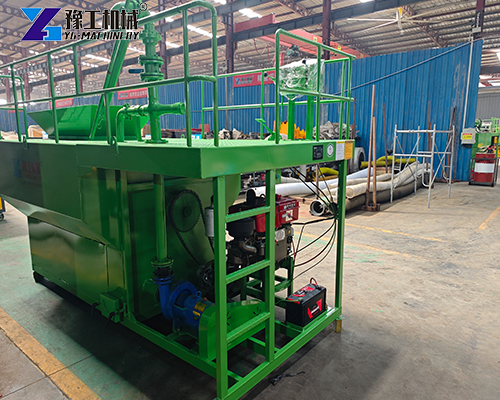
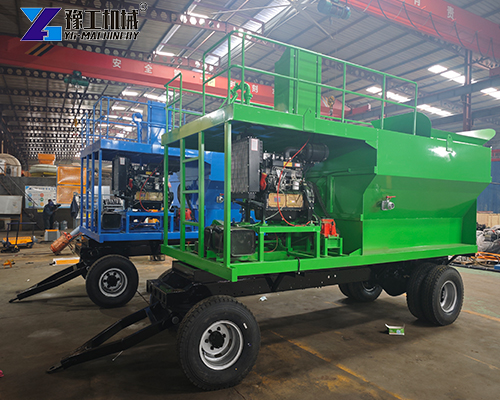
Traditional Sod Laying vs. Hydroseeding Machine for Sale
Many contractors hesitate between traditional sod laying and machine hydroseeding. In fact, a hydroseeding machine for sale delivers comprehensive advantages:
- Cost Comparison: Sod laying involves purchasing, transporting, and installing pre-grown sod rolls, resulting in high material and labor expenses. Hydroseeding finishes sowing, fertilizing, and mulching in one step, slashing overall project costs.
- Construction Efficiency: Sod laying is labor-intensive; one worker can only lay dozens of square meters per day. A single hydromulching machine can spray hundreds or even thousands of square meters daily.
- Adaptability: Sod rolls easily, slides, and falls off steep slopes, while hydroseed mulch sticks firmly to slope surfaces and provides excellent erosion control. The mulch layer locks moisture around seeds to speed up germination.
- Survival Rate: Grass seeds from hydroseeding make closer contact with the soil. Combined with water-retaining agents and adhesives, germination and survival rates far outperform traditional sod laying.
Mixing Methods of Hydroseeder Truck: Mechanical Mixing vs. Jet Agitation
The mixing system is a core component of hydroseeders, directly impacting material blending uniformity and spraying quality. Two mainstream mixing methods exist on the market:
Mechanical mixing uses spiral or inclined blades to forcibly agitate tank materials. The YG series adopts a combination of horizontal spiral conveying, mixing, and vertical backflow scouring mixing to evenly blend raw materials. Mechanical mixing features a strong stirring force and works well with high-concentration slurry. When soil or large solid particles are added, it prevents heavy materials from settling at the tank bottom.
Jet Agitation draws slurry out via a high-pressure pump and sprays it back into the tank from the bottom or side walls, relying on liquid impact to drive overall circulation. This design has a simple structure and low maintenance costs, yet delivers a weaker mixing force, performing worse than mechanical mixing on high-density slurry.
Mechanical mixing is the more reliable option for jobs requiring soil addition and thick slurry treatment. All large YG hydroseeder trucks adopt a composite mixing system centered on mechanical mixing, supplemented by circulating jet mixing, balancing powerful blending and efficient circulation. Notably, all YG series mixing systems support reverse rotation with three core functions:
- Blockage Prevention: Brief reverse rotation clears jams when the mixer gets clogged with excess materials;
- Auxiliary Blending: Alternating forward and reverse rotation pulls floating surface materials down to blades for zero-dead-angle mixing;
- Time & Labor Savings: One-touch reverse rotation speeds up on-site work far more than manual blockage clearing.
FAQs about Hydroseeding Machine for Sale
Q: Can a hydromulching machine sow staple food crops such as rice, wheat, and corn?
A: No. It cannot meet core agricultural production requirements, including precision seeding, row and plant spacing control, and consistent soil covering depth. It is engineered for turf greening, ecological restoration, and slope protection instead of farm crop cultivation.
Q: What is the mixing ratio for hydroseeding raw materials?
A: For compact small models: Water: Soil: Rice husk & other mulch substrates = 1: 0.5-1.5: 0.5 (the soil ratio is calculated based on sandy soil; reduce soil volume appropriately for clay soil). For large models: Water: Soil: Rice husk & other mulch substrates = 1: 1.5-2.5: 1.
Q: What is the standard hydroseeding construction workflow?
A: Standard steps: ① Add water, wood fiber and other raw materials; ② Mix wood fiber and base materials; ③ Add compound and organic fertilizer; ④ Pour mixed grass seeds into the tank; ⑤ Add water retaining agent; ⑥ Add adhesive; ⑦ Mix thoroughly with alternating forward and reverse rotation; ⑧ Evenly spray the grass seed slurry; ⑨ Cover and fasten non-woven geotextile.
Q: What are the key daily maintenance tips?
A: Thoroughly clean the tank and pipelines after every use; regularly inspect and tighten all bolts (especially for new machines and after heavy-duty operations); replace engine oil after the first 50 working hours, then every six months; clean or replace filters every six months; frequently check pipeline tightness to avoid water leakage; apply anti-rust treatment if the machine will be stored long-term.
Q: How to fix weak spray output or no material discharge from a hydromulching machine?
A: Troubleshoot in the order of Power – Components – Raw Materials: Flush clogged pipelines with clean water or detach hoses to clear blockages; dilute overly thick slurry by adding water; bleed air from feeding pipes by opening the air vent valve; replace worn pump impellers after 1-2 years of use; contact professional technicians for coupling damage repair.
Whether you take on small landscape renovation projects or large expressway slope restoration works, finding the right hydroseeding machine for sale is a critical step to project success. Covering compact to large units with mechanical and three-dimensional composite mixing systems, the full YG product line delivers complete solutions for projects of all scales. Get in touch with YG and start with a suitable hydroseeder truck for your project, bringing lush green vitality back to every stretch of land.