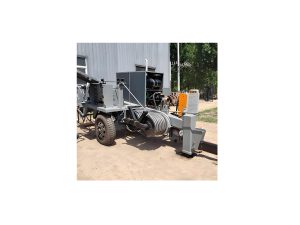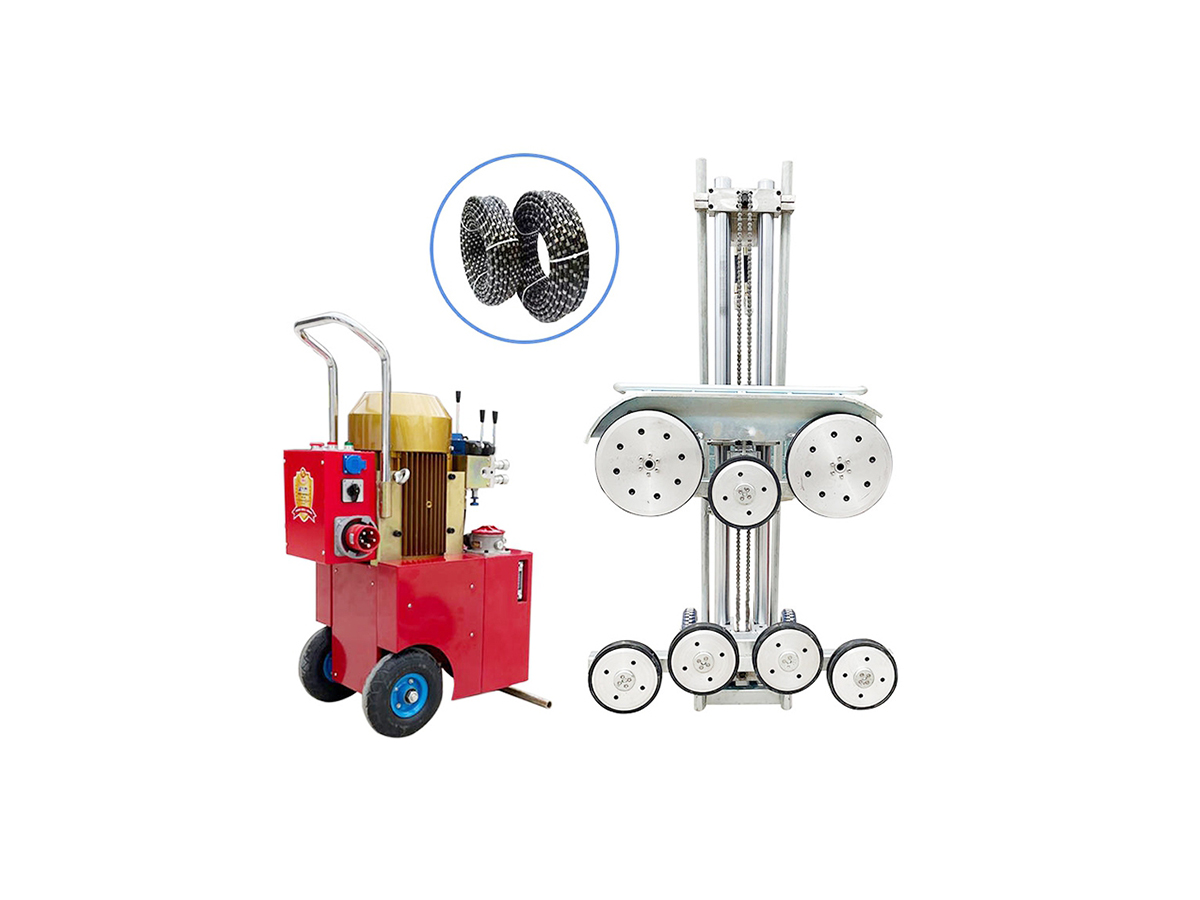

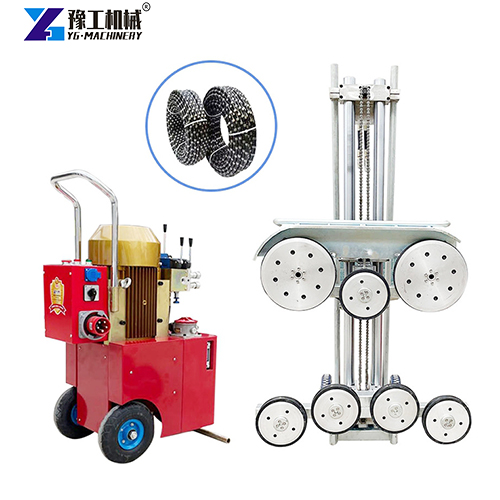
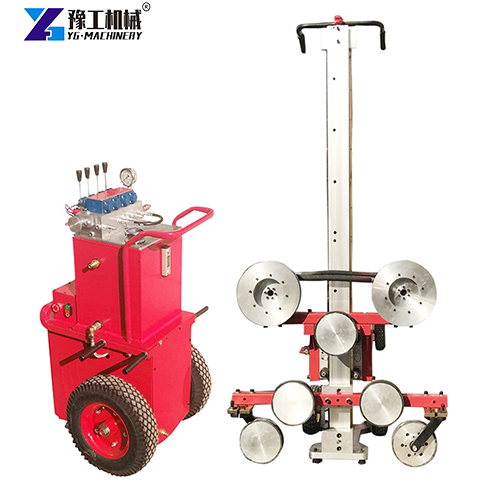
In bridge demolition, underwater pile foundation treatment, and large concrete structure renovation projects, how to achieve safe, efficient, low-vibration static cutting has always been a core concern for construction teams. Traditional breaker hammers or blasting operations are not only noisy and dusty, but also easily damage the remaining structures. As a flexible cutting tool, the wire rope saw has been widely used in demolition projects both domestically and internationally in recent years, thanks to its long cutting stroke and strong adaptability. This article provides a comprehensive analysis of this cutting technology, covering equipment configuration, usage advantages, applicable scenarios, and the selection of core components – diamond beads.
Diamond Wire Saw Machine Parameters
| Wire Saw Wheel Parameters | Hydraulic Pump Station Parameters | ||
| Wire Drive Mode | hydraulic | Rated Output Power | 22/25KW |
| Model Type | HM-40/80 | Working Voltage | 380v 50Hz |
| Minimum Input Power | 25HP/33HP | Hydraulic Pump Station | Gear pump |
| Output Shaft Speed | 350/940/1300r/min | Motor Working Floe | 40-100L/min |
| Maximum Wire Length | 18m | Working Pressure | 15-20Mpa |
| Feeding Method | Fully hydraulic | Oil Tank Volume | 16L |
| Wire Saw Wheel | 64kg | Weight | 98kg |
| Motor Weight | 13kg | Dimension(mm) | 650*550*1150 |
| Cutting Type | Transverse and longitudinal cutting | ||
How Does a Wire Rope Saw Work?
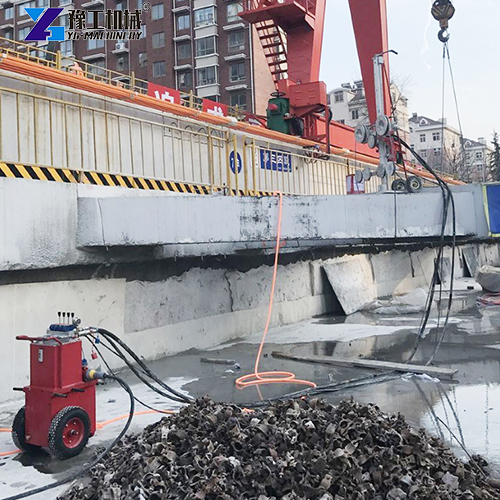
The core of a complete wire rope saw system lies in the coordination of hydraulic power and mechanical transmission. Its working principle is: the oil pressure output from the hydraulic pump station drives the hydraulic motor to rotate, which in turn drives the drive wheel to spin, making the diamond wire move at high speed. At the same time, the wire is guided by the driven wheel to control the running direction, achieving cutting and demolition of reinforced concrete through high-speed grinding. This equipment can perform static cutting of thick concrete members in various directions, completing precise separation without damaging the original structure. Different models vary in cutting efficiency, which is closely related to concrete strength, rebar density, and operating parameters.
What are the Standard Configurations of a Wire Rope Saw?
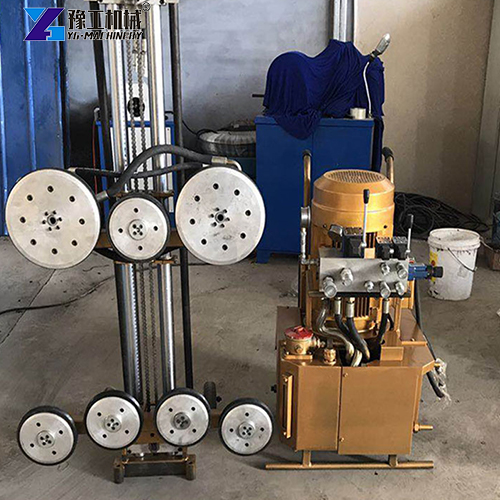
A complete wire rope saw system ready for field operation requires the following standard components in addition to the main unit:
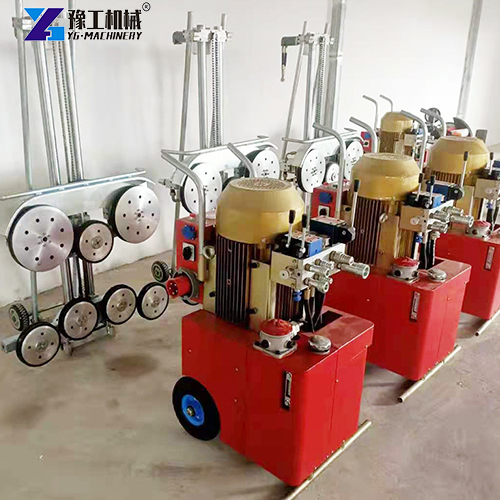
- Hydraulic pump station: provides oil pressure as the power source for the entire system;
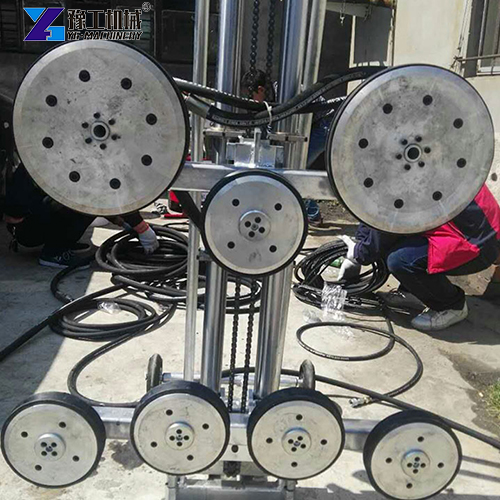
- Wire saw frame: includes the drive wheel and driven wheel system, used to mount and guide the wire;
- 4 high-pressure oil hoses (each 10 meters long): connect the pump station to the cutting head, transmitting hydraulic power;
- 1 hydraulic crimping tool: used for quick on-site connection or disconnection of the diamond wire;
- 1 on-board tool kit: contains common tools for daily maintenance and simple troubleshooting.
When purchasing a diamond wire saw machine, users should not only focus on the main unit’s performance but also confirm that these standard configurations are complete, ensuring the equipment can be assembled and used immediately upon arrival.
Main Benefits of Using a Diamond Rope Saw
Compared with traditional demolition methods (such as breakers and blasting), it offers clear advantages in several areas, mainly as follows:
- Static cutting, no damage to retained structures. The equipment vibrates very little during cutting, causing no impact damage to remaining concrete members – ideal for projects with high structural protection requirements, such as reinforcement renovations and bridge jacking.
- Smooth and flat cutting surface, reducing post-processing. The cut section is neat, requiring no secondary trimming or roughening, allowing the next construction step to proceed immediately, saving time and labor costs.
- Outstanding environmental benefits, low dust and noise. The cutting process uses water cooling and dust suppression, with virtually no dust flying on site, and noise is far lower than crushing operations – suitable for construction areas with strict environmental requirements, such as urban centers, hospitals, and schools.
- Long cutting stroke, suitable for large members. The wire is flexible, so the cutting stroke is almost unlimited. For bulky or irregularly shaped members, large cross-sections can be cut with a single setup – something rigid tools like circular saws cannot achieve.
- Flexible cutting direction, adaptable to various angles. Whether horizontal, vertical, inclined, or even curved and irregular structures, the diamond rope saw can achieve cutting by adjusting the position and angle of the guide wheels.
These features have led to a continuous increase in the market share of the diamond rope saw in demolition markets worldwide.
What are the Applicable Scenarios for a Wire Rope Saw?
Its application range is quite broad, covering almost all concrete structure projects requiring static cutting, mainly including the following types:
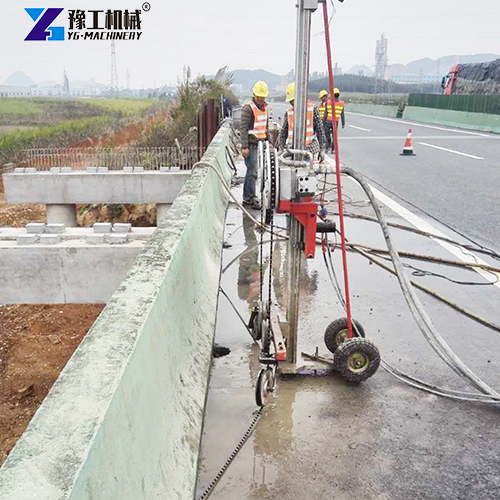
- Bridge engineering: cutting and demolishing bridge piers, box girders, and deck flanges, as well as partial removal in old bridge reinforcement and renovation;
- Underwater engineering: cutting underwater concrete piles of bridge piers, demolishing underwater pile caps of wharfs, and underwater renovation of port facilities;
- Building renovation: cutting basement support beams, opening floor slabs, modifying elevator shafts and stair openings, and partial removal of load-bearing walls;
- Municipal facilities: cutting and separating large equipment foundations, renovating water treatment tanks, and partial removal of tunnel linings;
- Mining and stone: cutting and shaping quarry blocks of granite, marble, etc., and splitting billets in stone processing plants.
Because the wire is flexible, the cutting direction can be adjusted freely. Regardless of the shape of the member, the diamond wire saw cutting machine can achieve efficient cutting by properly arranging guide wheels. Whether underwater or at height, as long as proper protection and guidance measures are in place, the equipment can perform the cutting task well.
The Secret of Beads: Selection Guide for Three Types of Diamond Beads
Diamond beads are the core components directly involved in grinding on the wire rope saw. Their type and quality directly determine cutting efficiency and cost. Currently, common beads on the market are mainly divided into three processes: sintered, electroplated, and brazed – each suitable for different materials:
- Sintered beads: made by powder metallurgy, embedding diamond particles in a metal bond. These beads offer good cost performance and wear resistance, suitable for cutting medium-to-low hardness granite, limestone, and ordinary grade reinforced concrete (C30-C40). In regular building demolition, sintered beads are the most widely used and most economical choice.
- Electroplated beads: made by electroplating, fixing a single layer of diamond particles onto the bead substrate. These beads have very high initial sharpness and fast cutting speed, but the diamond layer is thinner, and durability is relatively limited. They are more suitable for cutting softer materials like marble or sandstone, or for short-duration projects with smaller cutting areas.
- Brazed beads: made by high-temperature brazing, firmly welding diamond particles onto the substrate with high protrusion and strong holding force. These beads offer excellent cutting efficiency and service life, especially suitable for high-grade concrete (above C50), rebar-dense members, and complex conditions with hard aggregates. Although the initial cost is slightly higher, in high-intensity cutting tasks, their overall economy often outperforms the other two types.
When selecting beads for a diamond wire saw machine, users should clearly state the working conditions to the supplier based on the actual material and rebar content of the cutting object, so as to match the most suitable bead type and avoid slow cutting or premature bead failure due to improper selection.
FAQ about Wire Rope Saw
In actual consultations and sales, customers often ask the following questions. Here are the answers:
Q: How long is one coil of wire?
A: Under standard specifications, one coil of diamond rope saw is 50 meters long. If the circumference of the cutting member is shorter, shorter lengths can be cut as needed, but on-site connection with a hydraulic crimping tool and special connectors is required.
Q: How much area can be cut in one hour? And how much can one meter of wire cut?
A: Cutting efficiency is closely related to concrete grade, rebar content, and the condition of the wire. Under normal conditions, a properly functioning wire rope saw can cut about 8 square meters of ordinary reinforced concrete per hour. Per meter of wire, the cutting volume is about 2.5 to 3 square meters. It should be noted that if the rebar is dense or the concrete grade is high, cutting efficiency will drop significantly, and wire consumption will increase accordingly.
Q: Can the wire rope saw cut underwater?
A: Yes. Since the drive unit can be placed above water, with only the wire and guide wheels submerged, and the cutting process itself requires water for cooling and lubrication, it can operate normally in underwater environments such as pile foundations and wharf pile caps.
Q: Is water cooling needed during cutting? How is it done?
A: Yes. During cutting, the friction between beads and concrete generates a lot of heat, so a continuous water supply is required for cooling and lubrication; otherwise, beads will wear out quickly or even break. Customers need to provide their own water source and supply pipes connected to the water inlet of the cutting head. The water flow doesn’t need to be large, but it must be continuous.
How to Choose the Right Diamond Wire Saw Cutting Machine for You?
Based on the above, selecting a suitable diamond wire saw cutting machine requires consideration from multiple aspects: the material and strength grade of the cutting object, site conditions, power matching of the hydraulic pump station, whether the manufacturer provides complete standard configurations, and timely after-sales technical support. YG has been deeply involved in the cutting equipment field for many years, with products exported to Southeast Asia, South America, the Middle East, and many other countries and regions, accumulating extensive experience in various working conditions. We not only provide high-quality main units and consumables but also offer full technical support – from selection advice, operation training, to construction plan consulting – with the YG team always ready to respond. If you are considering purchasing a diamond wire saw machine, welcome to contact the YG sales team for detailed information and quotes. We will tailor the most suitable equipment configuration and bead matching solution based on your specific cutting needs, ensuring the best return on your investment.