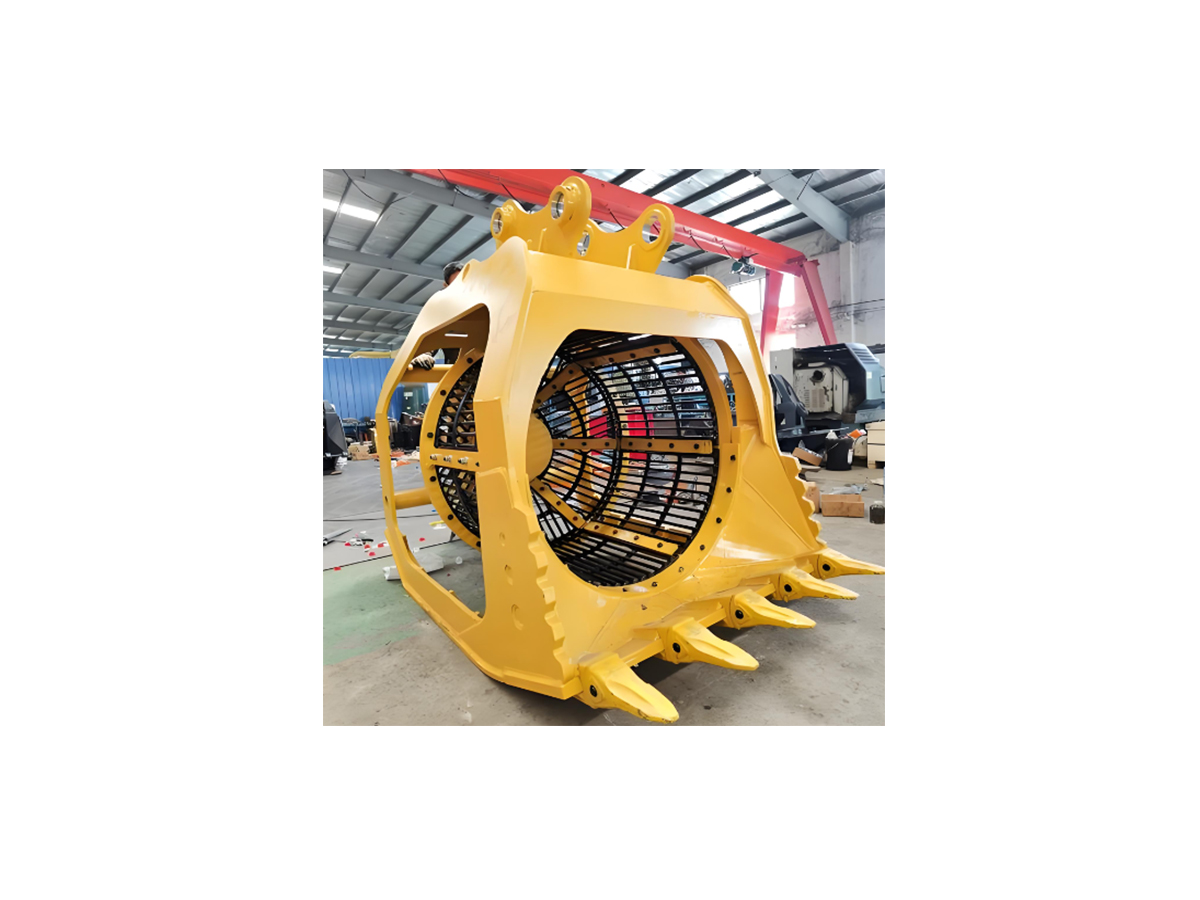

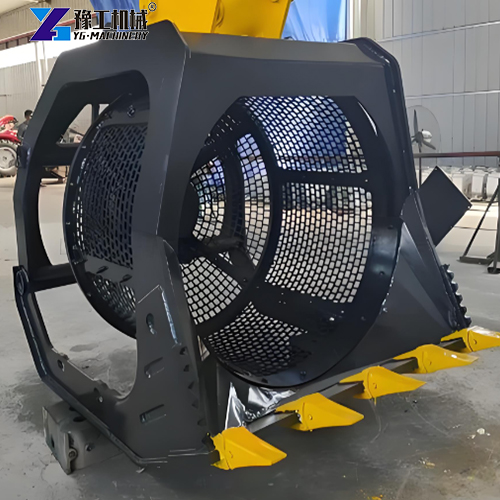
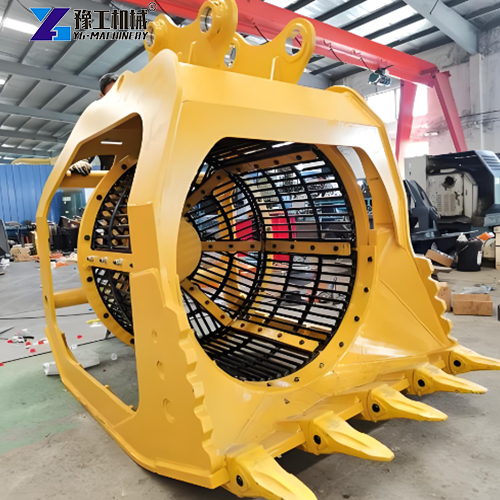
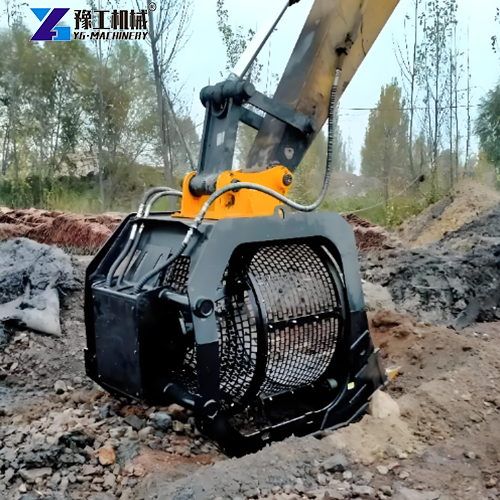
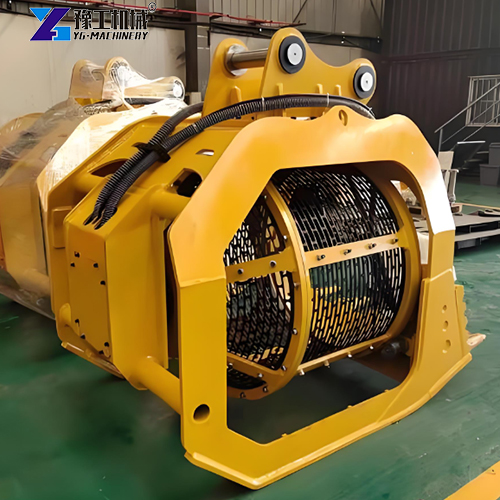
Material screening is an essential process in earthworks, demolition recycling, landscaping, and mining operations. Traditional practice requires hauling excavated rock and soil to fixed screening stations. Back-and-forth transport wastes time and labor and keeps costs high. A rotary screening bucket mounts directly on excavators to enable on-site screening.
Excavator Screening Bucket for Sale Specifications
| Model | YGGTS-03 | YGGTS-06 | YGGTS-12 | YGGTS-16 | YGGTS-20 | YGGTS-24 | YGGTS-30 |
| Suitable Excavator (t) | 5–10 | 10–18 | 18–25 | 20–30 | 25–35 | 30–40 | 40–50 |
| Overall Weight (kg) | 500 | 950 | 1320 | 1800 | 2000 | 2800 | 4000 |
| Bucket Capacity (m³) | 0.3 | 0.6 | 1.2 | 1.6 | 2 | 2.4 | 3 |
| Working Pressure (MPa) | 20 | 20 | 20 | 20 | 20–25 | 20–25 | 20–25 |
| Recommended Flow (L/min) | 60 | 80 | 100 | 100 | 150 | 150 | 220 |
| Screen Opening Size (mm) | 5–50 | 5–80 | 5–100 | 5–120 | 20–120 | 20–120 | 20–120 |
What Advantages Can You Get From a Rotary Screening Bucket?
A rotary screening bucket brings immediate efficiency improvements, mainly shown in these aspects:
- Multi-functional attachment, no extra equipment needed. Mounted directly on your excavator, it completes screening, loading and feeding in one pass. No separate mobile screening plant required; one excavator works as a mobile screening factory.
- On-site screening eliminates repeated hauling. Excavated materials are screened right on site. Fine materials can stay for backfilling or sale, while coarse materials (rocks, roots, construction waste) remain inside the bucket for separate disposal. You save transport time and fees for hauling materials to and from fixed screening stations.
- Anti-clogging design works well with wet materials. Materials tumble continuously inside the drum, automatically dislodging particles stuck in screen holes. Smooth screening is maintained even with wet, sticky materials.
- Single-operator operation. Powered by the excavator hydraulic system, no extra power or dedicated worker is needed. One excavator operator can finish digging, screening, and loading independently, greatly cutting labor costs.
Rotary Screening Bucket VS Large Mobile Screening Plant
This is a common dilemma for many contractors. Simply put, your choice between a Rotary Screening Bucket and a large mobile screening plant depends on project scale and working mode. Large mobile screening plants deliver high throughput and precise separation, suitable for long-term, continuous bulk screening work. However, they have obvious drawbacks: high purchase price, dedicated storage and operation space, and a transport trailer required for relocation.
A rotary screening bucket is totally different. It turns your existing excavator into mobile screening equipment. Its purchase cost is only a fraction of a screening plant, with no extra fuel and maintenance expenses. Screen wherever your excavator travels with zero relocation cost. It works in narrow streets, slopes and indoor sites with few space restrictions.
The conclusion is clear: If you run long-term large-scale bulk screening such as mines or large aggregate yards, a mobile screening plant is better. For medium & small construction sites, demolition yards, landscaping, river dredging, waste sorting and other projects requiring frequent relocation, a digger screening bucket delivers the best cost performance.
How to Choose Screen Mesh Sizes for Rotary Screening Bucket?
Mesh opening directly determines your output material quality. Wrong sizing causes fine waste to mix with usable aggregate or traps fine materials inside. YG’s excavator screener supports mesh sizes ranging from 5mm to 120mm. Our selection guide below:
- 5–10mm: Screen fine sand, topsoil and compost. Suitable for landscaping, nurseries and golf course maintenance.
- 10–30mm: Separate concrete aggregates, graded gravel and backfill soil. Ideal for road subbase and building foundation works.
- 30–50mm: Separate coarse stones and fines from construction waste. Perfect for demolition recycling and waste sorting.
- 50–120mm: Oversized material classification for large rocks, used in quarries and river regulation projects.
Selection Tip: If materials are damp or sticky, select an opening roughly 20% larger than your target size to avoid clogging. For dry, loose materials, stick to your target dimension.
How to Extend the Service Life of Digger Screening Bucket?
Even premium equipment will wear out quickly without proper maintenance. Follow these tips, and your rotary screening bucket can stay in excellent condition for years:
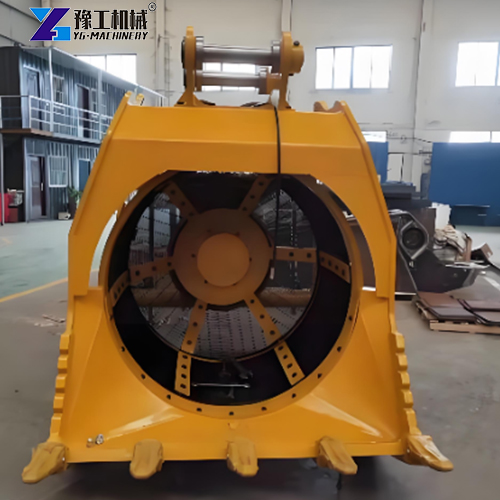
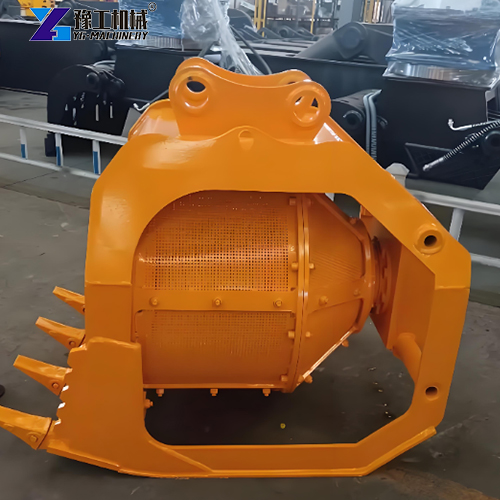
- Daily inspection: Check screen bolts for looseness and tighten before each use. Inspect hydraulic hoses and ensure overflow lines remain unobstructed.
- Regular lubrication: Frequently apply grease to support rollers at the bucket base. Replace industrial gear oil in the reduction gearbox every 500 working hours or six months.
- Monitor wear status: Periodically inspect abrasion on the drum frame and rollers. Adjust roller positioning to keep the drum and motor concentric.
- Proper storage: Place the unit on firm, level ground when idle to prevent long-term deformation under load.
- Timely screen replacement: Replace damaged screens promptly to avoid poor screening results.
Contact YG — Your Professional Partner for excavator screener
Don’t let screening work slow down your construction progress, and stop hesitating over expensive screening equipment. YG’s rotary screening bucket series upgrades your existing excavator into efficient mobile screening equipment with minimal investment. We offer seven models from 0.3m³ to 3m³, compatible with 5–50 ton excavators. You can find the right unit for small landscaping jobs or large mining operations. Contact us now, share your excavator model and working requirements with our technical team — we will provide selection plans and quotations within 2 hours.