
Urban underground pipe networks act as the “vascular system” of cities. With rapid urbanization, problems such as sediment-clogged drainage pipes, blocked manholes, and aging sewage pipe networks have become increasingly serious. The traditional manual manhole entry plus shovel cleaning method is not only low-efficiency, but also carries fatal risks including hydrogen sulfide poisoning, collapse, and drowning. As intelligent equipment specially built for underwater and confined-space desilting, the sludge dredging robot has become a core tool in municipal drainage maintenance. It completes the whole workflow of sludge stirring, suction, conveyance, and post-treatment via remote control, achieving safe operation: “no personnel enter wells, no sludge exposed on-site”.
Underwater Dredging Robot Specifications
| Model | YG500 Electric | YG600 Electric | YG700 Electric | YG800 Electric | YG900 Electric | YG1200 Electric |
| Robot Dimensions | 1500×500×650 mm | 1500×600×650 mm | 1600×700×650 mm | 1600×850×700 mm | 1650×960×750 mm | 1900×1200×750 mm |
| Slurry Pump Model | 3E-100Z170 | 3E-100Z170 | 4E-250ZJ45 | 4E-250ZJ45 | 4E-250ZJ45 | 4C-200Z125 |
| Cleaning Width | 500 mm | 600 mm | 700 mm | 800 mm | 900 mm | 1200 mm |
| Track Speed | 3–15 m/min | 3–15 m/min | 3–15 m/min | 3–15 m/min | 3–15 m/min | 3–15 m/min |
| Robot Weight | — | — | — | — | — | 500 kg |
| Pump Inlet Size | 3 inch | 3 inch | 4 inch | 4 inch | 4 inch | 5 inch |
| Pump Flow Rate | 100 m³/h | 100 m³/h | 160 m³/h | 160 m³/h | 200 m³/h | 200 m³/h |
| Pump Head | 0–30 m | 0–30 m | 0–25 m | 0–25 m | 0–25 m | 0–25 m |
| Hydraulic Station Dimensions | 2200×1200×1700 mm | 2200×1200×1700 mm | 2200×1200×1700 mm | 2200×1200×1700 mm | 2200×1200×1700 mm | 2120×1240×1200 mm |
| Main Motor Power | 18 kW | 18 kW | 22 kW | 22 kW | 22 kW | 45 kW |
| Hydraulic System Pressure | 0–16 MPa | 0–16 MPa | 0–16 MPa | 0–16 MPa | 0–16 MPa | 0–16 MPa |
| Max Particle Size | 15 mm | 15 mm | 40 mm | 40 mm | 50 mm | 60 mm |
| Winch Speed | 0–10 r/min | 0–10 r/min | 0–10 r/min | 0–10 r/min | 0–10 r/min | 0–10 r/min |
| Standard Hydraulic Hose Length | 50 m | 50 m | 50 m | 50 m | 50 m | 50 m |
| Control System | Wireless Remote Control | Wireless Remote Control | Wireless Remote Control | Wireless Remote Control | Wireless Remote Control | Wireless Remote Control |
| Lighting System | 2× Underwater LED Lights | 2× Underwater LED Lights | 2× Underwater LED Lights | 2× Underwater LED Lights | 2× Underwater LED Lights | 2× Underwater LED Lights |
Which Municipal Engineering Scenarios Require a Sludge Dredging Robot?
Applications of underwater dredging robots in municipal projects mainly fall into two key scenarios:
- Urban drainage pipeline maintenance: After long-term operation of urban rain-sewage pipelines, sediment, grease, and waste gradually build up and cause blockages, which easily trigger urban road waterlogging in rainy seasons. sludge cleaning machine travels deep inside pipelines and completes desilting without shutting down water flow, restoring pipeline flow capacity.
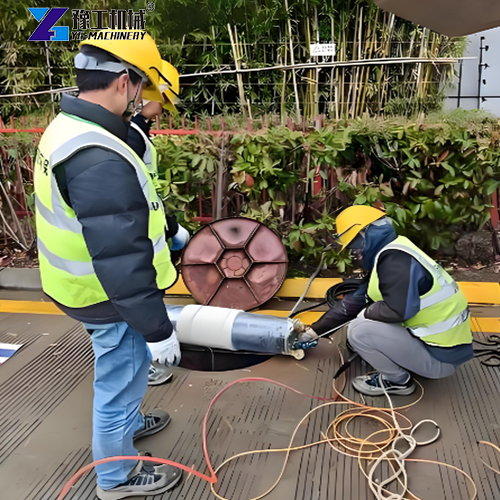
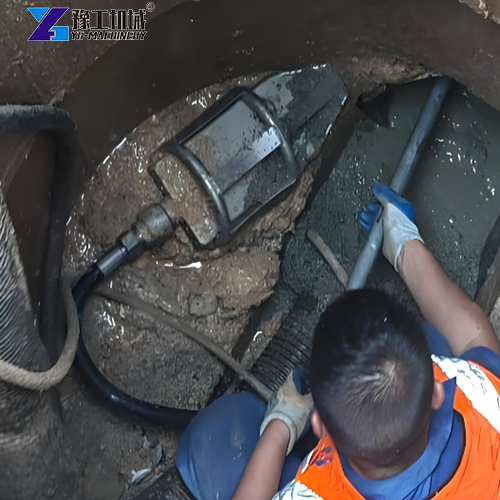
- Manhole and pump station desilting: Manholes and sewage pump stations are typical confined spaces. Accumulated sludge releases toxic gases such as hydrogen sulfide, making manual well entry extremely dangerous. Equipped with different working end attachments, the sludge cleaning machine remotely carries out sludge stirring, suction, and debris grabbing, fundamentally eliminating poisoning risks for field workers.
Traditional Desilting Methods VS Sludge Dredging Robot Solution
Drawbacks of traditional municipal desilting:
- Frequent casualty accidents: Confined spaces contain high levels of toxic and harmful gases, including hydrogen sulfide and methane. Poisoning and suffocation accidents from well entry work happen every year.
- Low construction efficiency & large impact: Long-term road closure and drainage shutdown are required, bringing severe disruption to city traffic and residents’ daily life.
- Incomplete sludge removal: Manual cleaning cannot reach deep pipeline sections and dead corners. Sediment builds up repeatedly, leading to short maintenance cycles and high overall costs.
Advantages of the dredging robot solution:
- Zero personnel entry into tanks: Operators finish all tasks on the ground via remote control, completely removing safety hazards from confined-space work.
- Non-stop operation: Desilting can proceed while pump systems keep running, without disrupting regular municipal drainage services.
- High cleaning efficiency: The tracked chassis fitted with professional working attachments travels at 3-15 m/min. Together with the pumping system, it supports continuous operation and greatly outperforms manual work.
- Sludge-free ground exposure: Sludge is extracted and conveyed in fully closed pipelines. Solid-liquid separation is completed at the rear-end unit with zero secondary pollution.
How Does Sludge Cleaning Robot Handle Complex Municipal Working Conditions?
Municipal pipe networks have complicated and changeable environments. sludge cleaning machine delivers stable, high-performance work with these core technologies:
Autonomous perception & navigation: Built-in LiDAR, vision cameras, and ultrasonic sensors allow precise detection of sediment positions and pipeline routes inside low-visibility sewage pipelines. It realizes autonomous obstacle avoidance and path planning.
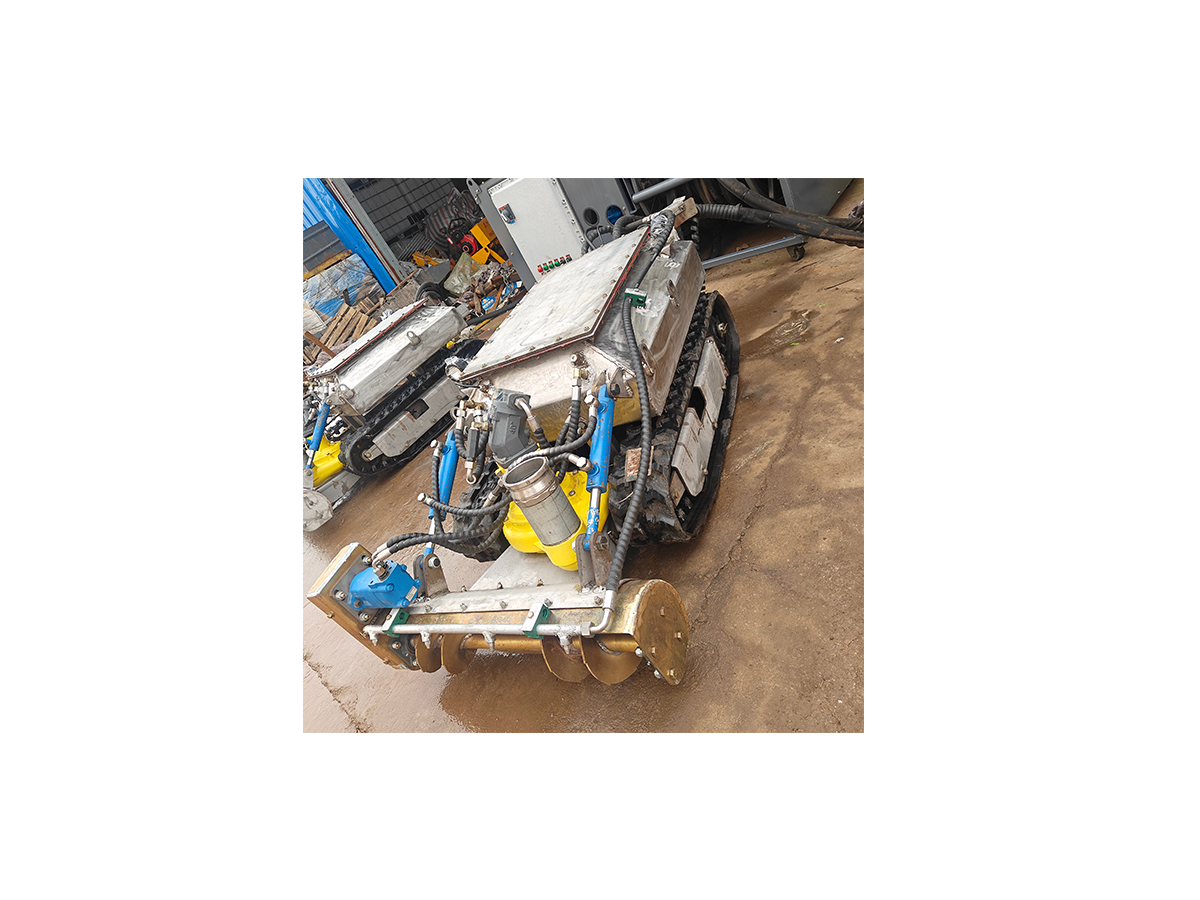
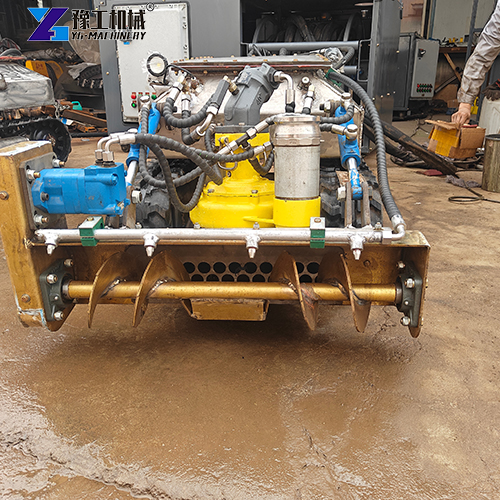
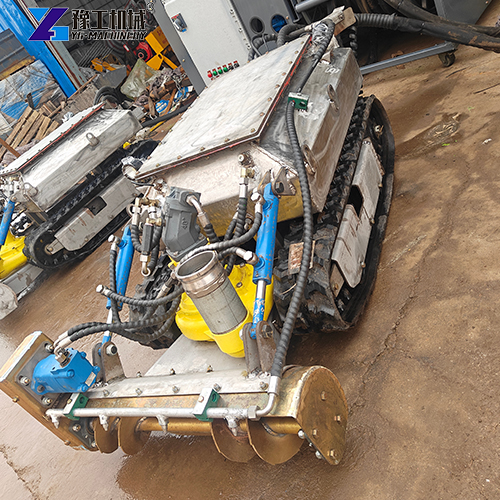
Versatile working attachments: Switch flexibly according to deposit types. High-pressure water jets scour hard sediment; auger heads break soft sludge; swing grab arms clear large-size waste; stirring-suction heads perform stirring and suction simultaneously. Multiple extraction modes are available: self-suction, pumping, pushing, and auger conveying. One single unit covers most municipal desilting conditions.
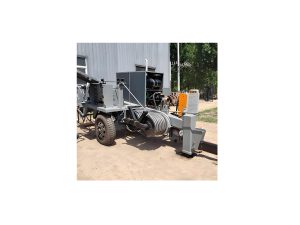
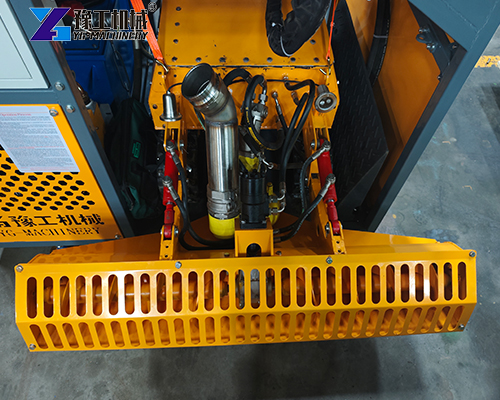
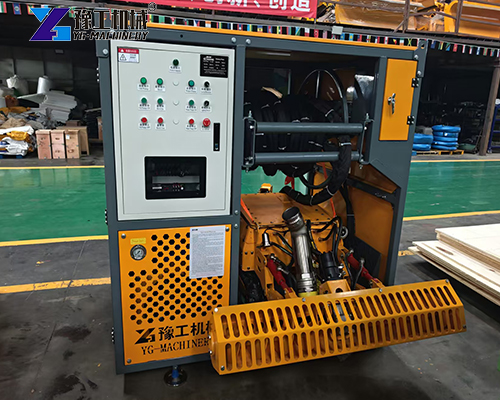
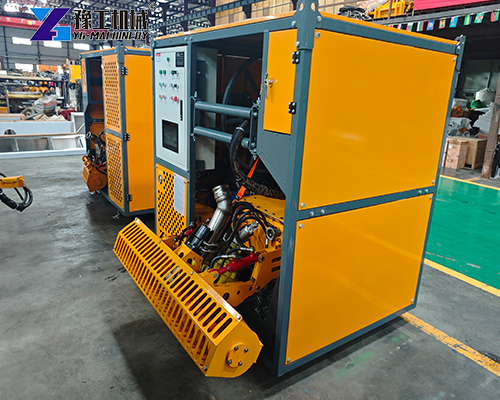
Complete system-oriented design: The whole set consists of four major modules: underwater working unit (tracked chassis plus working attachments), work station (power cabinet plus control cabinet), post-treatment unit, and pipeline assemblies. The power unit provides stable hydraulic output. The post-treatment module realizes solid-liquid separation and waste reduction. It forms a one-stop closed-loop workflow: front-end stirring-suction → mid-stream conveyance → rear-end disposal. Maximum diving depth ranges from 30 m to 90 m, covering municipal culverts and pump stations of various depths.
Dual Benefits of Efficiency & Cost: Why Sludge Dredging Robot Is Replacing Manual Work
Efficiency: A skilled diver can clean at most 10 cubic meters of sludge per day. A medium-size sludge dredging robot can finish 50-80 cubic meters within one day, 5-8 times faster than manual labor. For a 3-km municipal drainage pipeline, 7-8 workers need one full week for cleaning. Combined with high-pressure washing trucks, the robot can finish the job within a single day.
Cost-effectiveness: This is only the efficiency gap. More importantly, traditional desilting requires system shutdown and tank draining, often causing economic losses of hundreds of thousands. In contrast, a sludge cleaning robot can dive and operate while systems remain fully functional, with no service interruption.
Thanks to these dual advantages in efficiency and economy, it has become standard-issue equipment for an increasing number of sewage treatment plants, pump stations, and pipe-network maintenance departments.
Contact YG
If your municipal projects face pipeline sediment buildup, manhole desilting, or pump-station maintenance challenges, feel free to contact the YG team for sludge dredging robot model selection plans and quotations. Our technical team will recommend the most suitable model and working-attachment configuration based on your pipe sizes, sediment conditions, and site environment.