
Every year, workers lose their lives while entering storage tanks, settling basins, or sewers for cleaning. Hydrogen sulfide poisoning, methane explosions, and oxygen deprivation—these are not movie scenes but real tragedies that happen every day across the global industry. Data from the U.S. Bureau of Labor Statistics shows that the mortality rate for confined space work is more than five times that of ordinary construction. Yet these casualties are avoidable. A sludge tank cleaning robot can keep workers away from the tank opening and cut off the risk at its source. Today, more and more plant owners are realizing that it is better to spend a hundred thousand on a robot than to spend hundreds of thousands dealing with an accident—so that cleaning sludge will never again require a “person” to step into that dark steel shell.
Industrial Sludge Cleaning Robot Specifications
| Model | YG500 Electric | YG600 Electric | YG700 Electric | YG800 Electric | YG900 Electric | YG1200 Electric |
| Robot Dimensions | 1500×500×650 mm | 1500×600×650 mm | 1600×700×650 mm | 1600×850×700 mm | 1650×960×750 mm | 1900×1200×750 mm |
| Slurry Pump Model | 3E-100Z170 | 3E-100Z170 | 4E-250ZJ45 | 4E-250ZJ45 | 4E-250ZJ45 | 4C-200Z125 |
| Cleaning Width | 500 mm | 600 mm | 700 mm | 800 mm | 900 mm | 1200 mm |
| Track Speed | 3–15 m/min | 3–15 m/min | 3–15 m/min | 3–15 m/min | 3–15 m/min | 3–15 m/min |
| Robot Weight | — | — | — | — | — | 500 kg |
| Pump Inlet Size | 3 inch | 3 inch | 4 inch | 4 inch | 4 inch | 5 inch |
| Pump Flow Rate | 100 m³/h | 100 m³/h | 160 m³/h | 160 m³/h | 200 m³/h | 200 m³/h |
| Pump Head | 0–30 m | 0–30 m | 0–25 m | 0–25 m | 0–25 m | 0–25 m |
| Hydraulic Station Dimensions | 2200×1200×1700 mm | 2200×1200×1700 mm | 2200×1200×1700 mm | 2200×1200×1700 mm | 2200×1200×1700 mm | 2120×1240×1200 mm |
| Main Motor Power | 18 kW | 18 kW | 22 kW | 22 kW | 22 kW | 45 kW |
| Hydraulic System Pressure | 0–16 MPa | 0–16 MPa | 0–16 MPa | 0–16 MPa | 0–16 MPa | 0–16 MPa |
| Max Particle Size | 15 mm | 15 mm | 40 mm | 40 mm | 50 mm | 60 mm |
| Winch Speed | 0–10 r/min | 0–10 r/min | 0–10 r/min | 0–10 r/min | 0–10 r/min | 0–10 r/min |
| Standard Hydraulic Hose Length | 50 m | 50 m | 50 m | 50 m | 50 m | 50 m |
| Control System | Wireless Remote Control | Wireless Remote Control | Wireless Remote Control | Wireless Remote Control | Wireless Remote Control | Wireless Remote Control |
| Lighting System | 2× Underwater LED Lights | 2× Underwater LED Lights | 2× Underwater LED Lights | 2× Underwater LED Lights | 2× Underwater LED Lights | 2× Underwater LED Lights |
What is a Sludge Tank Cleaning Robot?
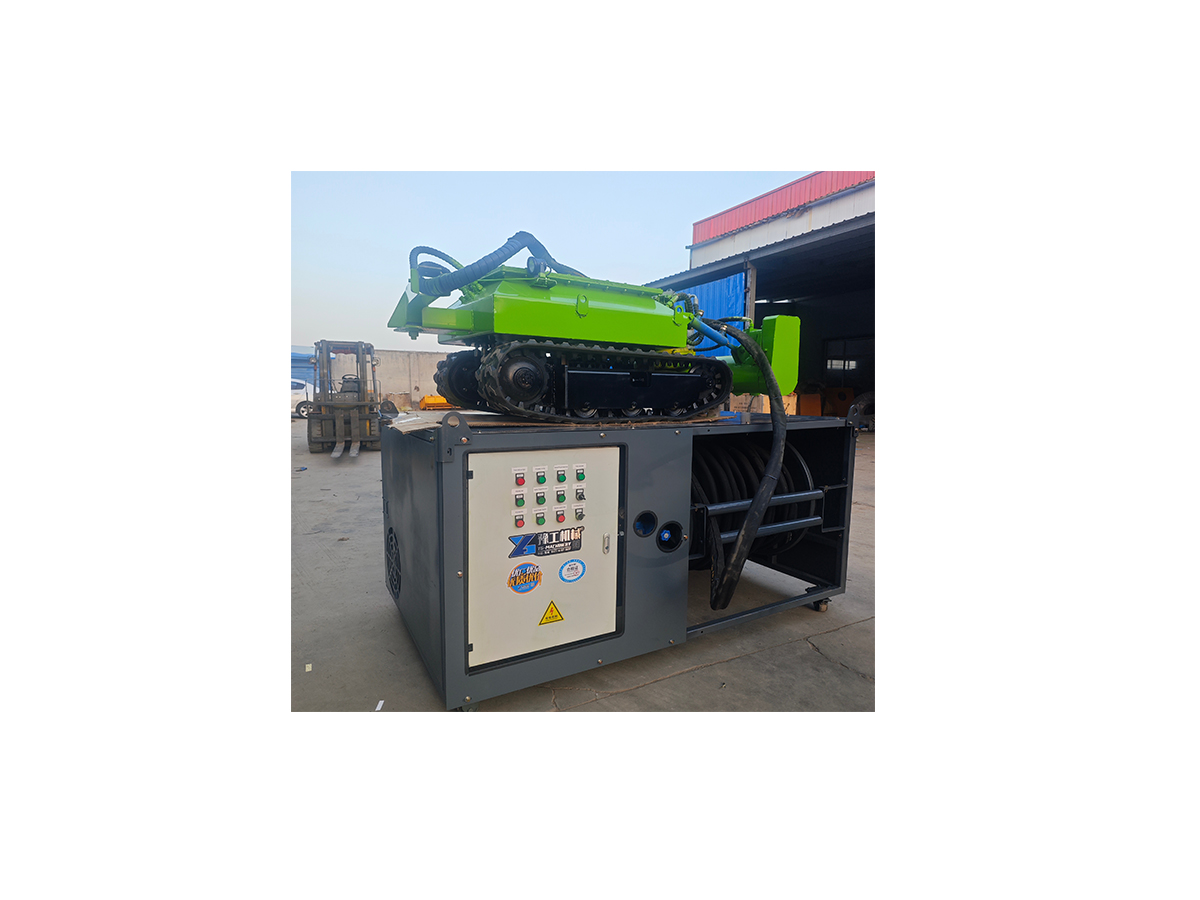
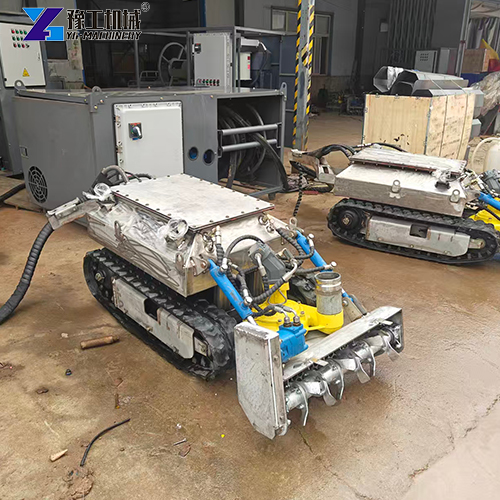
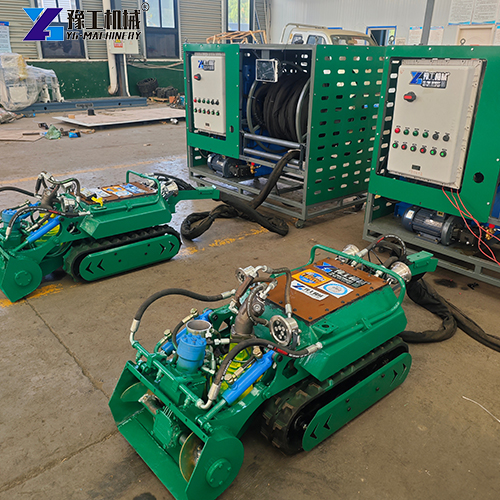
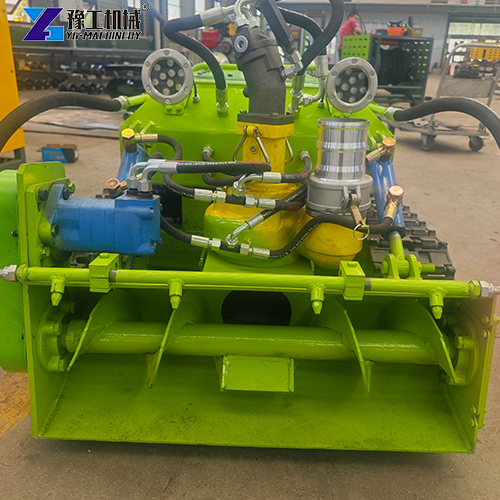
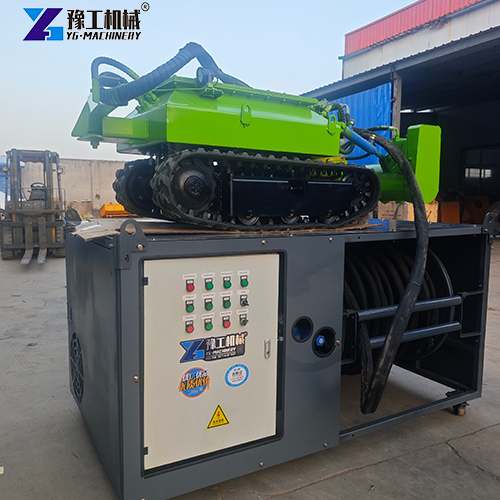
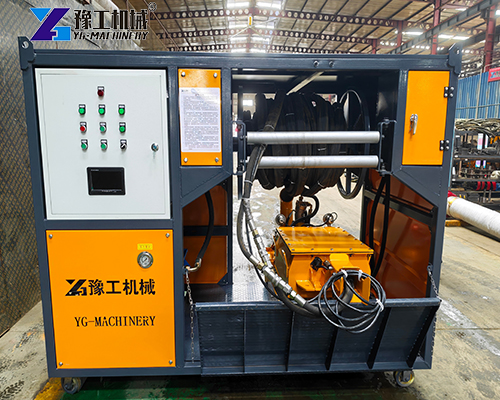
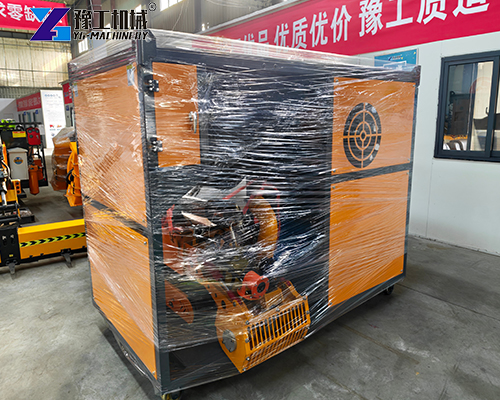
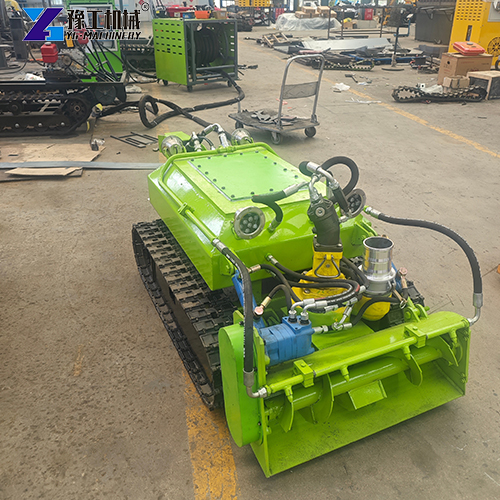
A standard industrial sludge cleaning robot is not a single machine but a complete system made up of an underwater crawler, a hydraulic power station, a control cabinet, hydraulic hoses, and sludge discharge pipes. During operation, the robot is lowered into the tank through the manhole, and the operator controls its movement, steering, and work from the ground or a control room using a wireless remote.
The working head on the robot (such as a suction cutter, spiral auger, or high-pressure water jet) first breaks up, cuts, and crushes hardened sludge, then extracts the slurry through a self-priming pump or screw conveyor, sending it via pipeline to downstream treatment equipment for dewatering, sorting, or resource recovery. Depending on the model, these robots can operate at depths of 30 to 90 meters, handle particles from 15 to 60 mm in size, travel at 3 to 15 m/min, and deliver pumping flow rates up to 200 m³/h. Whether it is a narrow inspection pit or a wide industrial settling tank, there is a suitable tank cleaning robot model available.
Why Is Industrial Sludge Cleaning Rapidly Replacing Manual Entry?
The driving forces behind this change are not just humanitarian concerns but also solid economic and regulatory pressures.
First, zero safety risk. As long as no one enters the tank, the risks of poisoning, suffocation, drowning, and rescue-related injuries are completely eliminated. An industrial sludge cleaning robot can easily enter environments with methane concentrations above the limit without any need for ventilation or gas monitoring preparation.
Second, double the efficiency. Manual cleaning is limited by physical strength, shifts, and weather, often taking days or even weeks. A robot can work 24 hours a day without being affected by high or low temperatures inside the tank. Real cases show that after adopting robots, the cleaning time for the same tank is reduced by 70%, and overall efficiency increases by more than three times.
Third, easier compliance. Regulations on confined space work are getting stricter in Europe, the US, and the Middle East, with fines often reaching tens of thousands of dollars. By using robotic tank cleaning equipment, companies can show regulators a “zero man-entry” record, greatly reducing legal and insurance risks.
How Does a Sludge Tank Cleaning Robot Operate in a “Pitch-Black” Tank?
Many people wonder: with no light inside the tank, how does the operator on the ground know where the robot is going? The answer lies in a multi-sensor observation system.
Every sludge tank cleaning robot comes standard with two high-brightness underwater LED lights and a high-definition camera, with real-time video transmitted to the display screen on the control console. The operator moves the joystick just like playing a video game, precisely controlling forward/backward movement, turning, and the angle of the working arm. Higher-spec models are also equipped with optional LiDAR and ultrasonic obstacle avoidance sensors, so even when suspended sediment makes visibility extremely low, the robot can plan its own path and avoid internal pipes or agitator obstructions. Some models even include an inertial navigation system, allowing them to “blindly” navigate in completely murky water while mapping the cleaned areas to ensure no corners are missed.
Suction Vs. Auger: How to Choose the Right Digging Mechanism for Different Sludge Tank Cleaning Robots?
The physical properties of tank bottom deposits vary greatly—some are thin activated sludge, some are hardened oil sludge, and others contain stones, cotton yarn, or plastic scraps. Choosing the wrong digging mechanism may cause the robot to spin idle or get stuck. Currently, mainstream robotic tank cleaning equipment options offer two basic extraction methods:
- Suction type (pump suction): uses a centrifugal pump to directly draw slurry. It is suitable for thin sludge with low solid content and good fluidity. Its advantages are simple structure and long conveying distance. For applications with strict particle size requirements (e.g., ≤15 mm), the YG500/600 series are typical choices.
- Auger type (screw conveyor): uses rotating spiral blades to scrape high-viscosity, large-particle deposits and push them toward the pump inlet or directly out of the tank. This structure is not afraid of tangling and can handle hard lumps up to 60 mm, making it more suitable for chemical heavy-oil sludge or riverbed sediment. The YG1200 model, for example, uses a high-torque auger design with a cleaning width of 1200 mm.
In fact, many robotic tank cleaning equipment units offer quickly interchangeable working heads, allowing users to switch according to daily conditions—one machine for multiple uses, greatly reducing equipment idle time.
How Much Money Can a Sludge Tank Cleaning Robot Actually Save?
Investing in a sludge tank cleaning robot may seem costly, but the payback period is often surprisingly short. Let us take a medium-sized chemical settling tank (requiring cleaning four times a year) as an example:
- Direct labor cost: The traditional method requires a team of 6 people, including attendants and rescue personnel, with a daily wage of $300 per person. One cleaning takes 5 days, so labor costs about $9,000. With the robot, only 2 operators are needed, and the job is done in 3 days, costing only $1,800 in labor—saving $7,200 per cleaning.
- Production loss: The traditional method shuts down the tank for 7 days (including preparation and recovery). If the tank produces $10,000 worth of output per day, that is a loss of $70,000. The robot compresses downtime to 3 days, saving $40,000.
- Safety and insurance: After adopting the robot, companies can apply to insurers for lower workers’ compensation premiums, saving about $5,000 per year.
- Waste disposal: The slurry extracted by the robot has a more stable concentration, which helps dewatering and reduces the number of transport trips, saving another $3,000 annually.
Taken together, a single tank can save over $200,000 per year, while the purchase cost of a medium-sized robot is typically in the range of $100,000–$150,000, meaning the investment is recovered in just six months. This does not even include the hidden brand value from avoiding major casualty incidents.
Which Industries Already Rely Heavily on Tank Cleaning Robots?
Today, robotic tank cleaning equipment has found mature applications in the following fields:
- Municipal engineering: Cleaning urban drainage pipelines, pump station sumps, and inspection pits—completely replacing manual entry and eliminating the risk of hydrogen sulfide poisoning.
- Water conservancy and environmental protection: Ecological dredging of rivers and lakes, used in projects like Taihu Lake and Dianchi Lake to precisely remove nutrient-rich sediment without harming the aquatic ecosystem.
- Wastewater treatment plants: Regular cleaning of grit chambers, aeration tanks, and secondary clarifiers to ensure stable biological treatment and reduce clogging of sludge discharge pumps.
For different needs, YG also offers optional explosion-proof motors, high-pressure water pumps, enhanced external cameras, and both electric and diesel versions are available—fully meeting the power conditions of different job sites.
Contact YG
Every tank differs in diameter, depth, medium, and deposit characteristics. We understand that a one-size-fits-all selection cannot deliver the best results. YG Machinery offers six standard models from YG500 to YG1200, covering cleaning widths from 500 to 1200 mm, pumping capacities from 100 to 200 m³/h, and a standard hydraulic hose length of 50 meters, with custom extension available.
Whether you are dealing with a municipal sewage manhole or a large-diameter water diversion culvert, we can recommend the most suitable industrial sludge cleaning robot configuration for you, and provide operator training and after-sales technical support.
It is time to say goodbye to the old era of “man-entry” tank cleaning. Contact YG today for a free selection consultation and return-on-investment analysis. Let us work together to protect every worker’s life and improve your operational efficiency.