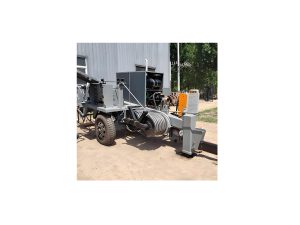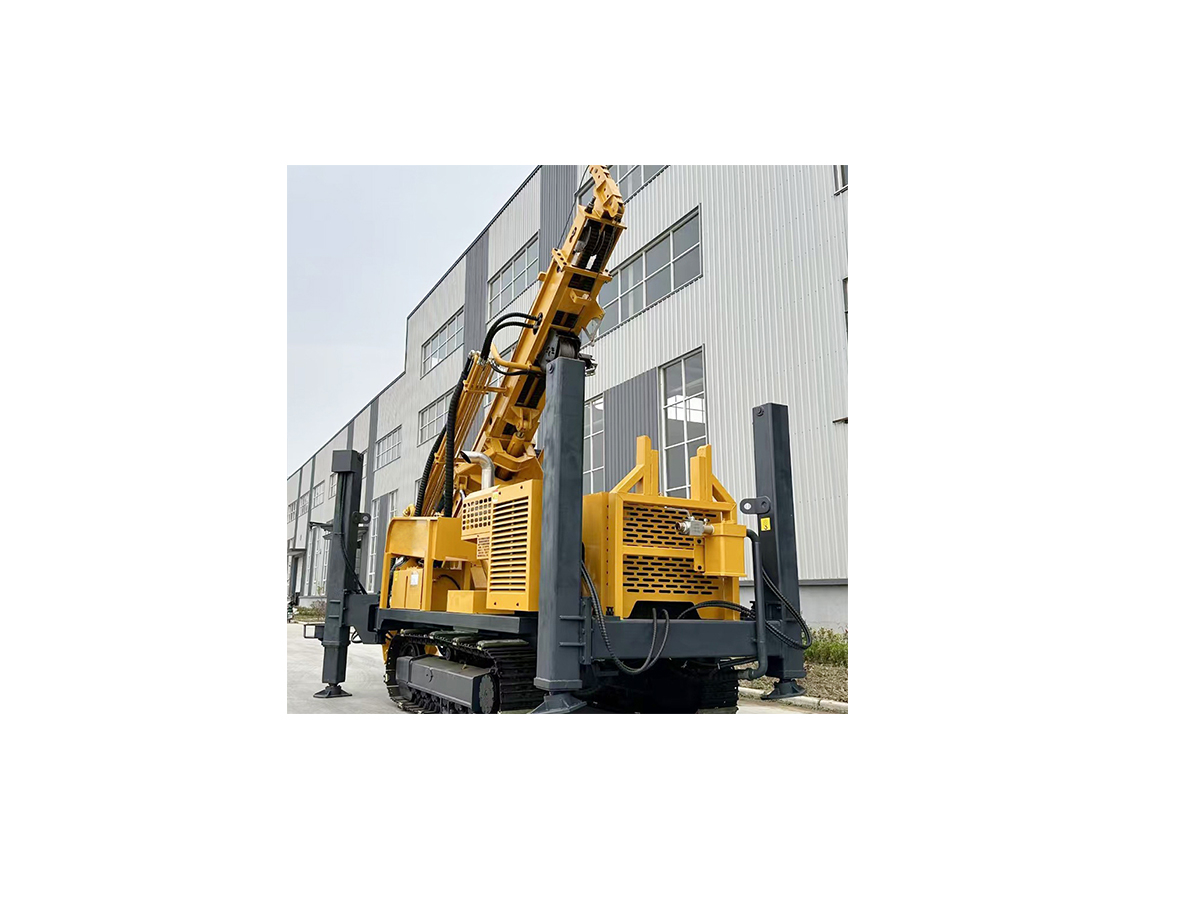

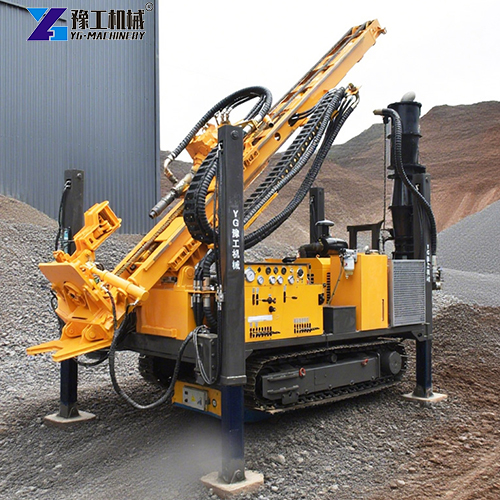
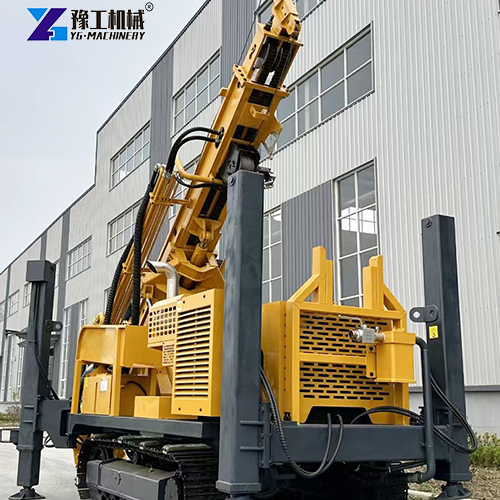
Global mineral resources demand keeps growing, infrastructure investment continues to rise, and the drilling industry is facing unprecedented opportunities. At the same time, environmental regulations are getting stricter, labor costs keep going up, and the industry urgently needs efficient, low-pollution, and labor-saving drilling equipment. The RC boring machine is born from this trend – it replaces mud with compressed air, replaces heavy manual work with automated hydraulic systems, and replaces open sampling with closed-loop sampling, leading traditional equipment in efficiency, environmental protection, and intelligence.
YG RC Boring Machine Popular Models Specifications
| Parameter | YGRC-400 | YGRC-500 |
| Max drilling depth | 400m | 500m |
| Drilling diameter | 115–305mm | 115–305mm |
| Working air pressure | 1.05–3 MPa | 1.05–3 MPa |
| Air consumption | 16–42 m³/min | 16–42 m³/min |
| Drill pipe length | 3m | 3m |
| Recommended pipe diameter | 89/108/127mm | 89/108/127mm |
| Axial pressure | 5T | 7T |
| Lifting force | 12T | 15T |
| Fast lifting speed | 14.5 m/min | 14.5 m/min |
| Fast feeding speed | 21 m/min | 21 m/min |
| Max rotary torque | 4000–5700 Nm | 5000–8000 Nm |
| Max rotary speed | 0–120 / 0–150 r/min | 0–120 / 0–150 r/min |
| Auxiliary winch lifting force | 20T | 20T |
| Drilling efficiency | 10–25 m/h | 10–25 m/h |
| Driving speed | 2.5 km/h | 2.5 km/h |
| Uphill angle | 21° | 21° |
| Weight | 7T | 11T |
| Dimension | 6.8×2.1×2.8m | 6.8×2.1×2.8m |
| Power | — | Cummins 154kW |
| Optional accessories | Reverse circulation device, mud pump, generator, foam pump | Reverse circulation device, mud pump, generator, foam pump |
5 Major Pain Points of Traditional Drilling, One-Stop Solutions by Reverse Circulation Drill Rig
Traditional geological drilling has long faced five major problems, and the reverse circulation drill rig solves each one with its reverse circulation technology:
• Discontinuous sampling, poor representativeness: Traditional core drilling requires pulling out the rod for each core sample, leaving large gaps and risking sample loss. The RC drilling machine continuously transports cuttings through the inner tube of the dual-wall drill pipe, covering every depth layer completely, and samples can be sent directly to the lab for analysis.
• Slow drilling speed, low efficiency: Traditional methods require frequent rod trips, so actual drilling time is low. The RC boring machine combines hydraulic top-drive rotation with a pneumatic DTH hammer, reaching 10–25m/h drilling efficiency, greatly shortening project timelines.
• Severe dust pollution: Traditional dry drilling generates a lot of rock dust at the worksite. The YG RC boring machine comes with a dust collector that effectively captures drilling dust. In addition, the air pre-filter removes over 90% of incoming dust and automatically discharges it, making for truly green operation.
• High labor intensity and safety risks: Manual pipe handling is time-consuming and risky – fingers get pinched, pipes can fall. The YG rig features a pipe handler + hydraulic wrench combo for safe and fast pipe connections. Full hydraulic drive greatly reduces manual labor.
• Poor adaptability, limited working conditions: Traditional rigs struggle to switch between soft layers and hard rock. The RC boring machine works on various formations, including loose layers and bedrock, using compressed air DTH drilling – one rig covers most geological conditions in exploration.
RC Boring Machine Structure Breakdown: Mast, Rotary Head, Hydraulic System
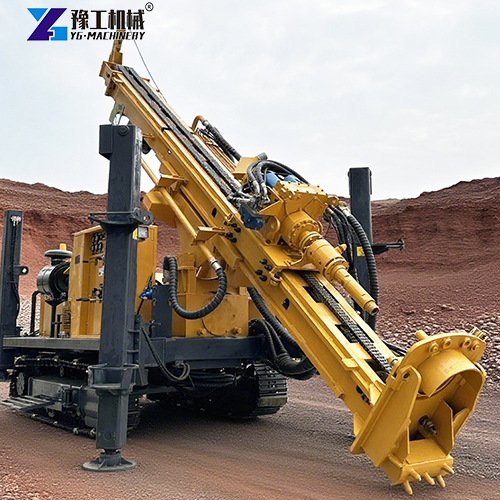
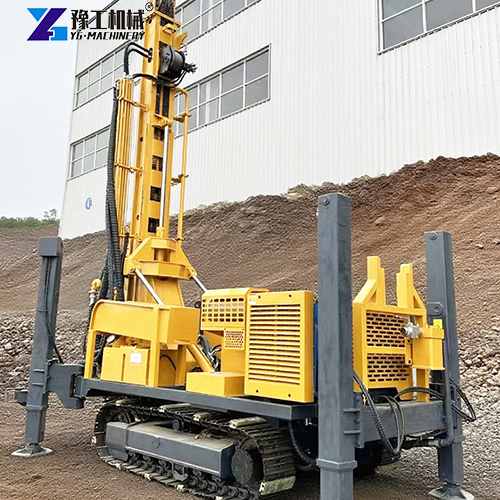
A complete RC drilling machine consists of the following core systems working together:
Mast System
The drill mast uses high-strength steel construction, with mast lifting and compensation fully controlled by the hydraulic system. During operation, the mast contacts the ground through compensation cylinder extension, significantly improving rigidity and ensuring stability. A unique drill pipe centering device, assisted by a level gauge, ensures accurate hole alignment – the centering device opens and closes smoothly, and the modular clamp plates have an adjustable inner diameter to perfectly match the drill pipe. The compensation-type slide plate also protects drill pipe threads, extending pipe service life.
Rotary Head System
It uses a hydraulic top-drive rotation system, with max rotary torque of 4000–8000 Nm (depending on model) and infinitely variable speed from 0–150 r/min. The rotary head carries a pneumatic DTH hammer that drives tungsten carbide bits to break hard rock. The air system includes a special lubricator that effectively extends the hammer’s service life. The roller slide track is wear-resistant and long-lasting.
Hydraulic System
All rig actions – mast lifting and compensation, pipe handling, rotation and feed, outriggers, winch, and travel – are driven by the hydraulic system, greatly reducing labor intensity. Fast lifting speed is 14.5m/min, fast feeding speed is 21m/min, axial pressure is 5–7T, and lifting force is 12–15T, meeting feed and pullout needs for various depths.
Reverse Circulation Drilling Rig for Sale – Wear Parts List
Knowing the wear parts and replacement intervals is key to equipment maintenance. Here are the main wear parts for a reverse circulation drilling rig for sale:
| Wear Part | Description | Recommended Replacement Interval |
| Tungsten carbide bit | Directly breaks rock, wears fastest | About 200–500m in hard rock, varies by formation |
| DTH hammer | Drives the bit to impact and break rock | Regular maintenance; seals about 500–1000m |
| Drill pipe | Transmits torque and feed force; threads wear easily | Compensation slide protects threads; inspect every 1–2 years |
| Drill pipe seals | Ensure air and mud sealing | Check every 3–6 months; replace if deformed or leaking |
| Hammer cylinder/piston | Core moving parts of the hammer | Overhaul about every 1000–2000m |
| Hydraulic hoses & fittings | Transmit hydraulic power | Inspect yearly; replace if bulging or leaking |
| Air pre-filter element | Filters incoming dust | Auto-cleaning, no manual cleaning needed; replace element about yearly |
| Cyclone separator liner | Inner wall of sample splitting channel | Inspect every 1–2 years depending on usage |
| Roller slide track | Mast guiding and sliding | Wear-resistant; inspect every 2–3 years |
Maintenance Tip: In hard rock conditions, bit and hammer replacement frequency increases significantly. Keep sufficient spare parts on site to avoid downtime waiting for components. YG provides genuine parts and technical support.
FAQs About Reverse Circulation Drill Rig
Q: How are cuttings samples collected in reverse circulation drilling?
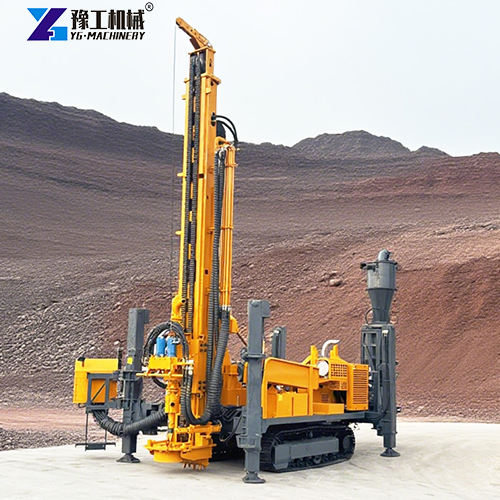
During drilling, compressed air is blown down through the dual-wall drill pipe to the bottom. The pressure difference forces cuttings upward through the inner tube to the surface, then through a hose to the cyclone separator for sample splitting. Finally, the cuttings fall from the bottom opening into sample bags. The bags are labeled with location and depth and can be sent directly to the lab – no manual handling needed.
Q: How to choose drill pipe size?
YG series supports three diameters: 89mm, 108mm, and 127mm, with a 3m single length. For shallower exploration (200–400m), 89mm pipe works fine. For medium depth (400–700m), 108mm is recommended. For ultra-deep holes (700m+), use 127mm pipe to ensure rigidity and cuttings removal efficiency. The final choice should also consider formation conditions.
Q: Air consumption is 16–42 m³/min – what air compressor should match?
For shallow holes and soft formations, the lower range (16–20 m³/min) is enough. For deep holes or hard rock, high-pressure impact is needed, so air consumption should increase to 30–42 m³/min. It’s recommended to choose a compressor with 10–15% extra capacity to maintain stable drilling efficiency.
Q: What are the rig’s travel and climbing capabilities?
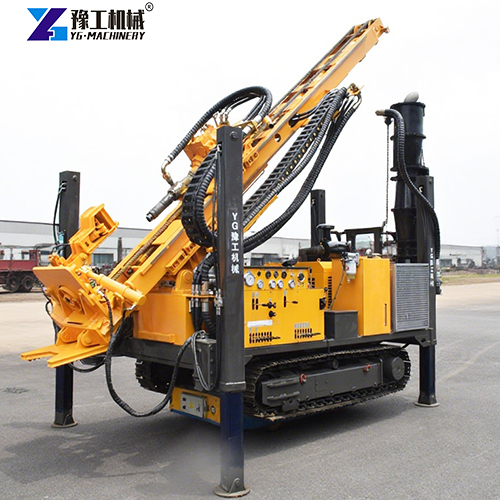
The YGRC-400/500 has a travel speed of 2.5 km/h and a 21° climbing angle, sufficient for most field exploration site moves. For steep slopes or complex terrain, inspect the route in advance or use a flatbed trailer for transport.
Q: Besides compressed air DTH drilling, does it support other methods?
Yes. The YG series comes standard with reverse circulation DTH drilling, and can also be equipped with a mud pump for mud drilling – suitable for loose formations or complex ground that needs wall support. One rig covers more working conditions.
Contact YG
If you’re looking for a reliable reverse circulation drilling rig for sale, contact the YG team for selection advice and pricing. The YG RC boring machine covers the full 200m–1200m depth range, with optional accessories including a reverse circulation device, mud pump, generator, and more – providing efficient, green, and intelligent one-stop drilling solutions for geological exploration and mineral resource development.