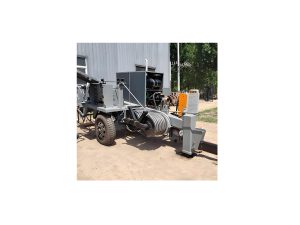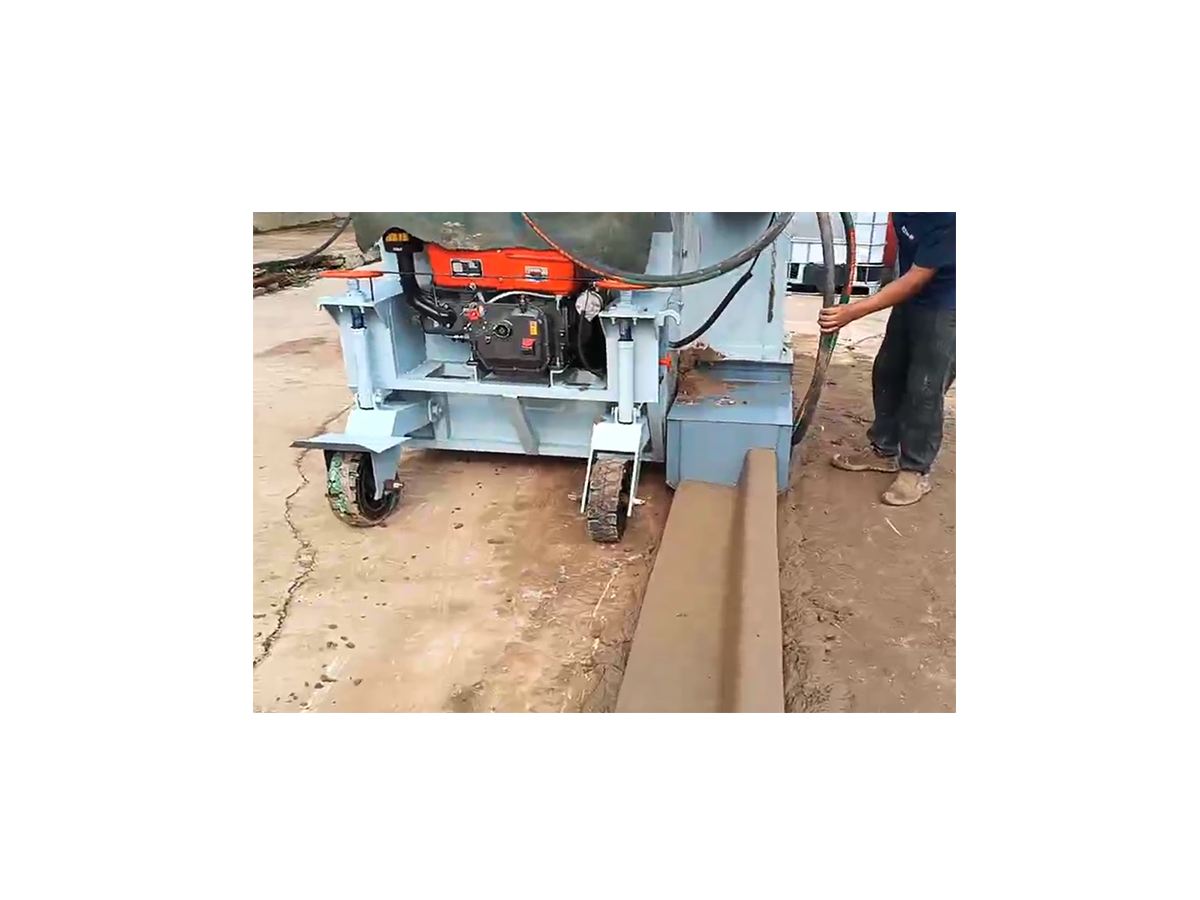

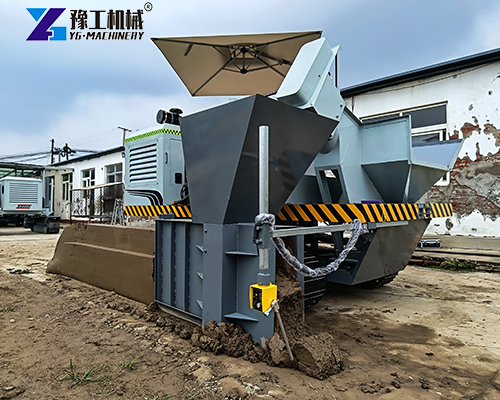
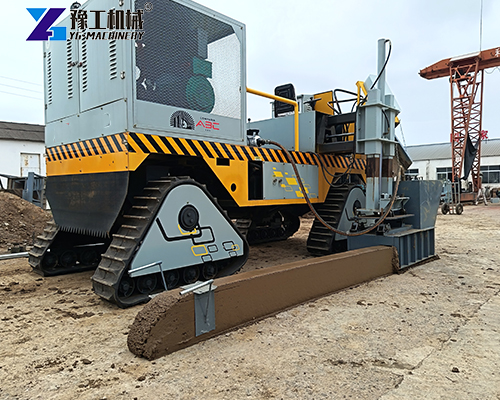
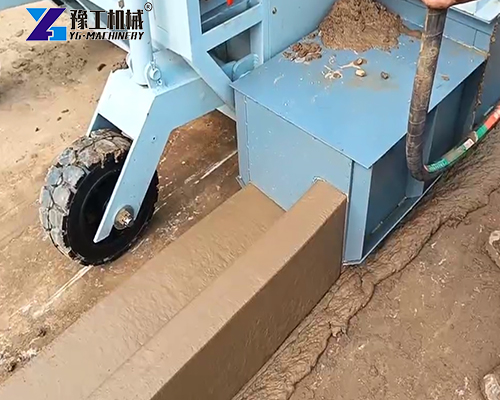
In curb construction, “precast installation” and “cast-in-place forming” are two completely different approaches. Precast curbs must be produced in a factory, then transported to the site for assembly – many steps, high waste, and poor line control. In contrast, a curb laying machine slipform curb machine pours and forms directly on site in one pass – no precasting, no transport, no assembly. Concrete goes from the mixer truck straight into the machine, and finished curbs come out the other end. One kerb paver machine production line can lay hundreds to over a thousand meters per day, with a maximum molding height of 1100 mm.
Slipform Kerb Machine Parameters
| Model | YG20 | YG30 | |
| Length*Width*Height | 5200*2400*2800mm | 5200*4100*2900mm | |
| Unladen mass | About 7000kg | The deadweight is greater, the crawler grip is raised, the construction stability is improved, the climbing and sliding formwork flatness, and the slope is free from interference from external factors | |
| Construction scope | Width ≤ 2000mm (road shoulder, ditch), height ≤ 600mm (kerbstone, curbstone) | Width ≤ 2000mm Height ≤ 1100mm | |
| Hopper volume | 1m³ | 0.5m³ | |
| engine | Rated power | 65kw | Inline 4-cylinder turbocharged diesel engine (for high altitude areas, increased power output) |
| Operating voltage | AC380v | ||
| Startup form | Electric start | ||
| Rated speed | 1500rpm | ||
| Heat dissipation form | Water cooling | ||
| Molding method | High-frequency vibrator (suitable for plastic concrete) | Formed shoulders and side ditches have higher strength | |
| Attached vibration motor (suitable for dry, hard concrete) | Can be paved with curbstones and higher curbstone heights | ||
| Automatic leveling system (imported DLS, optional) | Leveling range ±40mm | Imported components, temperature compensation, overvoltage, and overcurrent protection | |
| Steering form | Dual automatic steering system (imported DLS, standard) | Imported components, temperature compensation, overvoltage, and overcurrent protection | |
| Manual steering wheel (hydraulic steering gear) | |||
| Minimum turning radius | 6800mm | ||
| Paving and transfer speed | 1m-10m/min | Frequency conversion speed regulation can achieve a wide range of stepless adjustment of paving and transfer speed | |
| Travel drive form | Full-time four-wheel drive | When the road slope is ≤5%, a fully loaded 15m3 tank truck can be used for construction, and the slipform machine connection construction can be realized. | |
| Screw feeder drive type | High torque hydraulic gerotor motor | Ensure the continuous feeding of concrete, the screw feeder will not be stuck by large stones, and the concrete will be mixed twice to improve the workability of the concrete. | |
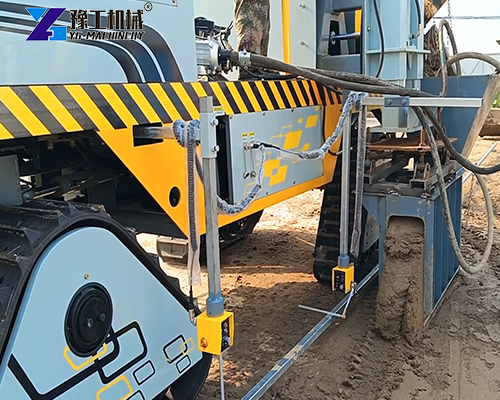
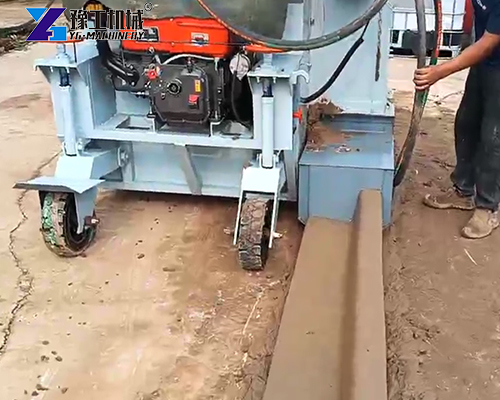
Slipform Cast-in-Place Curb vs. Precast Curb
- Construction speed: The extruded kerb machine slipform process achieves continuous paving at 1–10 m/min, with daily output up to 1000 meters. Precast curbs require factory production, curing (usually 7–28 days), transport to site, and manual assembly – a long overall cycle and low efficiency.
- Line quality: The kerb paver machine is equipped with automatic steering and leveling systems, producing straight lines and reducing bend deviation by 95%. Precast installation relies on manual string lines and piece-by-piece assembly, making line deviation and misalignment common.
- Structural integrity: Cast-in-place curbs are continuous monolithic structures, tightly bonded to the subgrade, with no joints and strong impact resistance. Precast blocks rely on mortar joints, which easily crack and leak water, leading to high maintenance costs later.
- Labor requirement: A slipform kerb machine on site needs only 1–2 operators to complete all steps. Precast methods require factory workers, truck drivers, site installers, and multiple other roles – heavy manpower input.
- Material waste: Cast-in-place uses concrete directly into the mold, with almost no material loss. Precast has losses at demolding, transport, cutting, and installation stages – significantly higher waste rates.
- Transport cost: Slipform uses bulk concrete delivered directly by mixer trucks – no finished products to transport. Precast curbs require many trucks to move them from factory to site, adding considerable transport expense.
- Schedule control: Cast-in-place is continuous and not limited by curing time, giving strong schedule control. Precast is bound by curing periods, making schedules less flexible.
- Application suitability: The curb laying machine cast-in-place solution is ideal for long-distance road projects, steep slopes, and special cross-sections. Precast is better for short repairs or maintenance jobs where precast stock already exists.
Factors Affecting the Price of a Slipform Kerb Machine
- Chassis type: Wheeled YG20 and crawler YG30 have different prices. The crawler model has greater deadweight and higher molding height (up to 1100mm), so it costs more.
- Molding height requirement: If you only need curbs up to 600mm, the wheeled model is enough. For barriers up to 1100mm, you must choose crawler YG30, which costs more.
- Custom mold quantity and complexity: Standard cross-section molds cost less. Custom molds for special shapes, curves, or decorative textures require more design and machining, increasing cost.
- Automatic leveling system: Manual control is standard; opting for the imported DLS automatic leveling system adds cost but greatly improves elevation accuracy.
- Vibration method choice: High-frequency vibrators and attached vibration motors suit different concrete mixes – selecting different vibration options affects price.
- Order quantity: Bulk orders get better pricing; single-unit and multi-unit prices differ.
- Shipping and after-sales: International freight, destination country duties, and whether on-site commissioning and training are included all affect the final delivered price.
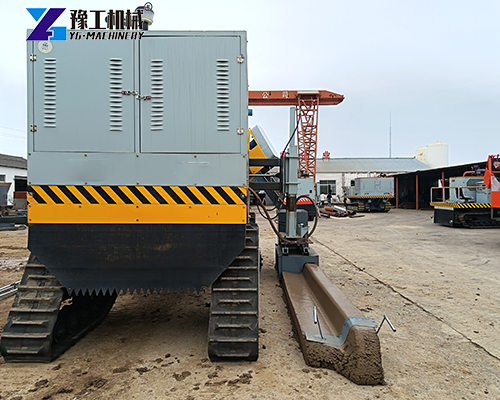
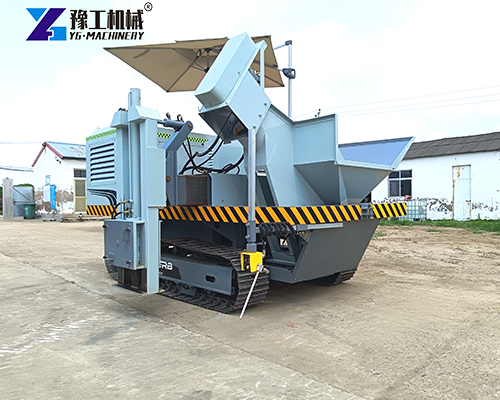
Complete Construction Process for Casting Curbs On-Site with a Curb Laying Machine
Step 1: Set the reference line
Set a steel wire rope or aluminum guide rail reference line along the designed curb alignment. This serves as the guide for the automatic steering and leveling systems. The accuracy of the reference line directly determines the final line quality.
Step 2: Prepare the concrete
Choose the right concrete mix for your machine – YG20 (wheeled) works with plastic concrete (higher slump) using high-frequency vibrators; YG30 (crawler) works with dry-hard concrete using attached vibration motors. Concrete is produced at the batching plant and delivered to site by mixer trucks.
Step 3: Connect and feed
Position the kerb paver machine, then the mixer truck discharges concrete directly into the hopper (YG20: 1 m³, YG30: 0.5 m³). The screw feeder, driven by a high-torque hydraulic motor, continuously and evenly sends concrete into the forming mold. During conveying, the concrete is mixed a second time to improve workability.
Step 4: Slipform molding
The machine travels automatically along the reference line, and concrete is continuously extruded into the custom mold. The vibration system works simultaneously to ensure compaction density. Paving speed is steplessly adjustable from 1 to 10 m/min via a frequency converter.
Step 5: Automatic leveling and steering
The imported DLS dual automatic steering system precisely corrects deviation along the reference line, while the optional automatic leveling system monitors elevation in real time (leveling range ±40mm), ensuring straight alignment and consistent top elevation.
Step 6: Curing
After forming, cover the curbs with curing film or water-cure them. Once the cast-in-place concrete gains strength, it forms an integral structure with the subgrade – zero joints, far superior to precast assembly.
Curb Laying Machine Overseas Project Cases
Case 1: Qatar – Highway Curb Project
A highway expansion project in Qatar required tens of kilometers of curbs. The hot, dry climate made precast curing difficult and slow. The contractor chose the YG20 wheeled curb laying machine, using its full-time four-wheel drive to connect directly with a mixer truck on the prepared subgrade. The high-frequency vibrator suited the local plastic concrete mix, and the automatic steering system ensured straight lines over long distances. Average daily paving exceeded 800 meters, and the overall schedule was completed one-third earlier than planned.
Case 2: Brazil – Municipal Road and Drainage Ditch Formed Together
A municipal project in Brazil required a curb and side drainage ditch to be formed simultaneously, with an irregular combined cross-section. YG custom-made a special slipform kerb machine mold for the project, integrating both the curb and ditch profiles into one set of tooling. The YG30 crawler chassis handled Brazil’s soft soil conditions, and the attached vibration motor perfectly matched the dry-hard concrete mix. One pass formed both curb and ditch together, greatly improving efficiency, and the line quality received high praise from the client.
Contact YG
One curb laying machine – paving speed 1–10 m/min, forming width up to 2 meters, height up to 1.1 meters, hopper capacity 1 m³ (YG20), full-time 4WD or crawler drive. What do these numbers mean? It means you can easily complete over a thousand meters of high-quality curbs in a single day. YG provides a one-stop service – machine + molds + training. Call or email us, and our engineers will reply within 24 hours.