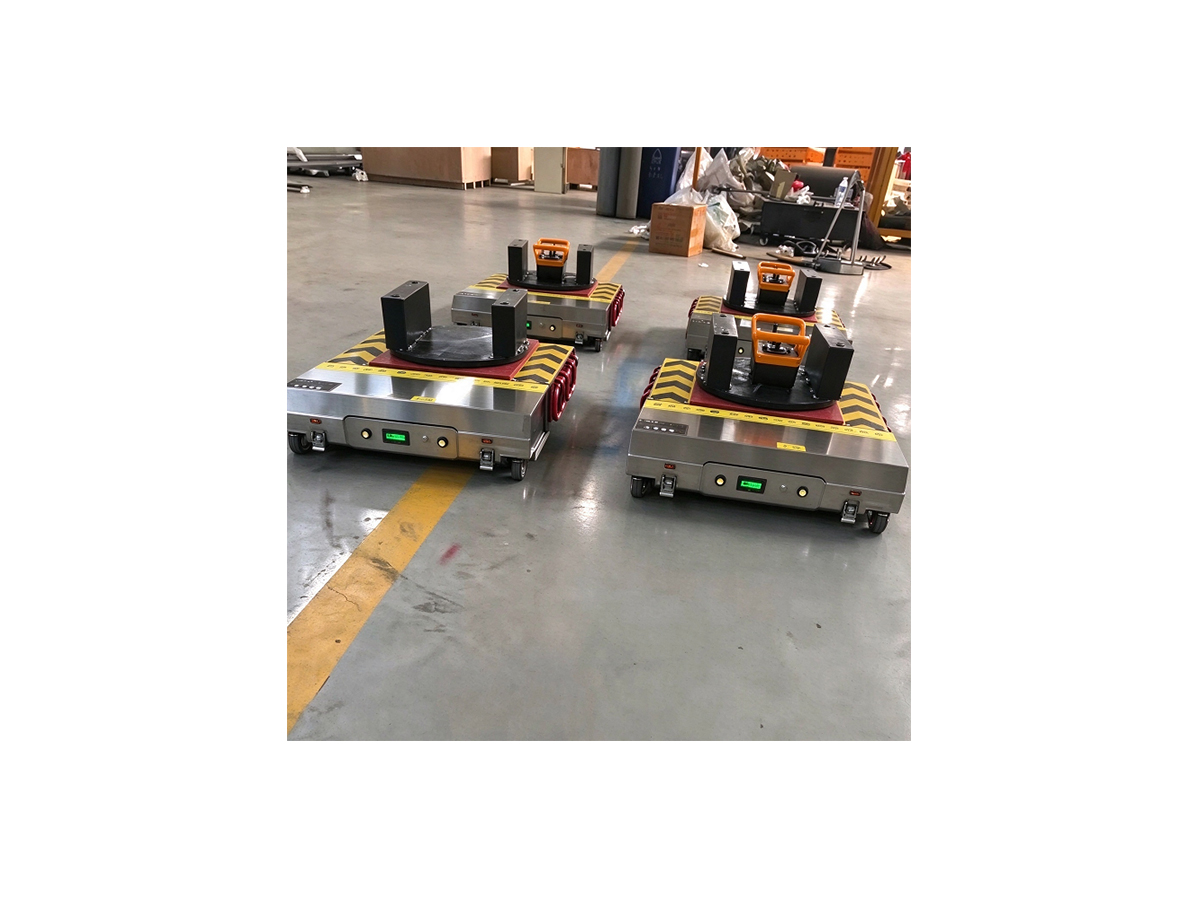

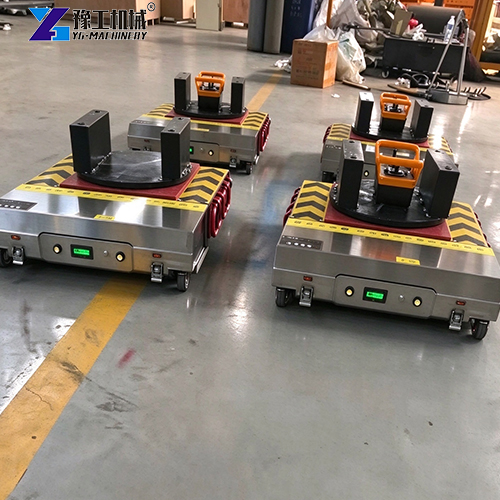
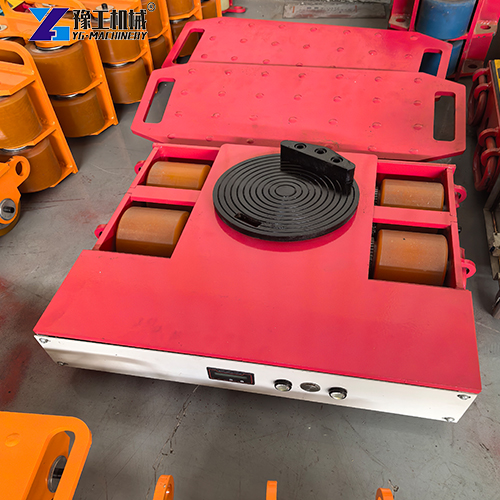
South Korea’s manufacturing industry demands precision in every procedure, from semiconductor wafer processing and shipbuilding to automobile assembly and energy infrastructure. When heavy production equipment needs to be moved inside these facilities, tolerance is measured in millimeters instead of meters. Our factory’s industrial machine skates have been successfully delivered to the South Korean market to solve exactly this challenge: safely, accurately, and efficiently move equipment weighing several tons up to dozens of tons within the compact space typical of South Korean industrial sites. This article details the product specifications that support these capabilities, customer pain points addressed by the equipment design, and real-world applications in core industrial sectors of South Korea.
Industrial Machine Skates Specifications — Hardware Supporting Performance
Before discussing applications, it is necessary to clarify the hard indicators of the equipment itself. Our industrial machine skates product line covers 7 load capacity grades from 10T to 60T, and every model shares the same core design: battery-powered, wireless remote control, modular configuration.
Key specifications defining platform capacity:
| Model | 10T | 20T | 25T | 30T | 40T | 50T | 60T |
| Motor | 500W x2 with brake 104, flange heavy-duty gearbox | 750W x2 with brake 104, flange heavy-duty gearbox | 1000W x2 with brake 104, flange heavy-duty gearbox | 1200W x2 with brake 120, flange heavy-duty gearbox | 1500W x2 with brake 120, flange heavy-duty gearbox | 2000W x2 with brake 120, flange heavy-duty gearbox | 3000W x2 with brake 120, flange heavy-duty gearbox |
| Controller | D2T80A dual driver | D2T80A dual driver | D2T100A dual driver | D2T100A dual driver | D2T200A dual driver | D2T200A dual driver | D2T220A dual driver |
| Remote control | C7 remote | C6/C7 remote or industrial remote | C7 remote | C7 remote | C6/C7 remote or industrial remote | C7 remote or industrial remote | C7 remote or industrial remote |
| Battery | 48V 30AH ternary lithium | 48V 60AH ternary lithium or LiFePO4 | 48V 60AH ternary lithium or LiFePO4 | 48V 60AH ternary lithium or LiFePO4 | 48V 120AH ternary lithium or LiFePO4 | 48V 120AH ternary lithium or LiFePO4 | 48V 120AH ternary lithium |
| Working current | 25A | 60A | 60A | 60A | 120A | 120A | 120A |
| Charging current | 54.6 | 54.6 | 54.6 | 54.6 | 54.6 | 54.6 | 54.6 |
| Drive wheels | 80×120×4, high-hardness fully imported polyurethane | 90×135×4, high-hardness fully imported polyurethane | 90×135×4, high-hardness fully imported polyurethane | 90×135×4, high-hardness fully imported polyurethane | 140×140×4, high-hardness fully imported polyurethane | 140×140×4, high-hardness fully imported polyurethane | 140×140×8, high-hardness fully imported polyurethane |
| Gear | Luomeng Titanium high-strength gear, 3-module | Luomeng Titanium high-strength gear, 3-module | Luomeng Titanium high-strength gear, 3-module | Luomeng Titanium high-strength gear, 3-module | Luomeng Titanium high-strength gear, 3-module | Luomeng Titanium high-strength gear, 3-module | Luomeng Titanium high-strength gear, 3-module |
| Steel plate | 10mm Q355 manganese steel | 10mm Q355 manganese steel | 12mm Q355 manganese steel | 12mm Q355 manganese steel | 16mm Q355 manganese steel | 16mm Q355 manganese steel | 16mm Q355 manganese steel |
| Towing capacity | 10T | 20T | 25T | 30T | 40T | 50T | 60T |
| Load capacity | 10T | 10T | 12.5T | 15T | 20T | 25T | 30T |
| Dimensions (L×W×H) | 500×550×145mm | 670×620×165mm | 670×635×165mm | 740×640×185mm | 810×800×182mm | 810×800×182mm | 1110×800×185mm |
| Turntable flange | 2900mm diameter | 2900mm diameter | 2900mm diameter | 2900mm diameter | 2900mm diameter | 2900mm diameter | 2900mm diameter |
| Travel speed | 2-10 m/min, adjustable | ||||||
| Continuous runtime | 2- 3 h | 3- 4 h | 3- 4 h | 3- 4 h | 4- 5 h | 4- 5 h | 4- 5 h |
In-Stock Models Ready to Ship – See What’s Available
Customer Pain Points: Heavy Load Moving Is Far More Than “Moving the Load”
Challenges for South Korean manufacturers in heavy equipment relocation are a set of interconnected issues, well beyond the basic requirement of moving weight from point A to point B.
1. Precise positioning in limited space. Factories in South Korea, especially semiconductor clean rooms, precision machining workshops, and aerospace component facilities, usually operate in multi-story buildings with narrow aisles and limited headroom. Precision equipment nearby is extremely sensitive to vibration. Positioning a 20-ton CNC machine tool with millimeter-level accuracy in such an environment is a completely different task compared with moving loads in open areas. Traditional rollers and forklifts cannot deliver this level of control.
2. Safety requirements under strict labor regulations. South Korea’s occupational safety standards require minimizing workers’ exposure to loads above certain weight thresholds. Manual pushing, pulling, or supporting heavy equipment, especially loads over 10 tons, is increasingly unacceptable under current regulations.
3. Rising labor costs make traditional methods unsustainable. Industrial wages in South Korea keep climbing. Assigning 4–6 workers to a single equipment relocation task is no longer economically feasible for most manufacturers. Repeated adjustments caused by poor positioning will further increase the total moving cost.
4. Risk of equipment damage from uncontrolled moving. High-value production equipment such as semiconductor processing modules, large injection molding machines, and precision grinders may suffer costly damage from vibration, impact, or uneven force during transit.
5. Adaptability to ramps and different ground surfaces. Many South Korean industrial sites include ramps between floors, outdoor loading zones with uneven ground, and transition areas between workshops and logistics yards. Equipment must move across these varied conditions without losing control or traction.
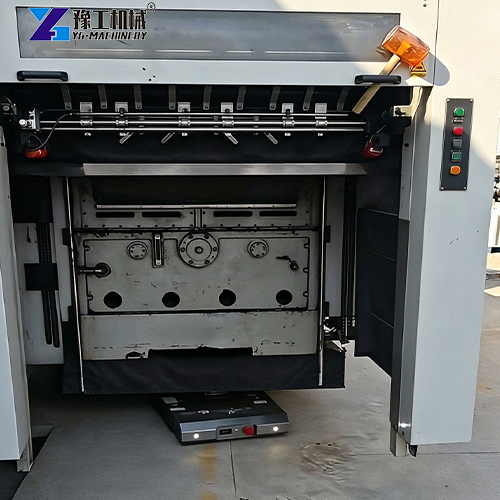
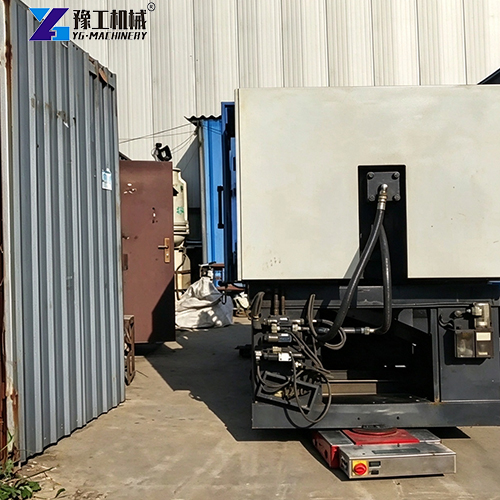
Solution: Electric Remote Control & Modular Configuration to Meet Site Requirements
Our factory’s industrial machine skates address all the above challenges through a combination of electric power, wireless control, and configurable hardware:
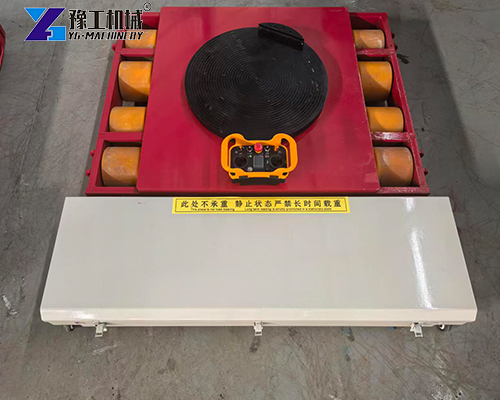
Single-operator remote control removes manual exposure risks. The industrial wireless remote controller allows one operator to manage all moving actions: forward, backward, steering, and stop. Effective control distance reaches 50 meters. Workers no longer need to stand beside multi-ton loads or push carts. This directly meets safety compliance requirements and cuts labor costs: one operator replaces a manual moving team of 4–6 people.
360° zero turning radius for precise positioning in tight spaces. Independent wheel drive enables the unit to rotate in place, move sideways, and align with target directions, without extra space for forward and backward movement. In South Korean semiconductor clean rooms or precision workshops where every centimeter of floor space is planned, this steering capability turns installation work from a logistics headache into a controllable, repeatable standard operation.
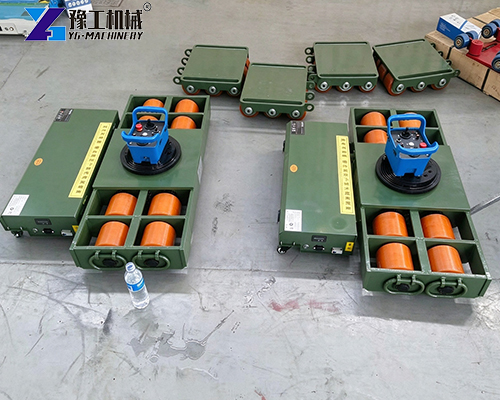
Modular setup fits any load shape. The system supports wireless synchronous linkage of multiple power units:
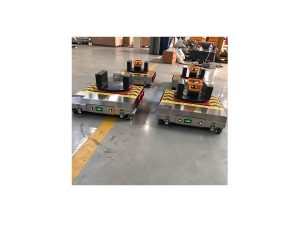
- 1 power unit + 2 auxiliary rollers (3-point support): Standard setup for most regular equipment moving — stable, flexible, and efficient
- 2 power units + 2 auxiliary rollers (4-point support): Suitable for equipment requiring maximum stability during positioning
- Synchronized operation of 3–4 power units: For oversized, extra-wide, or irregular-shaped loads requiring multi-point coordinated moving
This modular design means South Korean buyers do not need to purchase separate machines for different tasks. The same platform can be adapted by changing configurations.
Battery power supports full operation duration. Continuous runtime of 2–5 hours depending on model supports long moving jobs, with no refueling or power cord handling required. This is a major advantage in environments where exhaust emissions and cable routing are restricted.
Speak with Our Product Manager
Industrial Machine Skates In-Site Application: Heavy Production Equipment Delivery and Installation Relocation
The core use case for this batch delivered to South Korea is: after new production equipment arrives at the site, move it from the receiving area to its final installation position inside the production workshop. This is a common but critical step. When new CNC machines, presses, or processing modules arrive, they need to travel from receiving zones — usually outdoor platforms or ground-floor unloading areas — through the factory to final installation points on production lines.
Electric remote skates for moving heavy objects cover the full moving workflow:
- Unloading and initial positioning: Transfer equipment from transport vehicles onto the skate system. The remote controller allows operators fine adjustments during loading and alignment.
- Transit through the factory: Power units carry loads down aisles, around corners, and across ground transition zones.
- Precision installation and positioning: Upon reaching the target spot, the operator uses the remote for millimeter-level fine-tuning to align equipment with pre-marked floor positions and pipeline connections. The controlled braking system keeps loads stable during final alignment.
This workflow replaces the old method that required forklifts, manual rollers, multiple workers, and repeated adjustments, combining everything into one controlled operation completed by a single person.
Extended Applications in South Korean Local Industries
Besides core equipment installation scenarios, our industrial skates for moving heavy equipment are widely used across multiple key industrial sectors in South Korea:
- Shipbuilding. South Korean shipyards need to transport large steel segments and pre-assembled hull modules. The multi-unit synchronous setup of industrial machine skates can link 3–4 power units to move oversized components at controlled speed and direction, replacing hoisting solutions limited by weather and requiring large isolated working zones.
- Semiconductor & Electronics. Precision positioning capability makes the units suitable for equipment relocation around clean rooms, where vibration control and cleanliness protection are critical. Battery operation produces no exhaust, and polyurethane drive wheels protect sensitive flooring.
- Automotive Manufacturing. Stamping dies, welding jigs, and production line tooling require periodic relocation during production line reconfiguration. Remote operation allows these moves to be scheduled within maintenance windows without disrupting adjacent production lines.
- Energy Infrastructure. Positioning transformers and generators during power plant construction and maintenance benefits from the controlled movement and precise placement of industrial machine skates — especially in narrow power distribution rooms where cranes cannot access.
- Logistics & Warehousing. Distribution centers near ports use them to transfer heavy steel coils, molds, and oversized pallets between storage bays and loading zones, improving throughput and reducing reliance on forklifts.
Market Summary & Cooperation Outlook
The successful delivery of Industrial machine skates to South Korea proves the YG product platform can meet strict requirements of advanced industrial markets, where precision, safety, and operational efficiency are not optional extras but basic necessities. The combination of electric remote control, modular configuration, and robust hardware makes these units a practical solution for heavy moving scenarios where traditional methods fall short.
For global buyers — distributors, purchasing managers, and engineering contractors — evaluating machinery skates for sale, our full 10T–60T product range offers a proven, reliable platform. We provide configuration consulting based on your specific load requirements, site conditions, and working environments. Whether you need a single unit for regular moving or a multi-unit synchronous system for special heavy-duty tasks, our team can recommend the most suitable solution.
Contact us with your equipment weight, dimensions, ground conditions, and moving requirements to get a customized configuration plan.