
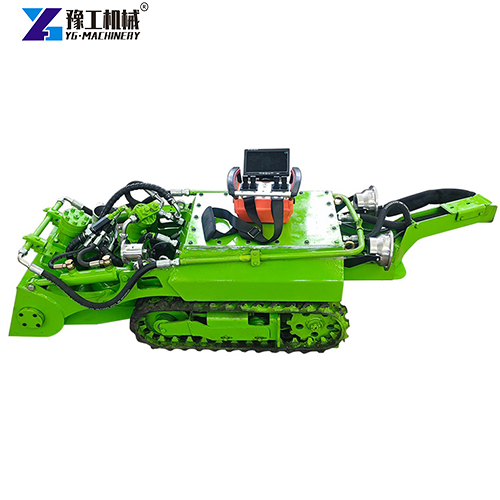
A major urban drainage trunk pipe buried ten meters deep is filled with toxic gas and sludge, making manual entry impossible. Chemical storage tanks several meters in diameter hold rock-hard sediment at the bottom; manual cleaning is not only dangerous but also forces production shutdowns for days. These once intractable headaches for operation and maintenance staff are now fully solved thanks to the arrival of the dredging robot. The YG series robotic tank cleaning equipment can advance into all kinds of harsh environments, just like “underwater tanks”. It thoroughly strips stubborn deposits via high-pressure water jet scouring, cutter head crushing, and powerful suction. As professional gear, they help more and more enterprises carry out safe sludge cleaning work with zero production halts, zero human entry, and zero direct contact.
Industrial Tank Cleaning Robot Parameters
| Model | YG500 Electric | YG600 Electric | YG700 Electric | YG800 Electric | YG900 Electric | YG1200 Electric |
| Robot Dimensions | 1500×500×650 mm | 1500×600×650 mm | 1600×700×650 mm | 1600×850×700 mm | 1650×960×750 mm | 1900×1200×750 mm |
| Slurry Pump Model | 3E-100Z170 | 3E-100Z170 | 4E-250ZJ45 | 4E-250ZJ45 | 4E-250ZJ45 | 4C-200Z125 |
| Cleaning Width | 500 mm | 600 mm | 700 mm | 800 mm | 900 mm | 1200 mm |
| Track Speed | 3–15 m/min | 3–15 m/min | 3–15 m/min | 3–15 m/min | 3–15 m/min | 3–15 m/min |
| Robot Weight | — | — | — | — | — | 500 kg |
| Pump Inlet Size | 3 inch | 3 inch | 4 inch | 4 inch | 4 inch | 5 inch |
| Pump Flow Rate | 100 m³/h | 100 m³/h | 160 m³/h | 160 m³/h | 200 m³/h | 200 m³/h |
| Pump Head | 0–30 m | 0–30 m | 0–25 m | 0–25 m | 0–25 m | 0–25 m |
| Hydraulic Station Dimensions | 2200×1200×1700 mm | 2200×1200×1700 mm | 2200×1200×1700 mm | 2200×1200×1700 mm | 2200×1200×1700 mm | 2120×1240×1200 mm |
| Main Motor Power | 18 kW | 18 kW | 22 kW | 22 kW | 22 kW | 45 kW |
| Hydraulic System Pressure | 0–16 MPa | 0–16 MPa | 0–16 MPa | 0–16 MPa | 0–16 MPa | 0–16 MPa |
| Max Particle Size | 15 mm | 15 mm | 40 mm | 40 mm | 50 mm | 60 mm |
| Winch Speed | 0–10 r/min | 0–10 r/min | 0–10 r/min | 0–10 r/min | 0–10 r/min | 0–10 r/min |
| Standard Hydraulic Hose Length | 50 m | 50 m | 50 m | 50 m | 50 m | 50 m |
| Control System | Wireless Remote Control | Wireless Remote Control | Wireless Remote Control | Wireless Remote Control | Wireless Remote Control | Wireless Remote Control |
| Lighting System | 2× Underwater LED Lights | 2× Underwater LED Lights | 2× Underwater LED Lights | 2× Underwater LED Lights | 2× Underwater LED Lights | 2× Underwater LED Lights |
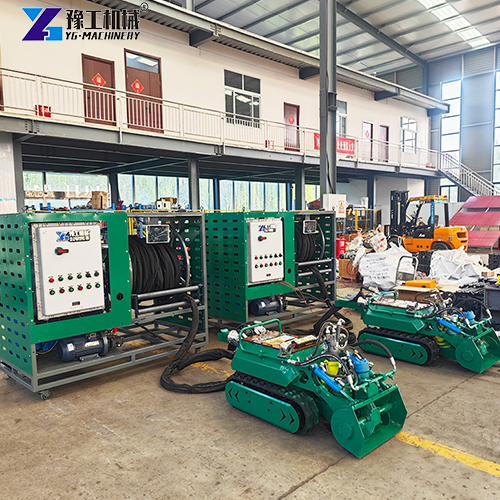
Core Technologies of the YG Dredging Robot
A high-performance dredging robot relies on support from the three core technologies below, each determining operational efficiency and safety:
Autonomous Navigation & Positioning Technology
- It is fitted with multiple perception devices, including LiDAR, high-definition vision cameras, and ultrasonic sensors to build real-time 3D environment maps underwater or inside pipe galleries.
- Within enclosed spaces with no GPS signals, it realizes autonomous obstacle avoidance, route planning, and position tracking. Paired with an underwater navigator, ground operators can check the robot’s precise coordinates and posture at all times.
High-Efficiency Operation Execution System
- Driving Unit: Motor-driven tracked chassis with strong traction. It moves flexibly over complex terrain such as sludge, gravel, and slopes, with a stable travel speed of 3–15 m/min.
Combined Operation Tools:
- High-pressure water jet unit: Breaks up compacted or hard sediment with powerful water streams.
- Robotic Arm / Cutter Head: Smashes bulk sludge and stones, or grabs debris like plastic bags and branches to prevent suction inlet blockages.
- Suction System: A high-power slurry pump (vacuum suction and discharge) draws crushed sludge and wastewater and transports it to ground level. Its maximum flow rate hits 200 m³/h, and it can pass particles up to 60 mm in size.
Remote Control & Monitoring System
- Operators steer the robot remotely from ground consoles via wireless remotes, enabling safe operation without staff descending into wells or cutting the water supply.
- High-definition video footage and sensor data (depth, temperature, hydraulic pressure, etc.) are transmitted back in real time for operators to adjust working plans promptly. As a sludge cleaning robot, it replaces manual labor in hazardous zones and fully eliminates risks of poisoning, oxygen shortage, and collapse during confined-space operations.
System Composition of the YG Dredging Robot
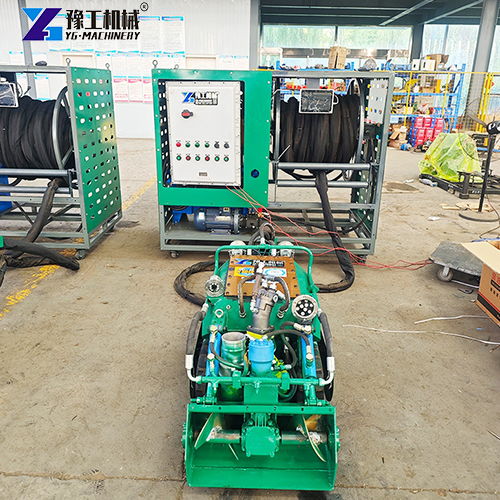
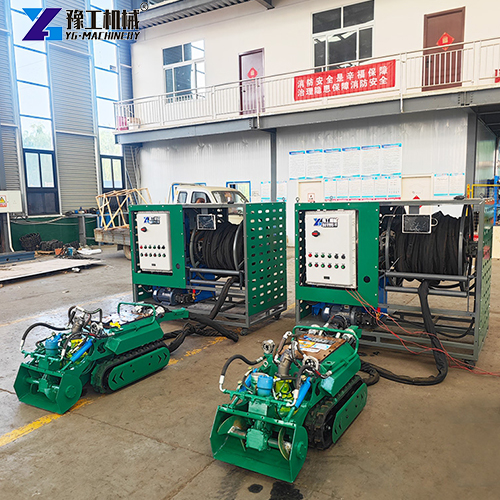
The complete YG dredging robot system consists of the following core components that work together to finish sludge removal efficiently and safely:
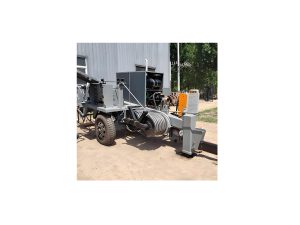
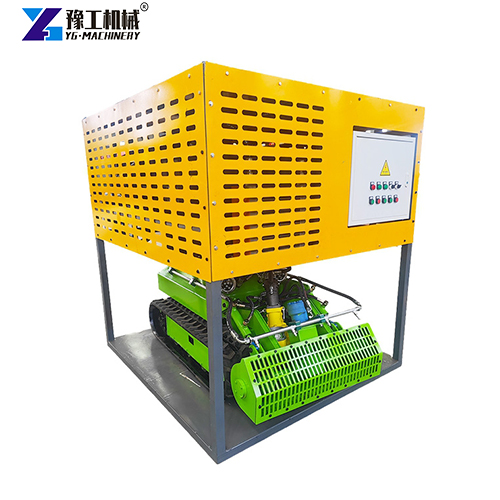
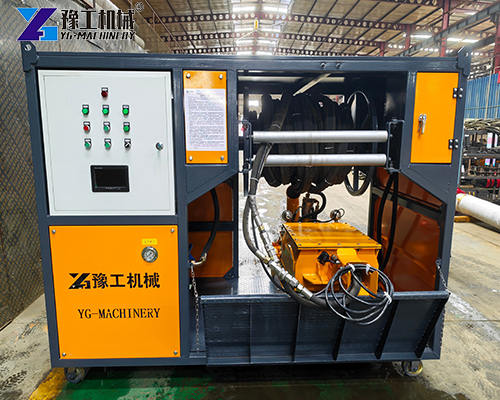
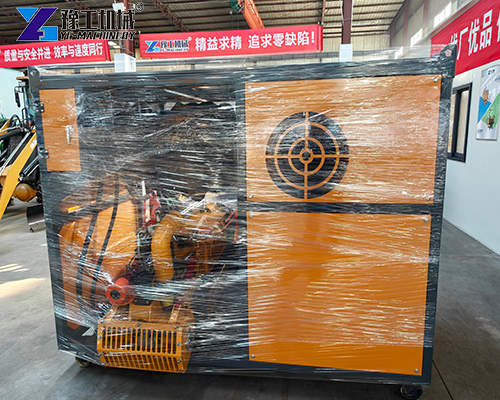
Hydraulic Power Station
- It supplies hydraulic power for the whole system and acts as the robot’s “heart”.
- Two versions available: electric models fit regular sites with mains power; diesel-powered models work independently from grid electricity, ideal for remote areas, temporary construction, and emergency rescue.
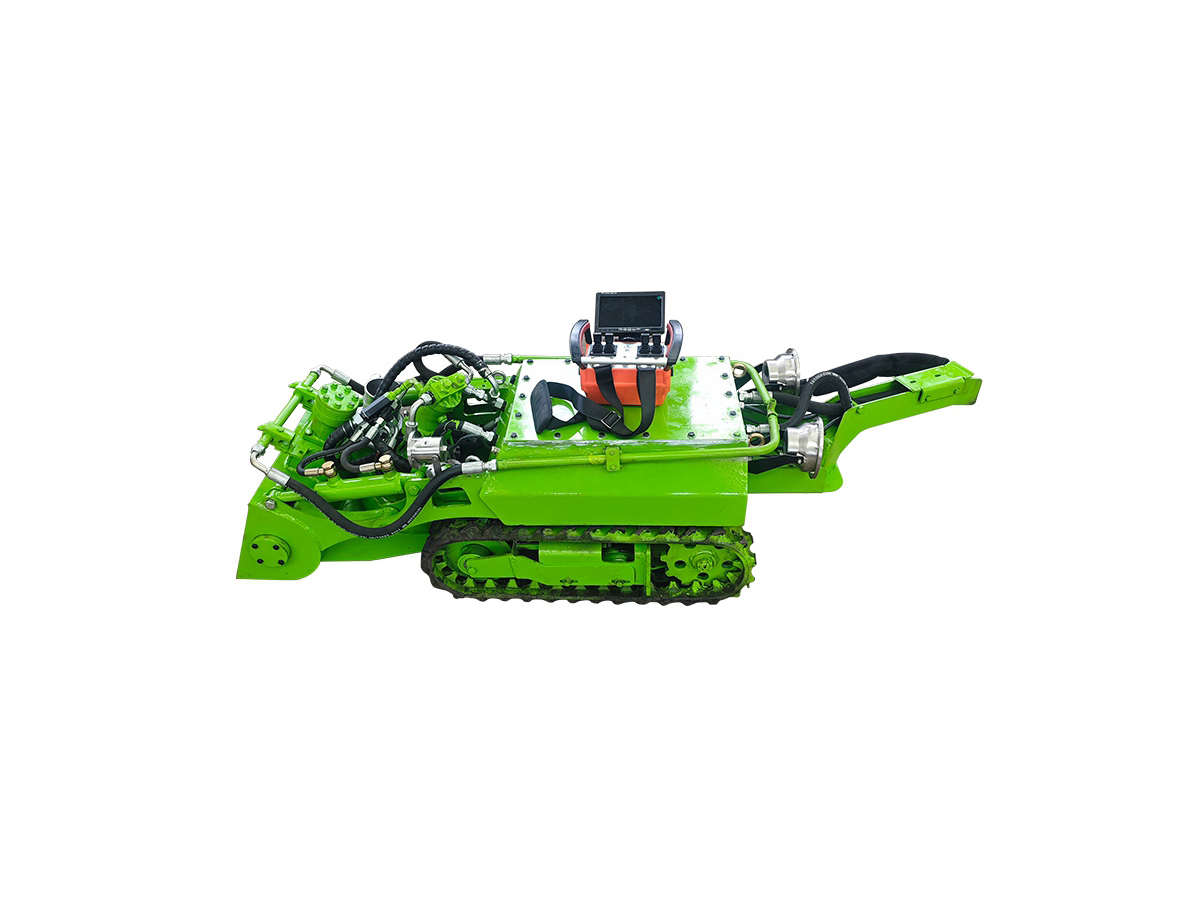
Robot Main Body (Operation Unit)
- Integrated with a tracked chassis for passability on rough ground, working tools (high-pressure water jet unit, robotic arm/cutter head, suction system), and multiple sensors (LiDAR, vision cameras, ultrasonic sensors, etc.).
- It carries out physical tasks, including travelling, crushing, flushing, and suction, while sending real-time environmental data back to operators.
Hydraulic Hoses
- Connect the hydraulic station and robot main body, delivering hydraulic power safely and efficiently to all actuators to guarantee stable robot operation underwater or deep inside wells.
Wastewater Discharge Pipelines
- Continuously carry high-concentration sludge and wastewater sucked by the robot to ground sludge storage tanks or subsequent processing equipment, supporting a clean workflow with zero sludge spillage on the ground.
What Working Conditions Can a Sludge Cleaning Robot Handle?
With an operational depth range of 30 to 90 meters, flexible tracked movement, and strong suction capacity, the YG dredging robot applies widely to three typical scenarios:
Municipal Engineering
- Routine maintenance of urban drainage pipelines to clear clogging sludge and prevent urban flooding in rainy seasons.
- Deep sludge removal for inspection wells and rainwater wells. It fully replaces manual well entry and removes all risks of hydrogen sulfide poisoning and suffocation from oxygen deprivation.
Water Conservancy Projects
- Eco-friendly dredging of rivers, lakes, and reservoirs to remove eutrophic sediment and improve water quality (applied in large water body treatment projects such as Taihu Lake and Dianchi Lake).
- It can serve as a sludge cleaning robot to clear sediment in forebays of pump stations, water diversion channels, and other water conservancy facilities.
Industrial Fields
- Regular sludge cleaning for chemical pipelines and storage tanks. It delivers non-contact intelligent operation in flammable and explosive environments to eliminate safety hazards brought by manual work.
- Periodic sediment removal for sedimentation tanks, aeration tanks, and sludge thickeners at wastewater treatment plants to secure the stable running of processing equipment. Here, the industrial tank cleaning robot plays a vital role and drastically cuts downtime for maintenance.
Frequently Asked Questions About Dredging Robot
Q: What optional functions are available for robotic tank cleaning equipment?
A: YG offers multiple optional upgrades. Explosion-proof motors suit flammable and explosive sites like chemical plants and gas stations. High-definition cameras boost visual control, so ground staff can clearly view underwater work. High-pressure water pumps further enhance removal performance on stubborn deposits.
Q: Does robotic tank cleaning equipment come in electric and diesel versions?
A: Yes. YG provides both electric and diesel-powered units. Electric versions fit regular job sites with stable mains power. Diesel versions operate without grid power and excel at remote locations, temporary construction, and emergency rescue where power supply is limited.
Q: What is its maximum diving and working depth?
A: The YG series dredging robot supports diving and operation depths from 30 to 90 meters, covering sludge cleaning demands for most municipal pump stations, deep tunnels, and industrial deep pools.
Contact YG
If you are troubled by blocked pipelines, tank sediment, or storage tank cleaning, the YG dredging robot series delivers safe, efficient, and intelligent solutions. YG provides full-process technical support ranging from equipment selection to on-site deployment. Feel free to reach out to the YG team for professional product consultation and customized sludge removal plans.