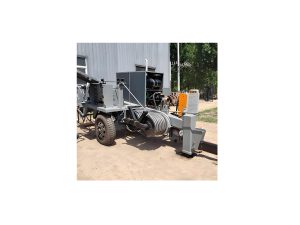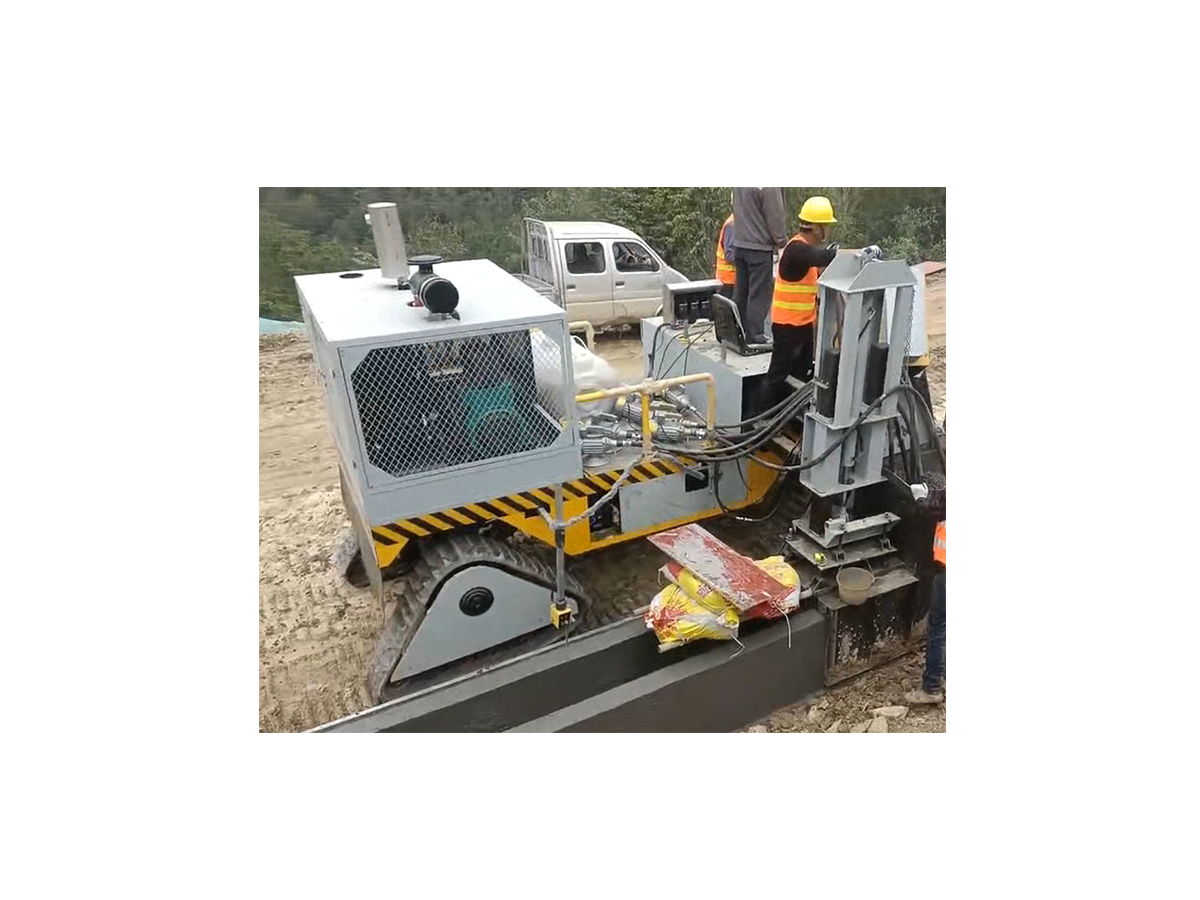

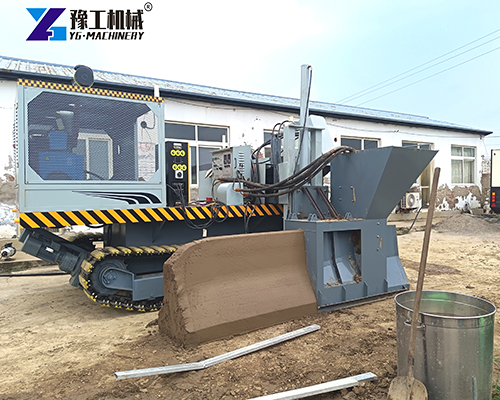
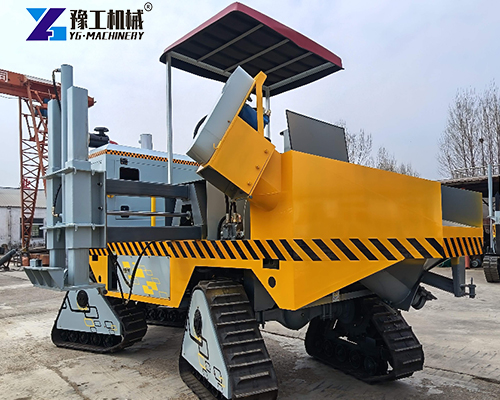
The kerb machine uses concrete as raw material and continuously forms curbstones in one pass through slipform technology, with paving speeds of 1–10 m/min and a maximum molding height of 1100 mm. One kerb laying machine production line can complete hundreds or even thousands of meters of curb installation per day, with uniform quality and smooth line shape. This article will give you a detailed introduction to the road kerb machine from five aspects: working principle, moldable profiles, brand advantages, chassis selection, and application scenarios.
Parameters of the Kerb Laying Machine
| Model | YG20 | YG30 | |
| Length*Width*Height | 5200*2400*2800mm | 5200*4100*2900mm | |
| Unladen mass | About 7000kg | The deadweight is greater, the crawler grip is raised, the construction stability is improved, the climbing and sliding formwork flatness, and the slope is free from interference from external factors | |
| Construction scope | Width ≤ 2000mm (road shoulder, ditch), height ≤ 600mm (kerbstone, curbstone) | Width ≤ 2000mm Height ≤ 1100mm | |
| Hopper volume | 1m³ | 0.5m³ | |
| engine | Rated power | 65kw | Inline 4-cylinder turbocharged diesel engine (for high altitude areas, increased power output) |
| Operating voltage | AC380v | ||
| Startup form | Electric start | ||
| Rated speed | 1500rpm | ||
| Heat dissipation form | Water cooling | ||
| Molding method | High-frequency vibrator (suitable for plastic concrete) | Formed shoulders and side ditches have higher strength | |
| Attached vibration motor (suitable for dry, hard concrete) | Can be paved with curbstones and higher curbstone heights | ||
| Automatic leveling system (imported DLS, optional) | Leveling range ±40mm | Imported components, temperature compensation, overvoltage, and overcurrent protection | |
| Steering form | Dual automatic steering system (imported DLS, standard) | Imported components, temperature compensation, overvoltage, and overcurrent protection | |
| Manual steering wheel (hydraulic steering gear) | |||
| Minimum turning radius | 6800mm | ||
| Paving and transfer speed | 1m-10m/min | Frequency conversion speed regulation can achieve a wide range of stepless adjustment of paving and transfer speed | |
| Travel drive form | Full-time four-wheel drive | When the road slope is ≤5%, a fully loaded 15m3 tank truck can be used for construction, and the slipform machine connection construction can be realized. | |
| Screw feeder drive type | High torque hydraulic gerotor motor | Ensure the continuous feeding of concrete, the screw feeder will not be stuck by large stones, and the concrete will be mixed twice to improve the workability of the concrete. | |
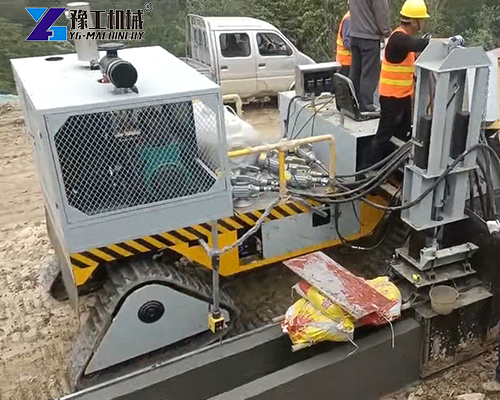
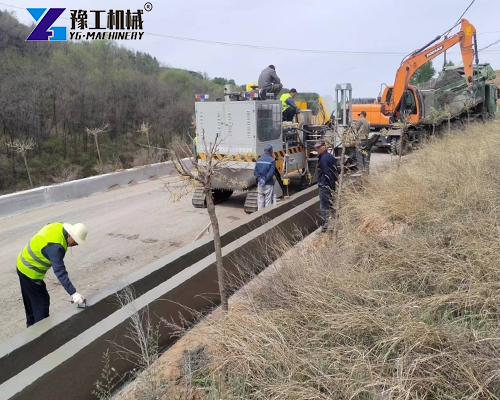
How Does the Kerb Machine Work?
The kerb machine slipform curb construction process is a continuous, uninterrupted forming flow, mainly including the following steps:
- Continuous feeding: Concrete enters the hopper and goes to the screw feeder. A high-torque hydraulic motor drives the screw to continuously convey the material. During conveying, the concrete is mixed a second time to improve workability. The screw feeder will not get stuck by large stones, ensuring continuous supply.
- Mold forming: Concrete enters the customized slipform mold, whose shape matches the cross-section of the target curbstone. As the machine moves forward, the concrete is continuously extruded and formed by the mold.
- Vibrating compaction: Choose the vibration method according to the concrete type – high-frequency vibrators are suitable for plastic concrete (higher slump), while attached vibration motors are suitable for dry-hard concrete. Vibration ensures the density and strength of the formed curbstone.
- Automatic leveling: The imported DLS automatic leveling system monitors the paving height in real time, with a leveling range of ±40 mm, and features temperature compensation, overvoltage, and overcurrent protection, ensuring consistent top elevation of the curbstones.
- Automatic steering: The dual automatic steering system (standard with imported DLS) automatically corrects deviation along the preset reference line, so the operator does not need to adjust direction frequently, and the formed line is smooth and straight.
What Curbstone Profiles Can the Kerb Machine Produce?
One of the core advantages of the concrete kerbing machine is that the molds are customizable – almost any cross-section shape of curbstone can be slipformed in one pass:
- Standard trapezoidal curbstone: The most common road curb shape, with a trapezoidal cross-section (narrow top, wide bottom), used for lane boundaries on urban roads and highways.
- Rectangular curbstone: Right-angle cross-section, commonly used for sidewalk edges, parking lot dividers, and landscape walkways.
- Curved/streamlined curbstone: Rounded-corner cross-section, used for highway interchanges and roundabouts to reduce impact force when vehicles collide.
- V-shaped drainage ditch: V- or U-shaped drainage channels on the shoulder, formed integrally with the curbstone, providing both drainage and boundary functions.
- Safety barrier foundation: Height up to 1100 mm (YG30) – can form concrete crash barrier foundations in one pass, replacing the traditional precast + assembly method.
- Decorative special-shape curbstones: Landscape curbstones with patterns, grooves, or special contours for parks, scenic areas, and high-end residential districts.
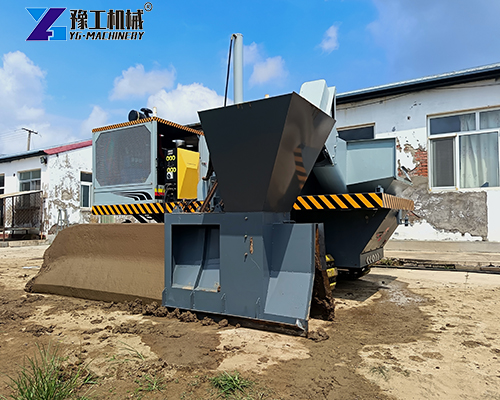
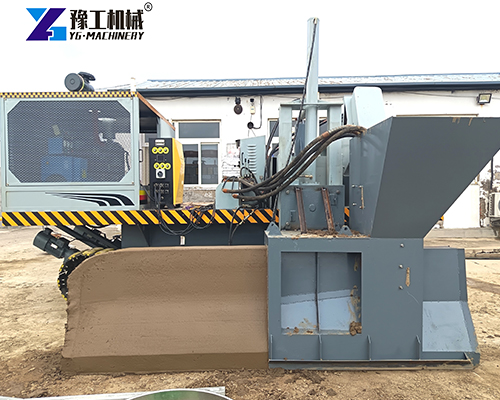
6 Advantages of the YG Road Kerb Machine
- One-pass forming, amazing efficiency: Paving speed is steplessly adjustable from 1 to 10 m/min, with variable-frequency drive providing wide-range precise control. Each day can complete hundreds to thousands of meters of curb construction – far exceeding the precast + installation method.
- Reduces bending deviation by 95%: The dual automatic steering system travels precisely along the reference line, so the formed curb line is straight, and bending deviation is greatly reduced.
- Slope anti-slip self-locking: The machine has a built-in slope self-locking function, so no extra braking device is needed when working on slopes, ensuring safe operation.
- Full-time 4WD / crawler drive: YG20 full-time four-wheel drive can work fully loaded with a 15m³ tank truck on slopes ≤5%; YG30 crawler drive offers stronger grip, suitable for steeper slopes and soft ground.
- Wide height coverage: YG20 molding height ≤600 mm covers standard curbstones; YG30 molding height ≤1100 mm can form concrete crash barriers in one pass.
- Imported key components: Both the automatic leveling and steering systems use imported DLS components, with temperature compensation, overvoltage, and overcurrent protection, adapting to various climate conditions.
Crawler Vs. Wheeled Kerb Machine – How to Choose?
When choosing the chassis type for a kerb laying machine, judge according to the specific construction conditions:
Choose wheeled YG20 when:
- The construction site is on hardened urban roads, asphalt pavements, or already laid subgrade with good load-bearing capacity.
- The curb height to be formed is within 600 mm – standard curbstones and shoulder side ditches.
- Frequent site transfers are needed – wheeled machines travel faster and can move flexibly between multiple job sites.
- The construction line is long, and road conditions are good – for large-scale paving on new urban roads or industrial park roads.
- You prefer a larger hopper (1 m³) to reduce refilling frequency and improve continuous operation efficiency.
- Road slope ≤5% – full-time four-wheel drive allows direct full-load connection with a 15 m³ tank truck.
Choose crawler YG30 when:
- The required curb height exceeds 600 mm, or you need concrete crash barriers – up to 1100 mm.
- The ground is soft soil, backfill, or uncompacted subgrade with poor bearing capacity.
- The construction section has a steep slope – crawler drive provides stronger grip and better climbing stability.
- Projects with very high stability requirements, such as highway barrier foundations or large slope ditches.
- The site has complex terrain with potholes – crawler chassis is more resistant to interference.
Simple guideline: Flat roads and standard curbstones → wheeled YG20; high curbstones, steep slopes, or soft ground → crawler YG30.
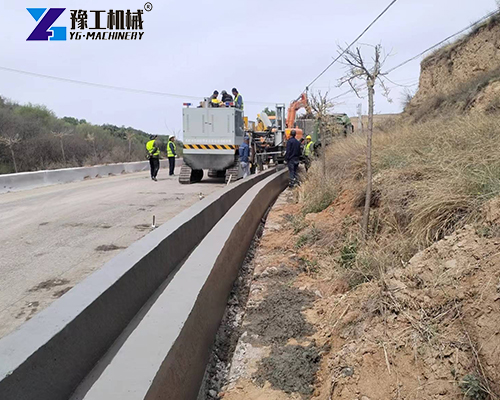
Application Scenarios for the Concrete Kerbing Machine
- Urban road works: One-pass forming of traffic lane curbstones, non-motorized lane dividers, sidewalk edge stones, and green belt border stones.
- Highway projects: Continuous slipform casting of median curbstones, shoulder side ditches, and crash barrier foundations – replacing traditional precast installation.
- Airport runways and aprons: Precision forming of runway edge marker stones and apron divider curbs, requiring extremely high straightness.
- Ports and logistics parks: Curbstones and drainage ditches for heavy-vehicle lanes – slipformed density is higher than precast units.
- Parks and scenic walkways: One-pass forming of landscape curbstones and flowerbed borders with custom molds to meet aesthetic needs.
- Water conservancy projects: Continuous slipform construction of channel slope linings and drainage ditches, suitable for long distances and slope changes.
FAQ about the Kerb Machine
Q1: What concrete requirements does the kerb laying machine have?
A: The YG20 is equipped with high-frequency vibrators, suitable for plastic concrete (higher slump); the YG30 is equipped with attached vibration motors, suitable for dry-hard concrete. Both models can be flexibly adapted to on-site concrete mix designs.
Q2: What is the maximum curb forming height?
A: The YG20 (wheeled) has a maximum forming height of 600 mm, suitable for standard curbstones and shoulder-side ditches; the YG30 (crawler) has a maximum forming height of 1100 mm, capable of forming concrete crash barriers in one pass.
Q3: Can non-standard shape curbstones be made?
A: Yes. The concrete kerbing machine’s molds are fully customizable – any cross-section shape can be designed and manufactured. Simply provide the cross-section drawing of the curbstone, and YG will make the corresponding mold.
Q4: Can the machine work directly with a concrete tank truck?
A: The YG20, with full-time four-wheel drive, can connect directly to a 15m³ concrete tank truck for continuous operation when the road slope is ≤5%, without needing an intermediate hopper.
Q5: Are the automatic leveling and steering systems reliable?
A: The YG series comes standard with imported DLS automatic steering, and optional imported DLS automatic leveling. The components feature temperature compensation, overvoltage, and overcurrent protection, and work stably in various environments – high temperature, low temperature, high altitude, etc.
Contact YG
Still using the old precast + assembly method for curbs? Low efficiency, high cost, and poor line straightness. The YG concrete kerbing machine solves all these problems with one-pass forming – faster speed, more stable quality, and less labor. Whether wheeled YG20 or crawler YG30, both fit your construction scenarios, contact YG now for a quote and custom mold solutions.