
Bringing in an efficient curb paving machine can completely transform how contractors carry out construction work. It not only cuts construction time many times compared with traditional manual forming, but also greatly reduces high-cost labour, while delivering standardised, high-quality finished profiles. However, there is a wide range of machine models on the market. If you pick the wrong unit, mechanical depreciation and inefficient running-in will quickly eat into your project profits.
Whether you are upgrading from traditional manual timber formwork to automatic slip-form construction, or expanding your existing machine fleet, clarifying your project requirements and matching the correct machine configuration is the critical first step.
Step 1: Define Your Project Requirements — Tyre-Type vs Track-Type Curb Paving Machine
For slip-form curb construction, chassis drive directly determines machine stability, off-road capability, and suitable working scenarios.
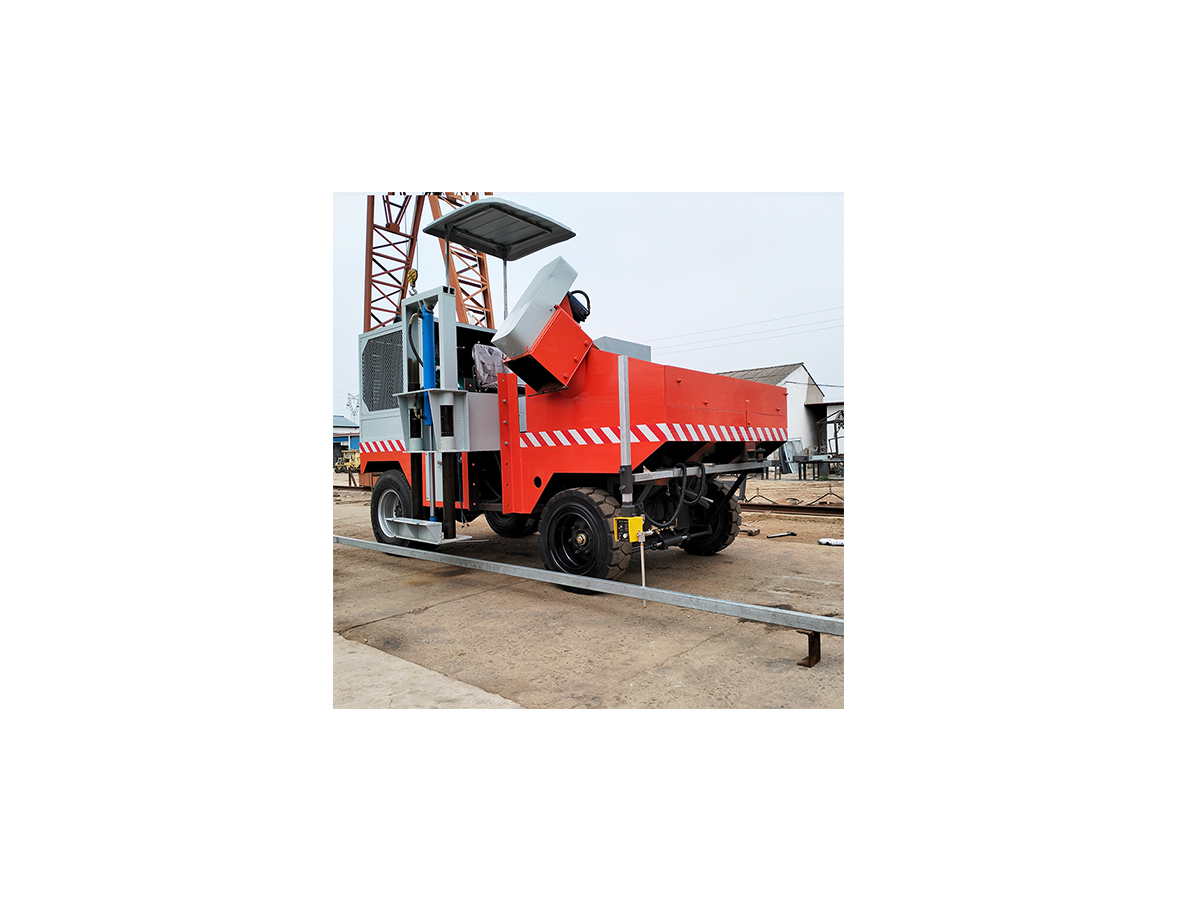
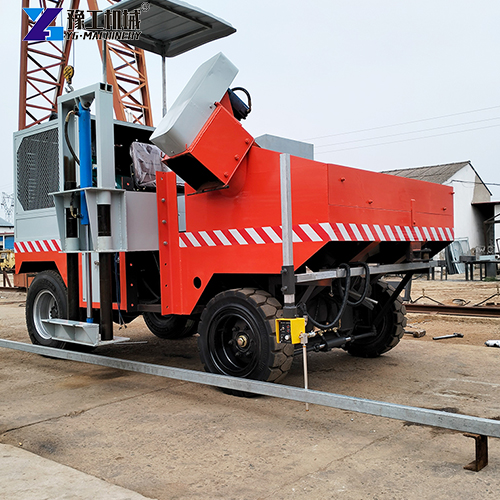
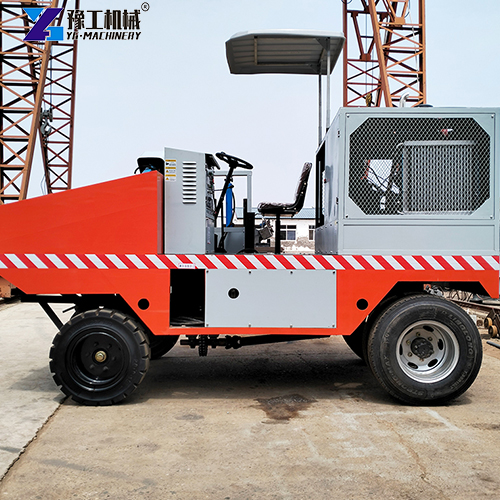
Wheel-type kerb making machine (e.g. YG-20 series):
- Application scenarios: Municipal roads, road shoulders, drainage ditches and standard curbs (width ≤ 2000mm, height ≤ 600mm).
- Key advantages: Fitted with Full-time 4WD, it delivers high mobility, flexible travelling and paving speed (1-10m/min stepless speed regulation), with excellent cost-performance.
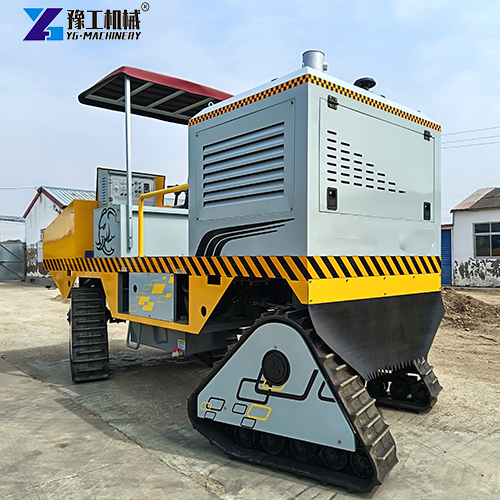
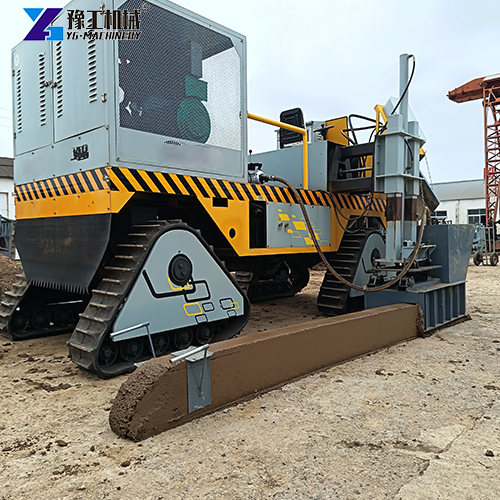
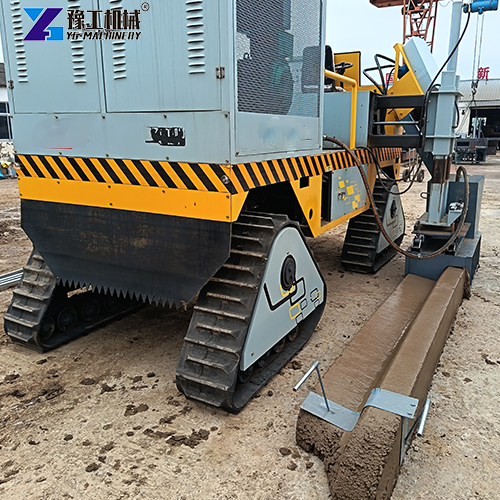
Heavy-duty track-type kerb making machine (e.g. YG-30 series):
- Application scenarios: One-step forming of large crash barriers, steep-slope construction, complex terrain, and demanding municipal projects (maximum height up to 1100mm).
- Key advantages: Heavy machine weight delivers outstanding track grip and higher construction stability. It resists external disturbance and maintains excellent surface flatness during climbing slip-forming work.
Step 2: Evaluate Core Technical Specs and Performance Under Special Working Conditions
When purchasing a curb paving machine, apart from basic dimensions, pay close attention to real-world performance in complex site conditions.
| Model | YG20 | YG30 | |
| Length*Width*Height | 5200*2400*2800mm | 5200*4100*2900mm | |
| Unladen mass | About 7000kg | The deadweight is greater, the crawler grip is raised, the construction stability is improved, the climbing and sliding formwork flatness, and the slope is free from interference from external factors | |
| Construction scope | Width ≤ 2000mm (road shoulder, ditch), height ≤ 600mm (kerbstone, curbstone) | Width ≤ 2000mm Height ≤ 1100mm | |
| Hopper volume | 1m³ | 0.5m³ | |
| engine | Rated power | 65kw | Inline 4-cylinder turbocharged diesel engine (for high altitude areas, increased power output) |
| Operating voltage | AC380v | ||
| Startup form | Electric start | ||
| Rated speed | 1500rpm | ||
| Heat dissipation form | Water cooling | ||
| Molding method | High-frequency vibrator (suitable for plastic concrete) | Formed shoulders and side ditches have higher strength | |
| Attached vibration motor (suitable for dry, hard concrete) | Can be paved with curbstones and higher curbstone heights | ||
| Automatic leveling system (imported DLS, optional) | Leveling range ±40mm | Imported components, temperature compensation, overvoltage, and overcurrent protection | |
| Steering form | Dual automatic steering system (imported DLS, standard) | Imported components, temperature compensation, overvoltage, and overcurrent protection | |
| Manual steering wheel (hydraulic steering gear) | |||
| Minimum turning radius | 6800mm | ||
| Paving and transfer speed | 1m-10m/min | Frequency conversion speed regulation can achieve a wide range of stepless adjustment of paving and transfer speed | |
| Travel drive form | Full-time four-wheel drive | When the road slope is ≤5%, a fully loaded 15m3 tank truck can be used for construction, and the slipform machine connection construction can be realized. | |
| Screw feeder drive type | High torque hydraulic gerotor motor | Ensure the continuous feeding of concrete, the screw feeder will not be stuck by large stones, and the concrete will be mixed twice to improve the workability of the concrete. | |
Step 3: Check Forming Technology and Mold Expandability
Different projects call for different concrete mix designs and curb shapes. The forming adaptability of your kerb laying machine for sale directly defines what jobs you can take on.
Flexibility of vibration system:
- Built-in high-frequency vibrator: Works for plastic concrete, delivering higher compaction and structural strength for road shoulders and ditches.
- External vibration motor: Works for dry-hard concrete and allows paving of large-section curbstones.
High-torque screw feeding system:
- Driven by a high-torque hydraulic gerotor motor, it ensures continuous feeding, prevents jamming from large aggregate, and remixes concrete to boost workability.
Custom Molds Service:
- Construction requirements keep changing. Fast-change mold support and any curb shape customization capability are key for contractors winning commercial real estate, park landscape, and highway guardrail projects.
Step 4: Assess Slope-Safety and Intelligent Control Capabilities
Real-world site terrain is often more complex than theoretical conditions. Steep slopes and continuous curves test machine performance and represent critical metrics for project quality and site safety.
- Safety and interlock protection for steep-slope work: On inclined sections, machine sliding can tear fresh slip-formed surfaces and trigger safety accidents. A continuous kerbing machine fitted with Anti-Slip Self-Locking allows stable holding and paving; no brake needed on slopes. On gradients ≤5%, it can pull a fully-loaded 15m³ concrete mixer truck for linked construction, solving material-supply interruptions common on mountain and slope sites.
- High-precision auto steering & automatic levelling: On tight curves and undulating ground, manually steered machines or basic sensors easily create flatness errors. Units with Auto Steering and automatic levelling cut turning deviation by 95%. Combined with a minimum turning radius of only 6.8 m, they handle sharp bends easily and greatly reduce follow-up manual finishing work.
Step 5: Calculate Total Cost of Ownership (TCO) and ROI
When buying equipment, do not look only at the upfront purchase price. Calculate how much it can save and earn for your business.
- Labour & cycle-time savings: Automatic slip-form construction cuts crew size from 8-10 workers down to 3-4 (operator + finisher). Paving speeds of 1-7m/min greatly shorten project lead times.
- Hardware durability & protection for imported components: Imported control assemblies such as the DLS system with overvoltage, overcurrent protection, and temperature compensation lower failure rates on tough job sites and reduce downtime losses.
- Compatibility with steep slopes & high altitude: Anti-slip slope locking and high-altitude power boost let your team bid for less-competitive, higher-margin mountain-highway and special-terrain contracts.
Conclusion: How to Make Your Final Decision
- If your projects focus on urban roads, community shoulders, drainage ditches, and regular car-park work, and you value cost-performance plus flexible site-to-site transport, the wheel-type YG-20 curb paving machine is your best option.
- If you need to build one-step-formed highway crash barriers (up to 1100 mm height), mountain-slope sections, or large-scale projects with strict flatness tolerances, the heavy-duty track-type YG-30 curb paving machine delivers unmatched construction stability.
Align the machine’s paving capacity and mold expandability closely with your core business scenarios. That way, your newly purchased continuous kerbing machine will become a genuine profit-driving asset for your construction team.