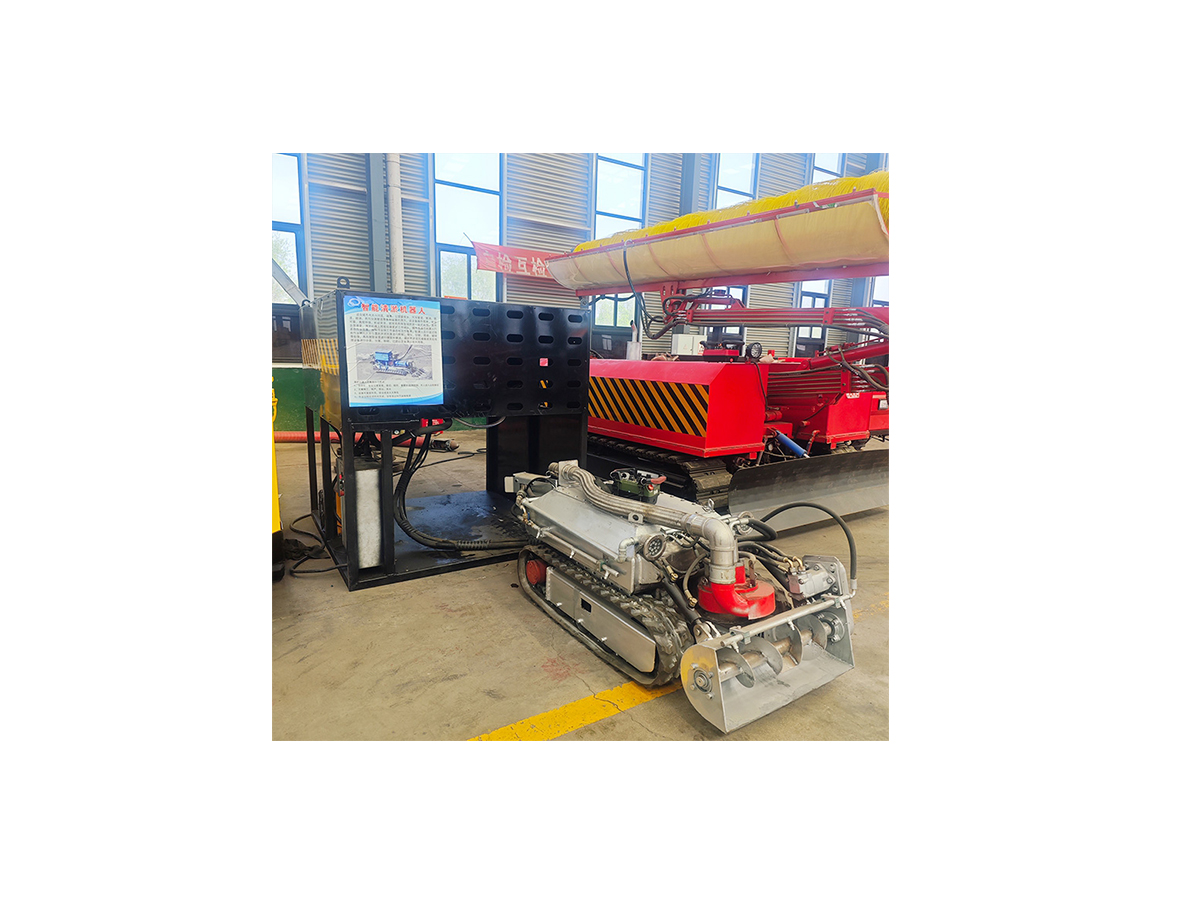

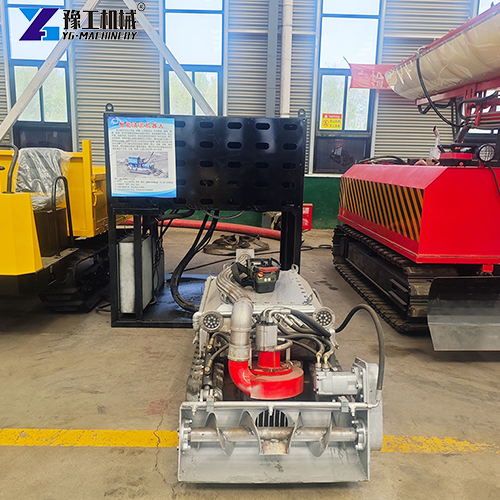
Oil sludge accumulated at the bottom of industrial storage tanks, hardened residues inside chemical pools, and activated sludge from sewage treatment plants — if these deposits are not cleaned in time, they will at minimum reduce equipment efficiency, and at worst trigger production shutdowns or even safety accidents. Traditional sludge removal relies on workers entering confined spaces, exposing staff to major hazards including poisoning, suffocation, and explosions. In addition, production halts for cleaning usually lead to staggering economic losses. Against this backdrop, the tank cleaning robot came into being. It can access tanks and pools without stopping production or draining liquid, and carry out precise sludge removal while the tanks remain filled. It truly realizes three key outcomes: “system stays operational, no personnel enters tanks, sludge is fully contained on-site”. Whether for oil tanks in petrochemical plants, reaction kettles in chemical factories, or sedimentation tanks at municipal wastewater facilities, the industrial tank cleaning robot is setting new benchmarks for safety and efficiency in sludge cleaning operations.
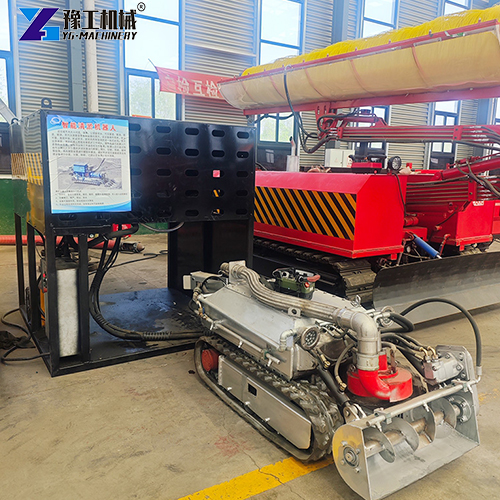
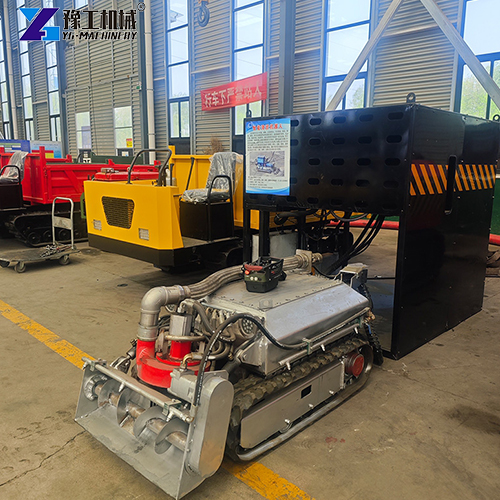
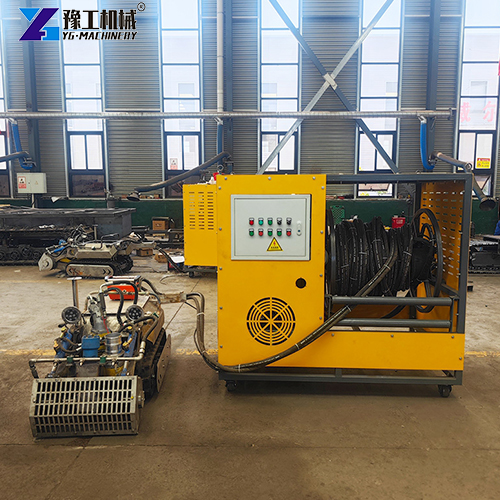
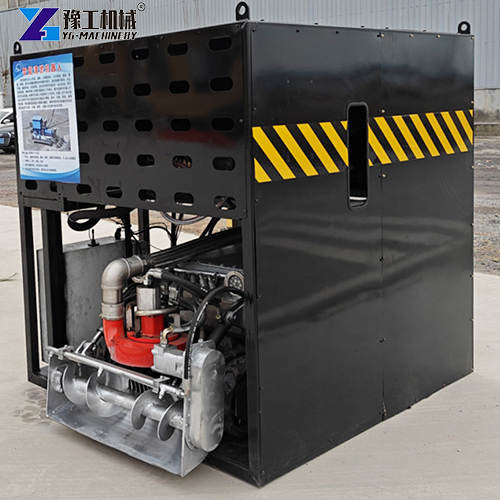
Sludge Cleaning Machine Specifications
| Model | YG500 Electric | YG600 Electric | YG700 Electric | YG800 Electric | YG900 Electric | YG1200 Electric |
| Robot Dimensions | 1500×500×650 mm | 1500×600×650 mm | 1600×700×650 mm | 1600×850×700 mm | 1650×960×750 mm | 1900×1200×750 mm |
| Slurry Pump Model | 3E-100Z170 | 3E-100Z170 | 4E-250ZJ45 | 4E-250ZJ45 | 4E-250ZJ45 | 4C-200Z125 |
| Cleaning Width | 500 mm | 600 mm | 700 mm | 800 mm | 900 mm | 1200 mm |
| Track Speed | 3–15 m/min | 3–15 m/min | 3–15 m/min | 3–15 m/min | 3–15 m/min | 3–15 m/min |
| Robot Weight | — | — | — | — | — | 500 kg |
| Pump Inlet Size | 3 inch | 3 inch | 4 inch | 4 inch | 4 inch | 5 inch |
| Pump Flow Rate | 100 m³/h | 100 m³/h | 160 m³/h | 160 m³/h | 200 m³/h | 200 m³/h |
| Pump Head | 0–30 m | 0–30 m | 0–25 m | 0–25 m | 0–25 m | 0–25 m |
| Hydraulic Station Dimensions | 2200×1200×1700 mm | 2200×1200×1700 mm | 2200×1200×1700 mm | 2200×1200×1700 mm | 2200×1200×1700 mm | 2120×1240×1200 mm |
| Main Motor Power | 18 kW | 18 kW | 22 kW | 22 kW | 22 kW | 45 kW |
| Hydraulic System Pressure | 0–16 MPa | 0–16 MPa | 0–16 MPa | 0–16 MPa | 0–16 MPa | 0–16 MPa |
| Max Particle Size | 15 mm | 15 mm | 40 mm | 40 mm | 50 mm | 60 mm |
| Winch Speed | 0–10 r/min | 0–10 r/min | 0–10 r/min | 0–10 r/min | 0–10 r/min | 0–10 r/min |
| Standard Hydraulic Hose Length | 50 m | 50 m | 50 m | 50 m | 50 m | 50 m |
| Control System | Wireless Remote Control | Wireless Remote Control | Wireless Remote Control | Wireless Remote Control | Wireless Remote Control | Wireless Remote Control |
| Lighting System | 2× Underwater LED Lights | 2× Underwater LED Lights | 2× Underwater LED Lights | 2× Underwater LED Lights | 2× Underwater LED Lights | 2× Underwater LED Lights |
How Does a Tank Cleaning Robot Work in Harsh Underwater Environments?
The underwater environment inside tanks and pools is extremely harsh: poor visibility, complex water flow, corrosive substances, and even flammable and explosive gases. How can a tank cleaning robot operate stably under such tough conditions? The answer lies in the coordinated operation of three core systems.
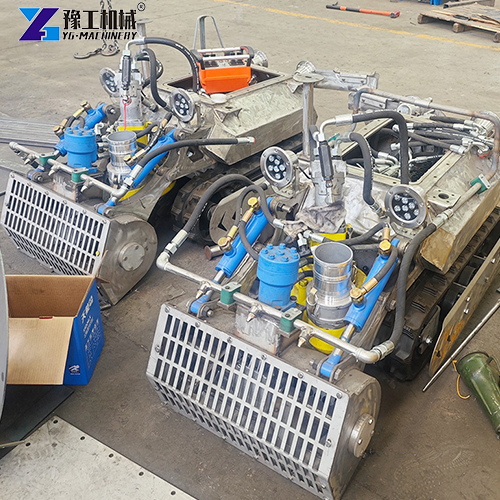
- Waterproof sealing and anti-corrosion design: Core components of the robot, including vision modules, controllers, and hydraulic oil tanks, adopt full waterproof sealing structures to stop water from damaging internal parts during underwater work. The outer shell is made of anti-corrosion materials to resist erosion from acid and alkaline liquids.
- Autonomous navigation and positioning technology: Equipped with multiple sensing devices such as LiDAR, high-definition cameras, and ultrasonic sensors, the robot can build real-time maps, avoid obstacles automatically, and optimize travel routes inside sealed tanks with no GPS signal. Combined with underwater sonar positioning and inertial navigation systems, operators on the ground can track the robot’s exact position and working posture in real time.
- High-efficiency operation execution system: After entering tanks or pools, the robot first breaks up hardened sludge and debris with spiral augers or cutters. Underwater robotic dredge moves forward on a tracked chassis to gather sludge to the slurry pump inlet, then pumps sludge and wastewater to ground treatment equipment through delivery pipes. For different types of waste, users may choose optional high-pressure water jets to wash hard deposits, or mechanical arms to grab large chunks of rubbish. Operators only need to control the robot remotely on the ground, staying completely clear of dangerous zones.
What Advantages Does the YG Tank Cleaning Robot Have?
Compared with traditional cleaning methods that require emptying tanks and manual entry after production shutdowns, the YG machine delivers these prominent benefits:
- Operate without halting production, drastically cutting downtime losses: Conventional tank cleaning requires draining all liquid, full ventilation, and manual tank entry, often taking days or even weeks per job. YG robots can work while tanks run normally, cutting cleaning time from several days down to a few hours.
- Eliminate all confined space operation risks: Tank interiors carry life-threatening hazards, including oxygen shortage, toxic gas, and explosion risks. YG robots let operators complete all work safely on the ground, achieving the goal of “no staff entering tanks, fully safe sludge removal”.
- Explosion-proof design for hazardous working areas: YG robots support optional explosion-proof motors, flame-retardant cables, and anti-static systems with official explosion-proof certifications, enabling safe operation in flammable and explosive sites such as chemical plants, oil tanks, and gas stations. As a professional industrial tank cleaning robot, this feature is its core edge over ordinary sludge cleaning equipment.
- Powerful cleaning efficiency with thorough results: One single YG robot can replace 6 to 10 workers. It removes stubborn deposits completely via a combination of auger crushing, high-pressure jet washing, and powerful suction, delivering far better cleaning results than manual work.
How to Pick the Suitable Tank Cleaning Robot?
When selecting a tank cleaning robot, evaluate options from four key dimensions:
- Tank opening size and working space: The six YG models from YG500 to YG1200 cover cleaning widths ranging from 500mm to 1200mm. Choose YG500/600 for small-opening tanks, and YG900/1200 for large pools or box culverts.
- Type of sludge deposits: Fit optional high-pressure water jets for hard, compacted sediments; add mechanical arms or cutting heads for waste containing large debris; the standard auger plus slurry pump combo meets demands for regular soft sludge.
- Safety standards of the working site: Explosion-proof motors and pump units are mandatory for flammable and explosive petrochemical or chemical sites; standard configurations work fine for regular municipal and water conservancy projects.
- Working depth and delivery distance: YG series supports maximum working depths of 30–90 meters and horizontal delivery lengths of 100–150 meters. When choosing a sludge cleaning machine, confirm the pump head and pipeline length match your site’s actual requirements.
Does an Industrial Tank Cleaning Robot Come with High Long-Term Maintenance Costs? What Are Its Wearing Parts?
Many clients worry about maintenance expenses for this machine. Overall, maintenance costs for YG robots are far lower than the total cost of traditional manual sludge cleaning. Daily maintenance mainly focuses on these areas: Main wearing parts include slurry pump impellers and liners (worn from constant friction), hydraulic pipe connectors (worn from repeated plugging/unplugging), rubber track pads (walking abrasion), sealing rings (waterproof protection), and so on. Replacement frequency depends on working intensity: parts wear faster in environments with hard sand and gravel, and last much longer when handling regular soft sludge.
Daily maintenance tips: Clean the robot body after every job, check hydraulic and wastewater pipes for damage, and replace hydraulic oil and filter elements regularly. YG provides full spare parts supply and after-sales service to guarantee stable long-term equipment operation.
Contact YG
If you are troubled by tank sludge removal, pool cleaning, or pipeline unclogging, YG’s tank cleaning robot series offers safe, efficient, and intelligent one-stop solutions. YG provides full-process technical support covering equipment selection, site surveys, and after-sales maintenance. We can also customize exclusive solutions for special working conditions — including explosion-proof upgrades, enhanced high-pressure systems, and ultra-deep underwater operation, all backed by mature technical capabilities. Feel free to reach out to the YG team to get product brochures, technical specifications, or book an on-site demonstration.