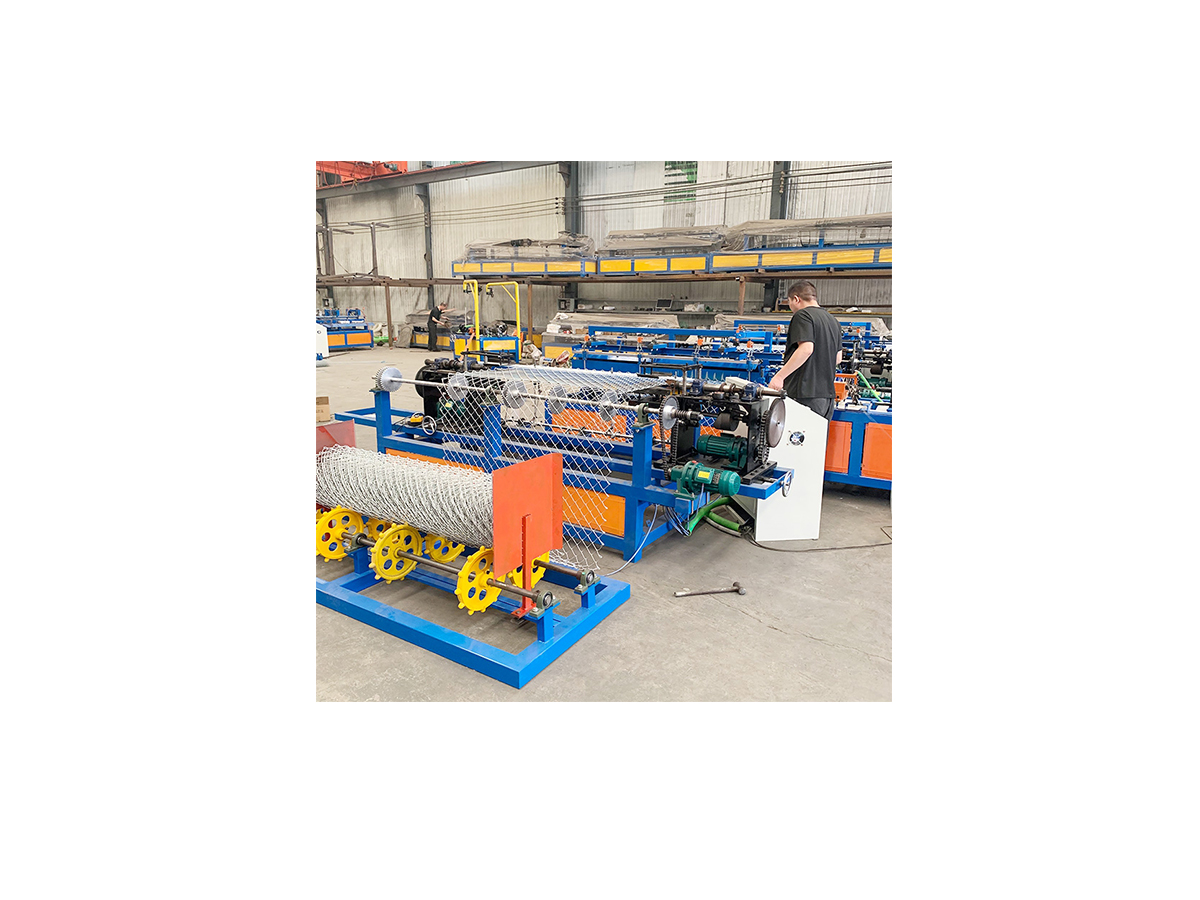

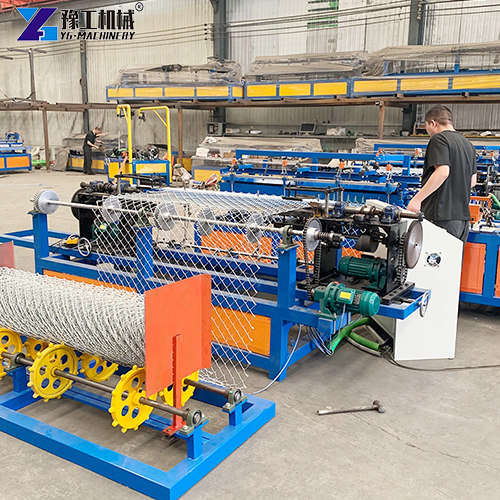
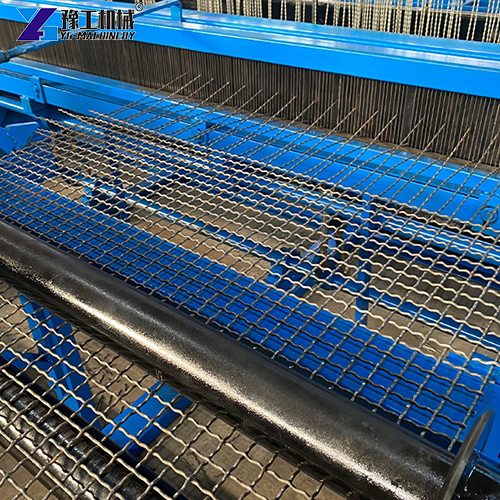
Highway isolation fences, soccer field perimeter netting, coal mine roof support mesh, livestock fencing — these everyday chain link mesh products all come from one type of equipment: the chain link machine. Every cycle of wire feeding, hooking, and rolling provides solid protection for infrastructure, mining, and agricultural projects worldwide. For wire mesh factories, a reliable and efficient machine is the foundation for winning orders and earning customer trust.
Parameters
| Parameter | Value |
| Production Capacity | 70–120 m²/hour |
| Wire Diameter | 1.5–4.5 mm (single wire) |
| Hole Size | 25–100 mm |
| Mesh Width | 1–6 m (customizable) |
| Power Supply | 380V 50HZ |
Five Core Process Steps of a Modern Chain Link Machine
The operation of a fully automatic chain link machine can be broken down into five synchronized process steps, each timed to millisecond precision:
1. Pay-off
Raw wire spools are mounted on the pay-off rack, releasing wire continuously and evenly under tension. Stable tension control directly determines the flatness of the woven mesh.
2. Straightening
The wire passes through multiple straightening wheels to eliminate internal stress and bending, ensuring the wire enters the weaving stage perfectly straight. The straighter the wire, the flatter the mesh.
3. Weaving (Spiral Forming)
The straightened wire enters the spiral forming die, where it is bent into continuous helical coils. As each spiral wire is formed, its tip is continuously threaded into the edge of the diamond mesh being woven. This is the core step — the balance between speed and precision directly determines the machine’s output.
4. Post-processing (Edge Locking / Cutting)
Once the set length is reached, the machine automatically locks the mesh edges and cuts the wire, ensuring clean, fray-free edges.
5. Rolling
The finished mesh is guided through rollers into the winding device, automatically coiled for easy packaging and transport.
These five modules work in sync under unified PLC control. Any delay in one step affects overall efficiency — this is the fundamental difference between a fully automatic chain link machine and traditional semi-automatic equipment.
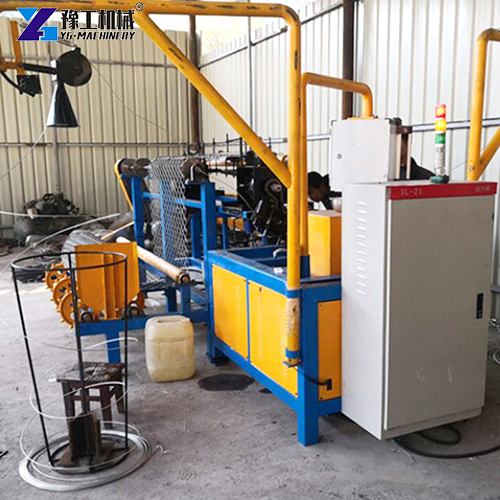
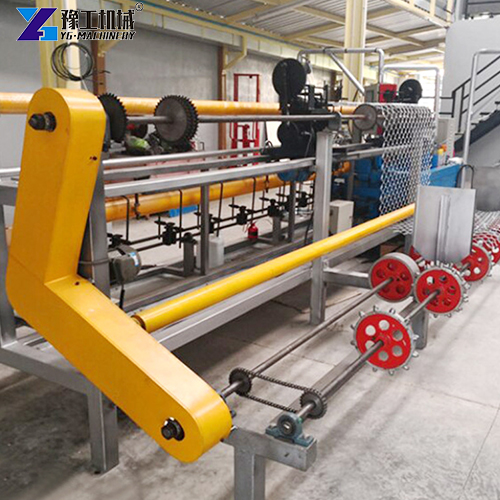
Why the Single-Wire Chain Link Fence Making Machine Remains a Global Favorite
In the global wire mesh industry, the single-wire chain link fence making machine has always held the dominant position. Here’s why:
1. Better wire adaptability.
A single-wire machine processes each wire independently. Whether it’s galvanized, stainless steel, or PVC-coated wire, weaving remains stable. Dual-wire machines require both wires to have identical strength — hard to guarantee in practice, and any deviation leads to wire breakage or mesh defects.
2. Lower failure rate.
The single-wire design is simple with a clear wire path, making maintenance easy. Dual-wire machines have complex structures — a problem in any part can shut down the entire machine.
3. Superior product quality.
The single-wire chain link fence making machine features optimized wire feeding and hooking synchronization, producing flatter mesh with fewer joints — ideal for high-standard protection projects.
These advantages make the single-wire chain link fence making machine the enduring workhorse of wire mesh factories worldwide.
How to Choose Wire Diameter, Hole Size, and Mesh Width for Chain Link Machine
When selecting a chain link machine, the right combination of three key parameters determines whether it meets your production needs:
Wire Diameter (1.5–4.5 mm): Thicker wire means stronger mesh, but harder to weave. For coal mine support mesh, choose 3.0 mm or above; for sports fencing and livestock enclosures, 2.0–3.0 mm is sufficient; for decorative mesh, 1.5–2.0 mm fine wire works well.
Hole Size (25–100 mm): Smaller holes use more wire per unit area, increasing cost but improving protection. Coal mine support mesh typically uses 30–50 mm small holes; highway fences use 50–80 mm; livestock and landscaping fences use 80–100 mm large holes.
Mesh Width (1–6 m): Wider mesh means more output per pass, but demands greater machine rigidity. The YG chain link machine supports 1–6 m width customization to meet various production scales.
These three parameters are interrelated: a thicker wire limits the minimum hole size; wider mesh demands more uniform wire. Choose based on your target market’s mainstream product specifications.
5 Benefits of Using the YG Automatic Chain Link Machine
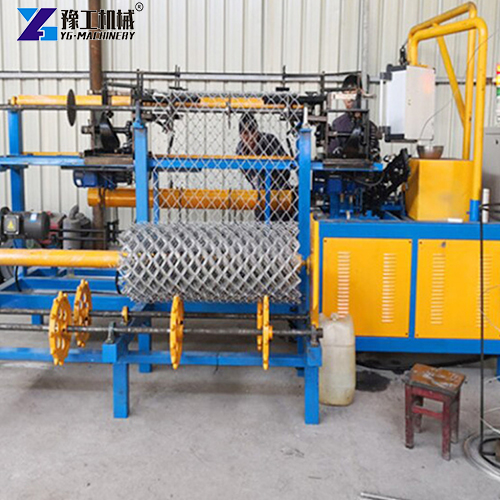
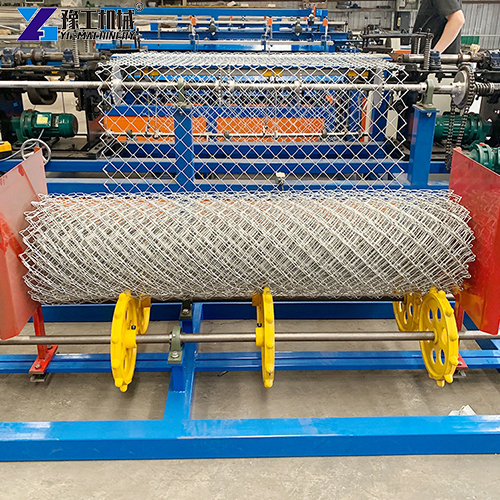
Choosing YG’s automatic chain link fence making machine delivers these core advantages:
1. One-person operation, labor costs cut sharply.
Traditional production requires multiple workers. YG’s fully automatic chain link fence making machine needs just one operator, saving labor costs significantly.
2. 24-hour continuous operation, stable output.
Built with a solid structure and low failure rate, the machine supports large-scale production with daily output reaching 1,680–2,880 m².
3. Quick hole size changeover, one machine, multiple uses.
Switching mesh specifications requires no complex adjustments. Operators can quickly swap molds and reset parameters — one machine produces multiple product types.
4. Minimal training, fast learning curve.
Most customers can master the machine by watching an operation video, greatly reducing training costs and time.
5. Servo drive + PLC control, precision, and longevity.
Servo motors ensure accurate positioning with low failure rates. The PLC programmable controller automates all processes — wire feeding, cutting, weaving, edge locking, and rolling. Electrical components are sourced from international brands, extending equipment life far beyond traditional models.
Choose YG
Whether you need galvanized, stainless steel, or PVC chain link mesh, YG provides the right chain link machine solution. Products support 1–6 m width customization, come standard with PLC servo control, include a one-year full machine warranty, and are backed by 24-hour technical support.
For more product details or a customized selection plan, feel free to contact the YG team!