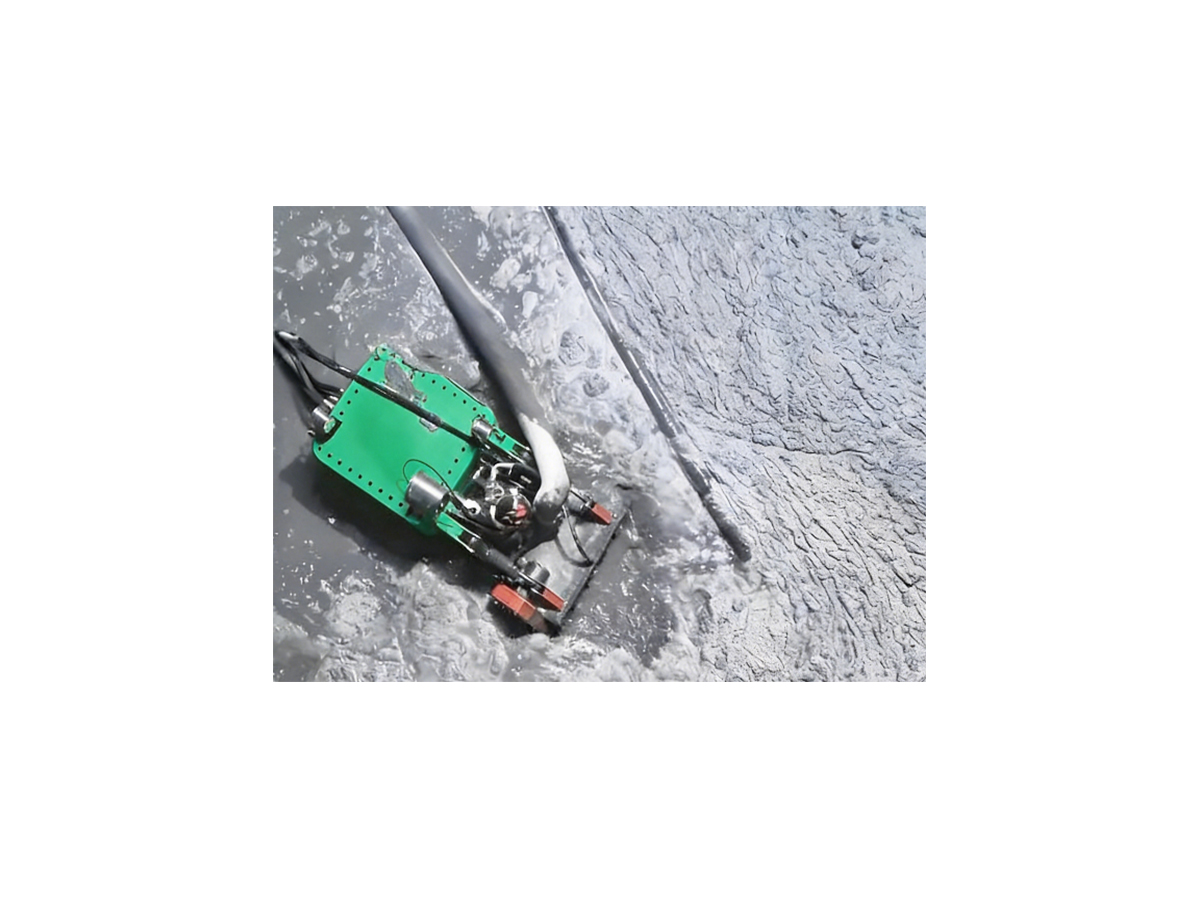

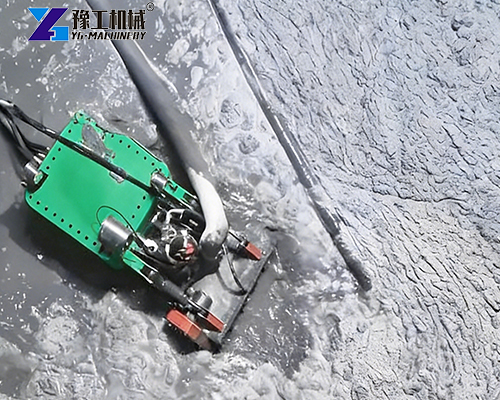
Around the world, rivers, lakes, and reservoirs are suffering from growing sediment build-up and water eutrophication. Traditional large-scale cofferdam and water-draining dredging is not only costly, but also causes devastating damage to aquatic ecosystems. Underwater crawler cleaning robots, as a new type of equipment with high efficiency, precise performance, and minimal impact on aquatic environments, are being adopted by a rising number of international water conservancy projects. Fitted with a tracked chassis, it travels steadily across river and lake beds. Multiple working end-tools break, cut, suck, and transfer sludge, with no need to drain water at any step. Focusing on river dredging scenarios, this article explains the technical parameters, key innovations, and ecological benefits of the underwater crawler cleaning robot to offer a reference for overseas contractors and water management authorities for equipment selection.
Sludge Dredging Robot Parameters
| Model | YG500 Electric | YG600 Electric | YG700 Electric | YG800 Electric | YG900 Electric | YG1200 Electric |
| Robot Dimensions | 1500×500×650 mm | 1500×600×650 mm | 1600×700×650 mm | 1600×850×700 mm | 1650×960×750 mm | 1900×1200×750 mm |
| Slurry Pump Model | 3E-100Z170 | 3E-100Z170 | 4E-250ZJ45 | 4E-250ZJ45 | 4E-250ZJ45 | 4C-200Z125 |
| Cleaning Width | 500 mm | 600 mm | 700 mm | 800 mm | 900 mm | 1200 mm |
| Track Speed | 3–15 m/min | 3–15 m/min | 3–15 m/min | 3–15 m/min | 3–15 m/min | 3–15 m/min |
| Robot Weight | — | — | — | — | — | 500 kg |
| Pump Inlet Size | 3 inch | 3 inch | 4 inch | 4 inch | 4 inch | 5 inch |
| Pump Flow Rate | 100 m³/h | 100 m³/h | 160 m³/h | 160 m³/h | 200 m³/h | 200 m³/h |
| Pump Head | 0–30 m | 0–30 m | 0–25 m | 0–25 m | 0–25 m | 0–25 m |
| Hydraulic Station Dimensions | 2200×1200×1700 mm | 2200×1200×1700 mm | 2200×1200×1700 mm | 2200×1200×1700 mm | 2200×1200×1700 mm | 2120×1240×1200 mm |
| Main Motor Power | 18 kW | 18 kW | 22 kW | 22 kW | 22 kW | 45 kW |
| Hydraulic System Pressure | 0–16 MPa | 0–16 MPa | 0–16 MPa | 0–16 MPa | 0–16 MPa | 0–16 MPa |
| Max Particle Size | 15 mm | 15 mm | 40 mm | 40 mm | 50 mm | 60 mm |
| Winch Speed | 0–10 r/min | 0–10 r/min | 0–10 r/min | 0–10 r/min | 0–10 r/min | 0–10 r/min |
| Standard Hydraulic Hose Length | 50 m | 50 m | 50 m | 50 m | 50 m | 50 m |
| Control System | Wireless Remote Control | Wireless Remote Control | Wireless Remote Control | Wireless Remote Control | Wireless Remote Control | Wireless Remote Control |
| Lighting System | 2× Underwater LED Lights | 2× Underwater LED Lights | 2× Underwater LED Lights | 2× Underwater LED Lights | 2× Underwater LED Lights | 2× Underwater LED Lights |
Pain Points of Traditional Dredging & New Demands for Ecological Dredging
Drawbacks of conventional river dredging methods
-Severe ecological harm: Cofferdam water-draining construction directly destroys habitats for aquatic life. Large-scale disturbance of bottom sediment sharply raises water turbidity and kills large numbers of fish and benthic organisms.
-Long construction cycles & high costs: Large-scale damming, cofferdam building, and water draining bring huge workloads. Limited construction windows are further constrained by seasons and incoming water flow.
-High risk of secondary pollution: Dredged sludge is stockpiled in open-air sites. Pollutants wash back into rivers with rain, so dredging results cannot last long.
New requirements for ecological dredging
Besides removing sediment, projects must protect aquatic ecosystems as much as possible, limit the scope of bottom-sediment disturbance, and control suspended-matter spread during work. Sludge dredging robot sets new technical standards for river dredging with precise, low-disturbance, no-water-stop operations.
Technical Breakthroughs & Working Mechanism of Underwater Crawler Cleaning Robot
The technical strengths of the underwater crawler cleaning robot lie in these key areas:
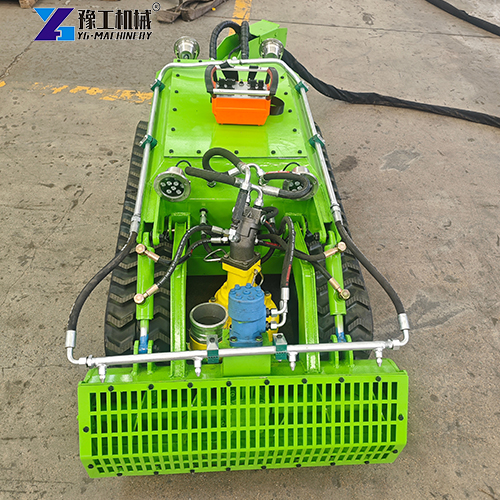
- Adaptive Tracked Chassis: Different from conventional vessel-mounted suction equipment, the underwater dredging robot uses an electric-driven tracked chassis. It drives and turns reliably over soft, uneven river beds and rarely gets stuck. It also performs well on steep river banks and complex terrain, delivering far wider coverage than fixed equipment.
- Fast-swap Multi-mode Working End-Tools: Based on river-bed sediment types — soft sludge, hard clay, mixed waste and debris — operators remotely switch working attachments: agitating-suction heads, auger tillers, auger crushing-suction heads, opening-closing raking arms, buckets and fork buckets. Operators can select extraction modes such as self-suction, pumping, pushing, and auger cutting. One single machine handles all working conditions, from fine-precision dredging to large-area clearance.
- Remote Operation & Real-time Sensing: Equipped with LiDAR, vision cameras, and ultrasonic sensors, it accurately maps river-bed terrain and sediment distribution even with very low underwater visibility. Operators run all controls from shore via the wireless remote-control system. Real-time underwater video feeds deliver full visibility, reliable control, and precise dredging.
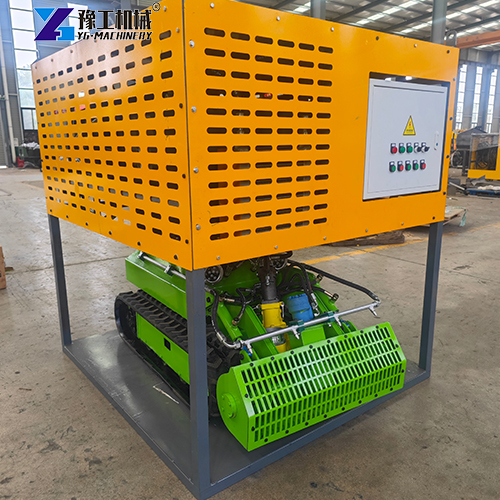
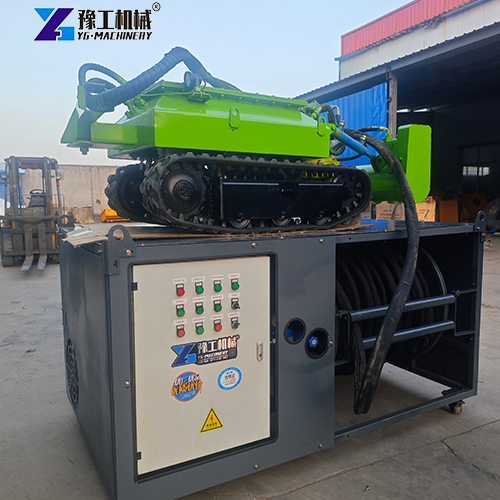
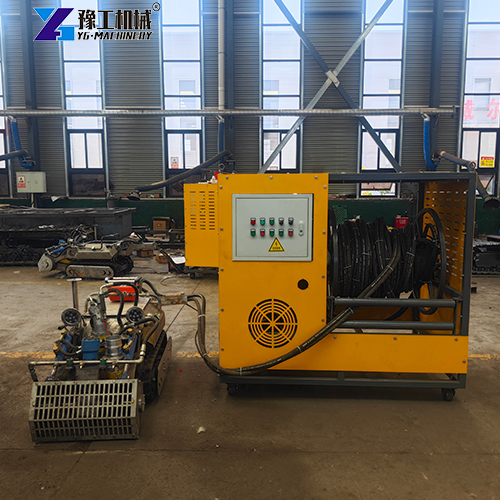
- Complete Closed-loop System Operation: The full-set sludge cleaning machine includes four core modules: underwater working unit, workstation (power cabinet + control cabinet), post-processing unit, and pipeline assemblies. The workflow follows: front-end agitation & cutting → middle-section sealed transfer → back-end solid-liquid separation & waste volume reduction. Sludge never touches open ground. Sand, silt, and water get separated to realize true one-stop treatment.
Ecological Synergy: More Than Sludge Removal — Water Protection
The ultimate goal of river dredging is not just sediment clearance, but restoring healthy aquatic ecosystems. The underwater crawler cleaning robot brings unique advantages for this purpose:
-Precise dredging with minimum disturbance: Sensors fitted on the tracked chassis monitor dredging depth live. Operators accurately adjust cutting depth and coverage of working tools, avoiding over-disturbance of original bottom soil and benthic habitats.
-Work without stopping water flow to protect aquatic life: No cofferdam or draining is required. Aquatic organisms do not need relocation. Water keeps its natural flow during construction, preserving ecological continuity to the maximum degree.
-Resource recovery via post-processing: The back-end separation system treats dredged sludge in classified ways. Sand and gravel get reused; organic matter turns into compost; waste gets compacted and transported off-site. Dredging evolves from waste disposal to resource recycling.
Sludge Dredging Robot: An All-round Solution From Urban Water Bodies To Complex Waters
YG-series sludge cleaning machine applies to far more scenarios than ordinary rivers:
-Urban inland rivers & landscape water bodies: Low-noise, low-disturbance dredging near residential zones, with no impact on residents’ daily life or landscape water views.
-Large lakes & reservoirs: Remove nutrient-rich bottom sediment, cut nitrogen and phosphorus release at source, and improve drinking-water and irrigation water quality.
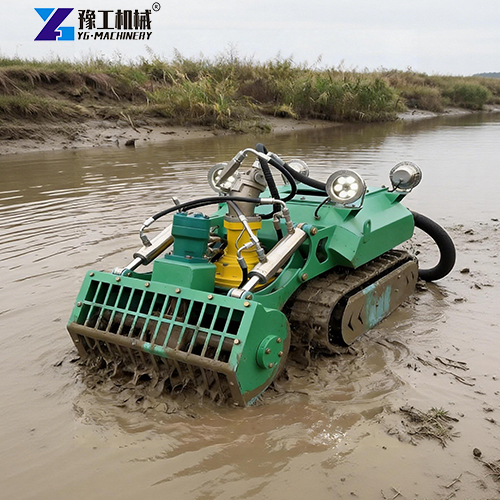
-Estuaries & intertidal zones: With a 30- 90 m diving depth, the sludge dredging robot adapts to tidal-level shifts and operates stably in tidal environments.
-Irrigation canals & water-diversion projects: Dredging width ranges from 500 mm to 1200 mm, matching irrigation canals of different widths.
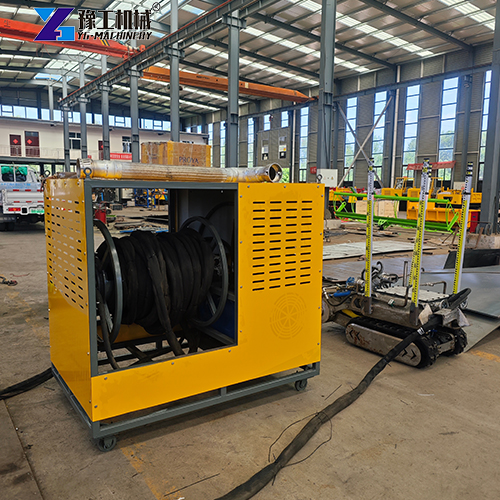
Choose YG Underwater Crawler Cleaning Robot
If you need sediment-remediation solutions for your rivers, lakes, or water-conservancy projects, reach out to the YG team for custom-designed solutions built around an underwater crawler cleaning robot. We offer full-range technical support: site-condition assessment, model selection, and complete equipment configuration. Both electric-powered and diesel-powered versions are available to match local power-supply conditions across global project sites.