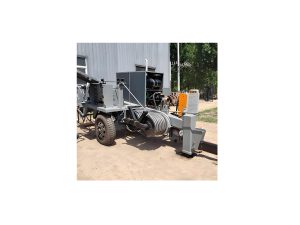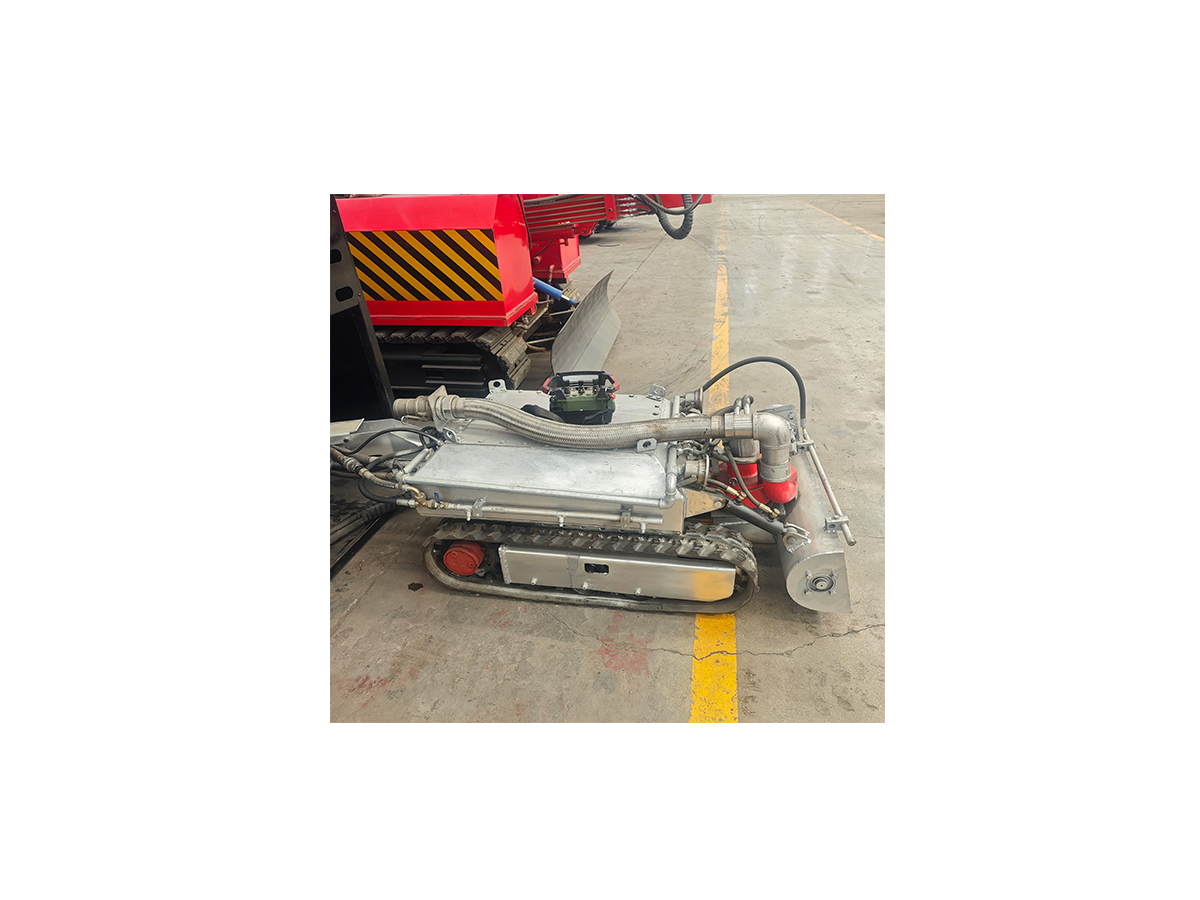

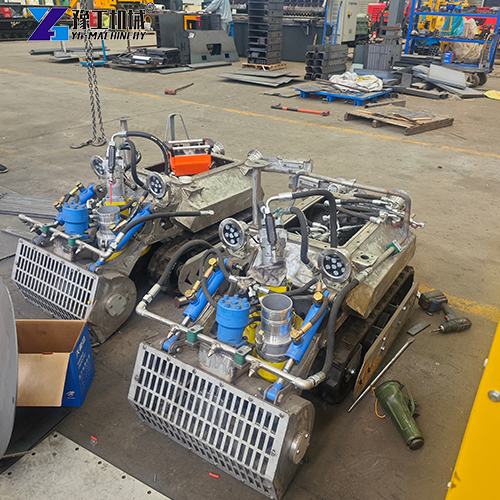
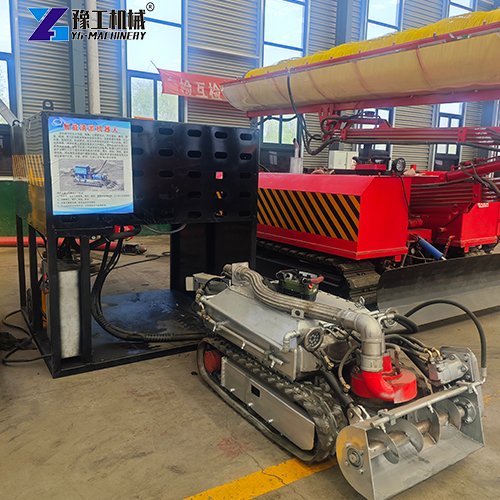
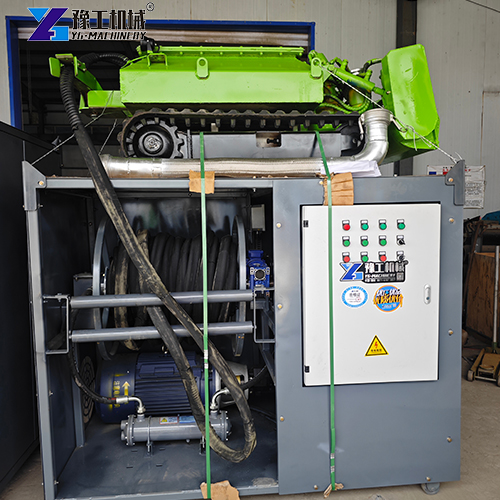
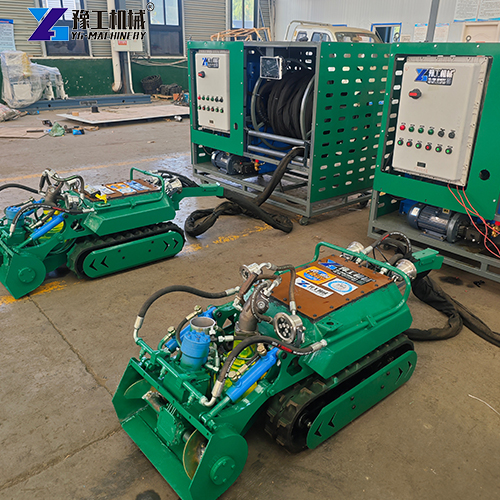
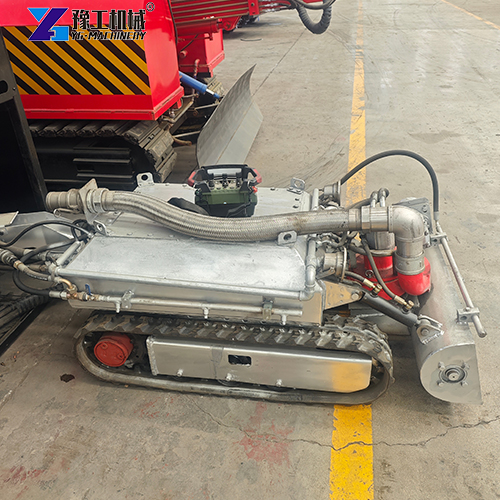
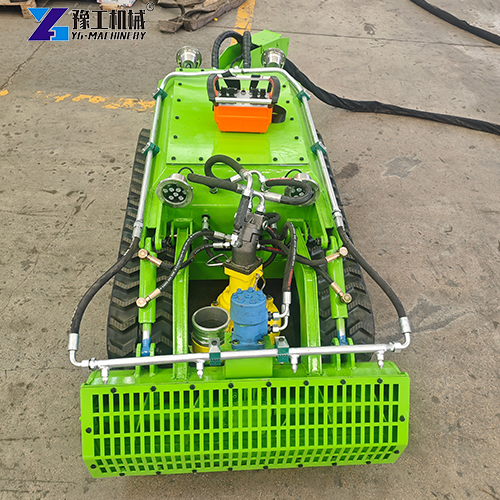
What is a crawler dredging robot? Simply put, it is a remotely controlled dredging device that can replace manual work in underwater and confined spaces. Its core structure includes a tracked walking chassis, multi-function working heads, a slurry pump suction system, a hydraulic power station, and a remote control system. The operator uses a wireless remote control from the ground to guide the robot through the bottom of storage tanks, inside pipelines, or in ponds. Depending on the type of sediment, the working head breaks up, crushes, or cuts the material, and then the pumping system transports the slurry in a closed pipeline to the surface for dewatering and solid-liquid separation.
Remote Control Dredging Robot Specifications
| Model | YG500 Electric | YG600 Electric | YG700 Electric | YG800 Electric | YG900 Electric | YG1200 Electric |
| Robot Dimensions | 1500×500×650 mm | 1500×600×650 mm | 1600×700×650 mm | 1600×850×700 mm | 1650×960×750 mm | 1900×1200×750 mm |
| Slurry Pump Model | 3E-100Z170 | 3E-100Z170 | 4E-250ZJ45 | 4E-250ZJ45 | 4E-250ZJ45 | 4C-200Z125 |
| Cleaning Width | 500 mm | 600 mm | 700 mm | 800 mm | 900 mm | 1200 mm |
| Track Speed | 3–15 m/min | 3–15 m/min | 3–15 m/min | 3–15 m/min | 3–15 m/min | 3–15 m/min |
| Robot Weight | — | — | — | — | — | 500 kg |
| Pump Inlet Size | 3 inch | 3 inch | 4 inch | 4 inch | 4 inch | 5 inch |
| Pump Flow Rate | 100 m³/h | 100 m³/h | 160 m³/h | 160 m³/h | 200 m³/h | 200 m³/h |
| Pump Head | 0–30 m | 0–30 m | 0–25 m | 0–25 m | 0–25 m | 0–25 m |
| Hydraulic Station Dimensions | 2200×1200×1700 mm | 2200×1200×1700 mm | 2200×1200×1700 mm | 2200×1200×1700 mm | 2200×1200×1700 mm | 2120×1240×1200 mm |
| Main Motor Power | 18 kW | 18 kW | 22 kW | 22 kW | 22 kW | 45 kW |
| Hydraulic System Pressure | 0–16 MPa | 0–16 MPa | 0–16 MPa | 0–16 MPa | 0–16 MPa | 0–16 MPa |
| Max Particle Size | 15 mm | 15 mm | 40 mm | 40 mm | 50 mm | 60 mm |
| Winch Speed | 0–10 r/min | 0–10 r/min | 0–10 r/min | 0–10 r/min | 0–10 r/min | 0–10 r/min |
| Standard Hydraulic Hose Length | 50 m | 50 m | 50 m | 50 m | 50 m | 50 m |
| Control System | Wireless Remote Control | Wireless Remote Control | Wireless Remote Control | Wireless Remote Control | Wireless Remote Control | Wireless Remote Control |
| Lighting System | 2× Underwater LED Lights | 2× Underwater LED Lights | 2× Underwater LED Lights | 2× Underwater LED Lights | 2× Underwater LED Lights | 2× Underwater LED Lights |
How Does a Crawler Dredging Robot Work?
The operation of a crawler dredging robot can be broken down into four key steps, forming a complete closed-loop process: “break up → extract → convey → post-treat”.
Step 1: Carry the working head and enter the work area.
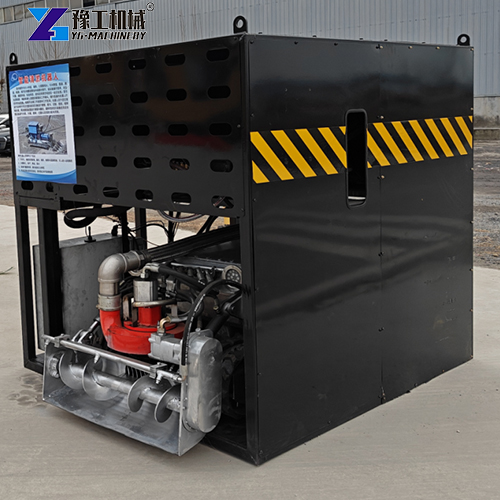
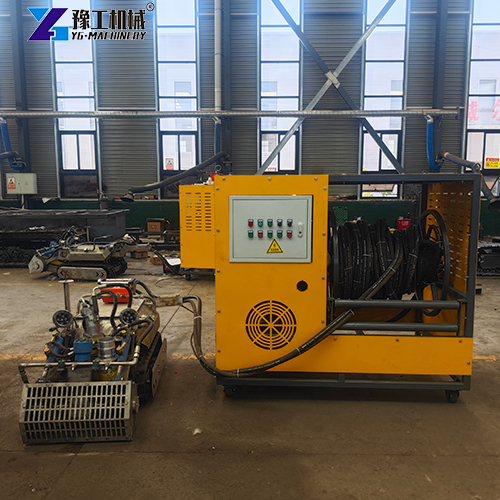
The crawler dredging robot uses its tracked chassis to carry different working heads (such as suction cutters, auger rototillers, auger crushing heads, opening-and-closing scraping arms, etc.). It is lowered by hoisting or drives itself into storage tanks, ponds, or pipelines. The hydraulic power station (power pack) supplies continuous power to the robot through hoses.
Step 2: Break up, cut, and crush the sediment.
While the robot moves forward, the working head breaks, stirs, cuts, or crushes the sludge and sediment at the location. For hard, compacted deposits, a high-pressure water jet device uses high-pressure water to soften them. For large foreign objects, the mechanical arm and cutter head can break and grab them.
Step 3: Suction and closed-conveyance.
The loosened sludge is drawn into the pipeline through the extraction device (in self-priming, pump-feeding, pushing, or auger mode) and then conveyed in a sealed pipe to the surface treatment equipment. The whole process keeps sludge from falling on the ground, with no secondary pollution.
Step 4: Post-treatment and sorting.
The post-treatment unit dewaters, sorts, filters, and recovers resources from the extracted material. The separated clean water can be reused or discharged to meet standards, while the dry residue can be recycled or disposed of properly, achieving one-stop treatment.
Key Features of YG Crawler Dredging Robot
The YG series sludge dredging robot has gained wide recognition in the global market thanks to the following core advantages:
- Full-scene coverage: From pipelines to large storage tanks, from municipal sewage to chemical storage, 6 models cover almost all dredging scenarios.
- Explosion-proof safety system: Optional full-machine explosion-proof solutions – explosion-proof control system, explosion-proof motor, explosion-proof hydraulic system – meet the strict requirements of flammable and explosive environments like petrochemicals.
- Remote control: All models come standard with wireless remote control. The operator can complete all operations safely from the ground, with underwater cameras and display screens for visual feedback.
- Non-stop operation: Dredging can be done while the pump system is running normally – no need to shut down or drain the tank, greatly reducing downtime losses.
- Flexible power options: Both electric and diesel-powered versions are available, suitable for sites with stable power supply or remote field locations without electricity.
- Deep-water capability: Maximum diving depth of 30m–90m (can handle fluid sludge with 40% solid content at up to 20m underwater) – covering most deep-water dredging needs.
- Complete system integration: Four modules – underwater unit, power station, post-treatment unit, and pipelines – are integrated into a ready-to-use system.
What Factors Should You Consider When Choosing a Crawler Dredging Robot?
With multiple models and configuration options, selecting a sludge cleaning machine requires a comprehensive evaluation across four dimensions:
1. Water body type: depth, sediment type, and obstacles
Different working environments demand very different equipment. For shallow pipelines (1–3m) with small deposits, the YG500/YG600 is sufficient. For deep storage tanks (over 10m) or large lakes, larger models with longer hydraulic hoses are needed. For hard crystalline deposits, high-pressure water jets and crushing heads are required; for soft sludge, a suction head is enough. If there is large debris or reinforcing bars on the tank or pond bottom, choose models with larger particle-passing capacity (YG900/YG1200, 50–60mm capacity).
2. Required cleaning speed and efficiency
Cleaning efficiency is directly determined by pump flow rate and cleaning width. Emergency repairs and rapid unblocking need high flow (YG1200’s 200 m³/h); for routine maintenance and small-area cleaning, medium flow of 100–160 m³/h is sufficient. The track speed is adjustable from 3–15 m/min, allowing flexible control according to sediment density.
3. Transportation and storage constraints
The physical dimensions vary significantly – the YG500 is only 1500×500×650mm and can easily fit into a small truck, while the YG1200 measures 1900×1200×750mm and requires more transport and storage space. For project teams that need to move frequently, compact models and quick-assembly designs are more important.
4. On-site power availability
If the site has stable industrial power, the electric version has lower operating costs and less noise. If it is a remote river or temporary site without power, the diesel-powered version is a better choice. The YG series offers both options, so you can choose flexibly according to actual conditions.
Applications of Sludge Cleaning Machine in Various Fields
The sludge cleaning machine is used far beyond a single scenario. Below are typical applications in four core areas:
Municipal engineering
- Regular maintenance and emergency unblocking of urban drainage pipelines
- Cleaning inspection wells and sewage pump stations
- Pre-rain dredging of combined sewer networks for flood control
Water conservancy
- Ecological dredging of rivers and lakes to remove nutrient-rich sediment
- Cleaning sediment from reservoir intakes
- Maintenance of irrigation channels and water diversion projects
Industrial sector
- Removing bottom oil sludge and sediment from petrochemical storage tanks
- Cleaning chemical plant pipelines and reactor vessels
- Maintaining settling tanks and aeration tanks in wastewater treatment plants
Mining and energy
- Cleaning sediment from tailings ponds
- Dredging cooling water ponds and circulating water basins
- Unblocking mine drainage systems
Frequently Asked Questions About Sludge Dredging Robot
Q: How much does a sludge dredging robot cost?
The price depends on the specific model and configuration. The base prices of the YG500–YG1200 series increase with size, and optional add-ons such as explosion-proof systems, underwater cameras, high-pressure flushing pumps, crushing heads, etc., will add extra cost. We recommend contacting YG with your actual working conditions for a custom quote.
Q: What are the wear parts of a remote control dredging robot?
Common wear parts include: the impeller and liner of the slurry pump (long-term abrasion), hydraulic hose couplings (frequent plugging/unplugging), rubber track pads (walking wear), and sealing rings (waterproof sealing). The replacement frequency depends on operating intensity – high-hardness sand and gravel environments require more frequent changes, while normal sludge environments need much less. Regular inspection and replacement based on operating hours are recommended to keep the equipment in optimal condition.
Q: How to perform daily maintenance?
After each operation, clean the robot chassis and working head, check track tension and wear; regularly lubricate hydraulic hose joints and auger bearings; check the integrity of electrical cables and seals; when storing for long periods, drain the hydraulic system and apply anti-rust treatment. YG provides detailed maintenance manuals and remote technical guidance.
Contact YG
If you are looking for a reliable crawler dredging robot solution, welcome to contact the YG team. We offer professional technical support from site assessment and model selection to complete configuration, along with electric and diesel options, full explosion-proof options, and global voltage customization – covering all dredging needs in municipal, water conservancy, industrial, and mining sectors.