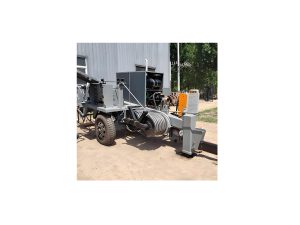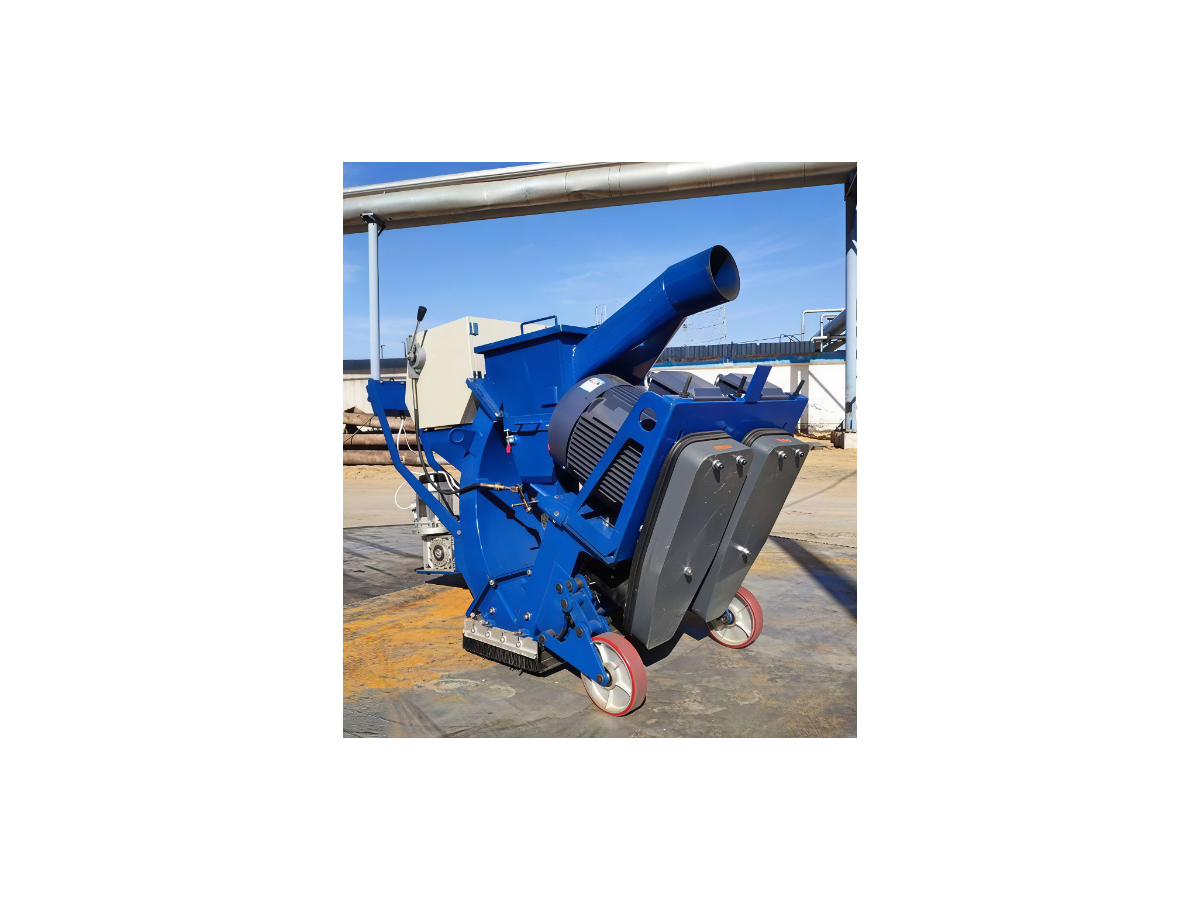

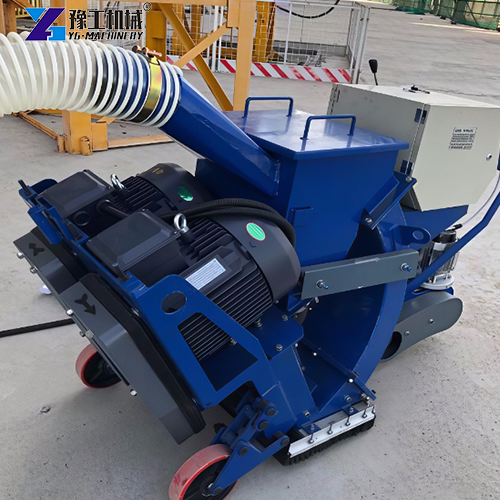
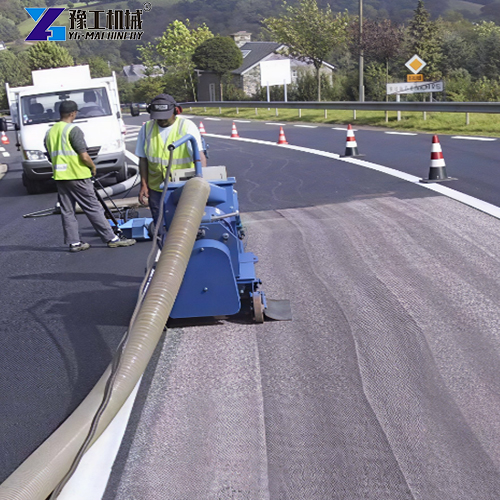
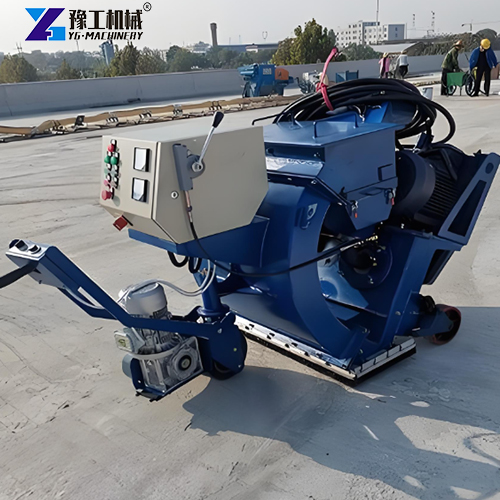
If you’re struggling with surface preparation for bridge deck waterproofing — manual grinding is too slow, chemical stripping is dusty, and traditional sandblasting doesn’t meet environmental standards — then you should know about the bead blaster floor machine. This mechanized shot blasting equipment uses high-speed steel shot to impact the surface, removing laitance, stripping old coatings, and creating the required surface roughness in one pass. With an integrated closed-loop dust collection system, it enables dust-free operation. With a maximum processing efficiency of up to 600 m² per hour, it is the first choice for large-area concrete and steel structure surface preparation. YG offers three models ranging from 270 mm single-wheel to 800 mm twin-wheel, covering everything from small warehouse renovations to large bridge deck projects.
Floor Shot Blasting Machine Parameters
| Model | YG-270(Single) | YG-550/600(Double) | YG-850(Double) | |
| Shot Blasting Wheel Diameter | 200mm | |||
| Working width | 270 mm | 550/600 mm | 800 mm | |
| Walking speed | 0.5~20 m/min | 0.5~33 m/min | ||
| Concrete surface cleaning efficiency | ≥180 m2/h | ≥400 m2/h | ≥600 m2/h | |
| Steel plate surface cleaning efficiency | 15-25 m2/h | 75-100 m2/h | 100-160 m2/h | |
| Dust connection pipe diameter | 120 mm | 150 mm | ||
| Suggest the diameter of steel balls | 1.2-1.5 mm | 1.5-1.8 mm | ||
| Steel pill consumption | 10 g/m2 | |||
| Supporting dust collector | Seven-core automatic backflush vacuum cleaner | Eight-core automatic backflush vacuum cleaner | ||
| Shot wheel motor | Power consumption | 11 kW | 11*2 kW | 15*2 kW |
| Input Current | ≤ 15 A | ≤ 22*2 A | ≤ 28*2 A | |
| Walking motor | Power consumption | 0.5 kW | 1.5 kW | |
| Input Current | 1 A | 3 A | ||
| Size (mm) | 1000*300*1100 | 1950*720/775*1400 | 1950*1020*1550 | |
| Weight | 150 kg | 570 kg | 700kg | |
| Power connection requirements | 400V, 50Hz, 100A, CEE socket | |||
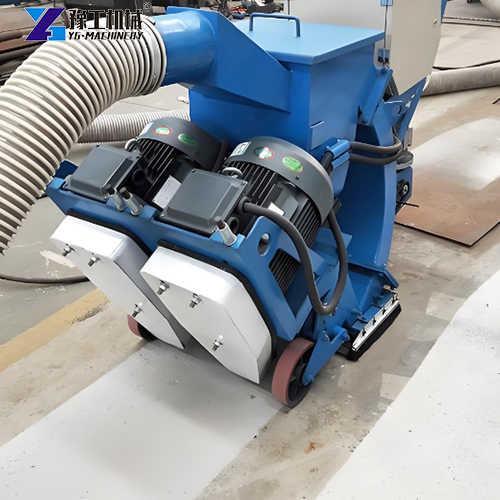
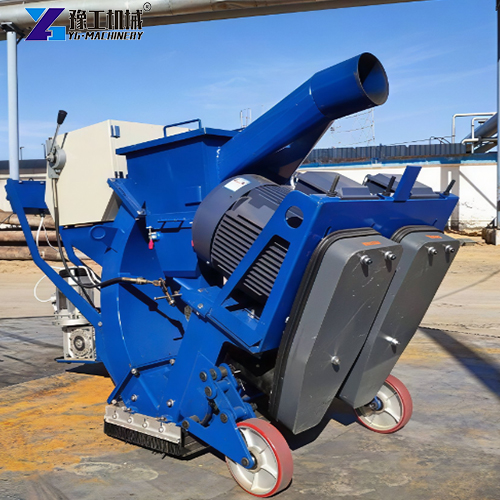
6 Advantages of Bead Blaster Floor Machine
- High efficiency for large-area work
Compared with manual grinding, which processes only 5-15 m² per hour, the floor shot blaster can clean concrete at up to 600 m²/h (YG-850 model) — more than 40 times faster. Large bridge decks, runways, or warehouse floors can be completed in days, greatly shortening the construction period. - Uniform and controllable surface roughness
By adjusting the walking speed and choosing different steel shot diameters, you can precisely control the surface roughness level (CSP 3-5). This is much more reliable than the random results of manual grinding, ensuring consistent bonding quality for waterproofing membranes and coatings. - Dust-free and environmentally friendly operation
The supporting dust collector uses airflow to automatically separate shot from debris and dust, with a capture rate of over 99%. There is no obvious dust at the job site, making it suitable for indoor warehouses, airport terminals, urban bridges, and other projects with strict environmental requirements. - Shot recycling reduces consumable costs
Steel shot is automatically recovered and reused inside the machine, with consumption of only about 10 g per square metre. For a 5,000 m² bridge deck, total shot consumption is about 50 kg — much lower in cost than disposable abrasives or chemicals. - Multi-purpose use
The same floor shot blasting machine can handle both concrete (removing laitance, scarifying, stripping old coatings) and steel (derusting to SA 2.5-SA 3) — you just change the shot diameter. With high utilisation, it is ideal for contractors taking on various types of projects. - Easy operation and low labour costs
Self-propelled design means the operator only needs to control the direction, with no heavy physical work. Most workers can get started in half a day, and two people can handle large-area construction, with much lower labour input than traditional methods.
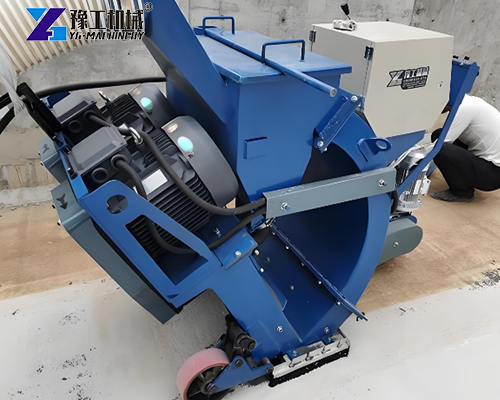
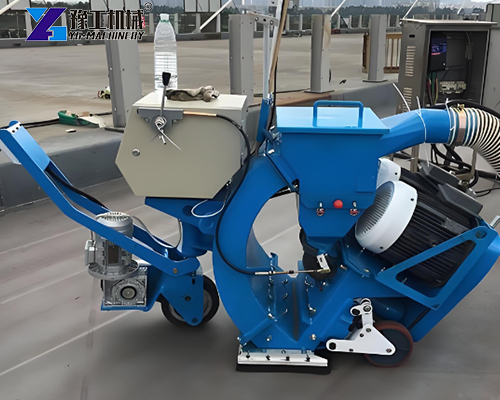
What are the Wear Parts of the Concrete Floor Bead Blaster?
In daily use, the main wear parts of the bead blaster floor machine include the following four categories:
- Directional sleeve and blasting wheel blades – they directly contact high-speed steel shot and wear fastest, with a service life of about 20,000 m². It is recommended to check wear after each large project and replace them when the wear exceeds one-third of the original thickness.
- Top and side liners – they protect the inner wall of the blasting chamber and last about 50,000 m². Worn liners reduce shot rebound efficiency and affect treatment results.
- Steel shot – although recyclable, it gradually breaks and becomes smaller after repeated impacts, so fresh shot must be added regularly. For a 50,000 m² bridge deck, about 2-3 tonnes of steel shot are needed in total.
- Dust collector filter cartridges – they become clogged after long-term dust filtration, reducing suction. The seven-core / eight-core automatic backflush system extends cartridge life, but inspection is recommended every six months and replacement if necessary.
YG supplies a full range of original wear parts, with worldwide express shipping to keep your equipment running.
Applications of the Floor Shot Blaster
Concrete surface treatment
- Removing laitance and curing compounds from concrete to provide a clean substrate for waterproofing layers
- Scarifying bridge decks to achieve CSP 3-5 roughness, enhancing waterproofing membrane adhesion
- Renovating warehouse, garage, and factory floors — removing old coatings and stains
Municipal roads and highways
- Removing old road markings and thermoplastic coatings
- Increasing surface roughness and friction coefficient for improved driving safety
- Scarifying road and tunnel pavements
Airport runway maintenance
- Removing rubber deposits in runway touchdown zones
- Removing old runway markings
- Restoring runway surface roughness and raising friction coefficient to aviation safety standards
Asphalt pavement treatment
- Removing surface contaminants from asphalt
- Roughening asphalt surfaces to improve adhesion and skid resistance
- Cleaning and maintaining asphalt layers on airport runways
Steel structure surface treatment
- Derusting steel plates to SA 2.5-SA 3
- Surface preparation for pedestrian overpasses and steel beams before painting
- Decontaminating steel structures in nuclear power plants
Railway and transport facilities
- Scarifying railway bridge decks before waterproofing
- Surface treatment of concrete components in rail transit systems
Large-area construction tips
Walking speed control
Walking speed directly affects the surface finish. Too fast gives insufficient roughness; too slow can cause over-treatment and increased wear. Recommendations:
- Concrete scarifying: control at 10-20 m/min (twin-wheel models) to reach CSP 4 in one pass
- Steel derusting: about 4 m/min for SA 2.5, about 3 m/min for SA 3
- For first-time use, test a short section at the edge first, then proceed at full speed once the result is confirmed
Shot flow adjustment
Shot flow is controlled by the regulating valve at the bottom of the hopper. Too low reduces efficiency; too high increases consumable waste and motor load. Recommendations:
- Keep the shot level at 1/2 to 2/3 of the hopper to ensure steady feed
- Check shot size every 2,000-3,000 m²; remove excessive fines and add new shot
- For concrete, use 1.2-1.5 mm shot; for steel, use 1.5-1.8 mm shot
Edge and corner treatment
The bead blaster floor machine covers large areas with its standard working width, but corners, column bases, and edges need special attention:
- When working along walls, keep the machine close to the wall and use the eccentric coverage of the blasting wheel to treat the edge
- For dead corners unreachable by the machine (e.g., pipe bases, narrow corners), use a hand-held angle grinder for touch-up
- For large areas, it is best to finish the edges and corners first, then work the middle area to avoid missing spots
Frequently Asked Questions about Bead Blaster Floor Machine
Q1: How much area can one bead blaster floor machine handle per day?
A1: Taking the YG-850 as an example, concrete surface efficiency is ≥600 m²/h. With 8 effective working hours per day, one machine can process up to 4,800 m² per day. In practice, allowing for shot refilling, moving between sites, and breaks, the daily output is about 3,000-4,000 m².
Q2: How soon after concrete treatment can waterproofing be applied?
A2: After shot blasting, the concrete surface is clean, dry, and rough, so waterproofing membranes can usually be applied immediately. It is recommended to complete the waterproof layer within 48 hours to avoid surface re-contamination.
Q3: What are the power requirements? Can the site supply it?
A3: All models require 400 V / 50 Hz three-phase power with a CEE socket connection. Large sites usually have three-phase supply; if not, a diesel generator set with adequate power can be used.
Q4: How do you clean up the steel shot after the job?
A4: The closed-loop recovery system of the floor shot blasting machine automatically returns most of the shot to the hopper. After finishing, simply sweep the floor with an industrial vacuum cleaner — there will not be a large amount of shot left behind.