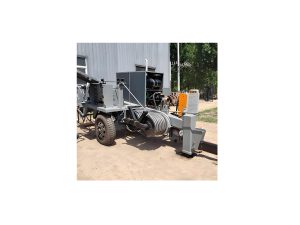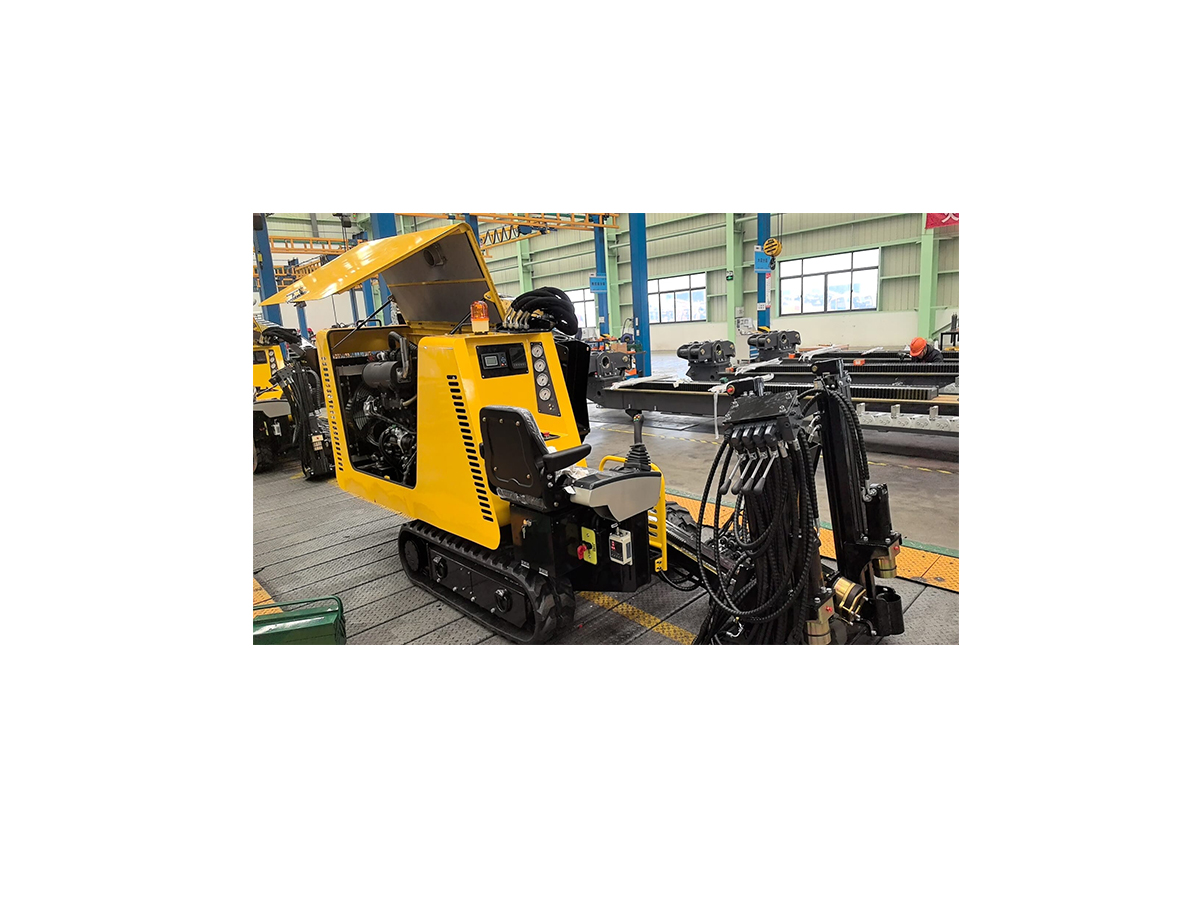

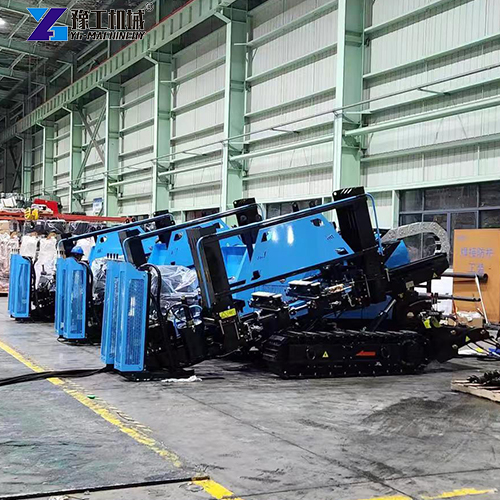
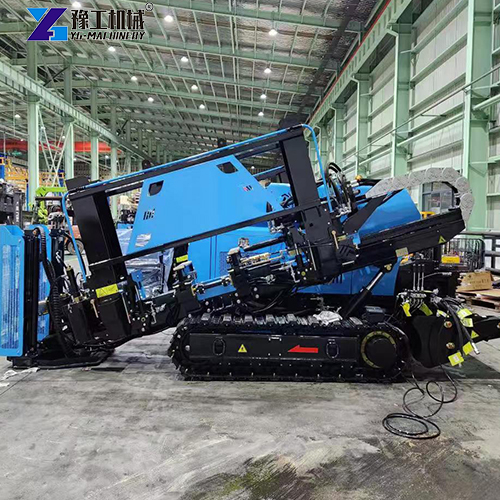
Modern underground construction has long moved past the era of purely manual operation. An advanced pipe-laying horizontal directional drilling rig not only features intelligent functions like auto-anchoring, automatic drill pipe loading/unloading, and automatic lubrication, but also uses a computer-controlled steering system to monitor the drill bit position in real time, achieving centimeter-level guidance accuracy. This horizontal drill rig, which integrates mechanical, hydraulic, and electronic control systems, can handle hard rock conditions and maneuver flexibly in tight spaces. However, even the best equipment can face risks like hole collapse or pipe sticking if the drill pipe and bit are poorly matched or if pullback parameters are off. This article will walk you through the key points – from rig selection and tool matching to pullback techniques – so you can get the most out of your equipment.
YG Best-selling Directional Boring Machine for Sale Specifications
| Model | YG-160A | YG-180 | YG-280 | YG-320 | YG-320A |
| Engine rated power | 100KW | 97KW | 160KW | 140KW/160KW | 160KW |
| Push and pull | Cylinder | Motor | Motor | Cylinder | Motor |
| Maximum drag/feed force | 160/100KN | 180/180KN | 280/280KN | 320/320KN | 320/320KN |
| The maximum torque of the powerhead | 5000N.n | 6000N.n | 10000N.n | 12000N.n | 12000N.n |
| Powerhead speed | 0-180r/min | 0-140r/min | 0-120r/min | 0-140r/min | 0-140r/min |
| Moving speed of the powerhead | 30m/min | 20m/min | 20m/min | 20m/min | 20m/min |
| Maximum reaming hole diameter | Φ600mm | Φ600mm | Φ750mm | Φ800mm | Φ800mm |
| Drill rod length (single) | 3m | 3m | 3m | 3m | 3m |
| Drill pipe diameter | Φ60mm | Φ60mm | Φ73mm | Φ73mm | Φ73mm |
| Drill pipe diameter | 10-23° | 10-22° | 10-23° | 10-20° | 10-20° |
| Maximum mudflow | 160L/min | 250L/min | 320L/min | 320L/min | 320L/min |
| Maximum mud pressure | 100bar | 80bar | 80bar | 80bar | 80bar |
| Overall quality | 6700kg | 8500kg | 12500kg | 11500kg | 11200kg |
| Dimension(length*width*height) | 5700*1820*2400mm | 6400*2270*2340mm | 7100*2260*2450mm | 7100*2250*2450mm | 7662*2162*2450mm |
Why Choose YG Pipe-Laying Horizontal Directional Drilling Rig?
Choosing a good pipe-laying horizontal directional drilling rig directly affects project efficiency and costs. The YG series stands out for these reasons:
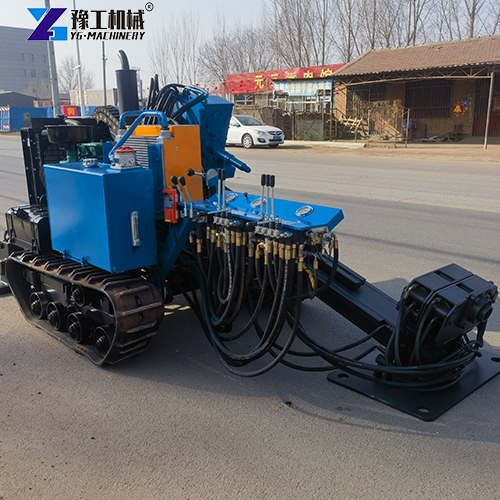
• Strong yet economical power – high-performance engine with excellent fuel economy, lowering long-term operating costs.
• Efficient and durable transmission – rack-and-pinion push-pull drive gives high efficiency and long service life, reducing downtime for maintenance.
• Wide adaptability – mast luffing mechanism supports 13°~28° entry angle adjustment, suitable for both short- and long-distance installations.
• Easy mobility – heavy-duty undercarriage with rubber tracks and high-speed travel motors, plus optional wired remote control for better visibility and safety.
• Reliable core components – joint-venture high-pressure cast-iron main pump, quality mud pump, and imported hydraulic valve groups ensure stable performance under high pressure.
• Two-speed design – both rotation and push-pull have dual-speed modes, letting you switch based on soil hardness to improve efficiency.
How to Match High-quality Drill Pipe and Bits for Your Horizontal Drill Rig?
Drill pipe and bits are key consumables for an underground pipe drilling machine. Proper matching follows these principles:
• Match by rig power – high-torque rigs need high-strength alloy steel pipe; lower-power models use lighter pipe to avoid sticking or breaking.
• Match bit to ground conditions:
– Soft clay, sand → standard pipe + blade or conical bits.
– Gravel, cobble layers → high-torque pipe + PCD or roller bits.
– Hard rock → surface-hardened or hard-chrome coated wear-resistant pipe + roller cone bits.
• Pay attention to pipe connections – ensure threads match and are well lubricated; an auto-lube system extends connection life.
• Inspect wear regularly – check pipe straightness and bit wear after each job, and replace as needed.
Pullback Guide: How to Choose the Right Reamer?
Reamer selection directly affects hole quality and pullback success. Here are the three main types:
• Barrel reamer – good for soft clay; it compacts the hole wall, helps support and smooth the bore, and resists collapse.
• Plate reamer – has large cutting edges with strong cutting ability, suitable for harder ground, with reaming sizes up to 480~1625mm.
• Fly-cutter (spinning) reamer – carbide cutting teeth with smooth chip removal, especially effective in dense sandy soils.
Also keep in mind:
• Reaming diameter is usually 1.2~1.5 times the pipe outer diameter.
• For large diameters, use step reaming, with adjacent step diameters 100~150mm apart.
How to Calculate Proper Pullback Speed to Prevent Hole Collapse?
Pullback speed is critical for hole stability. Here are the calculation and adjustment strategies:
• Basic rule – too fast disturbs the wall, too slow kills efficiency; adjust dynamically by ground conditions.
• Soft ground – use lower speed (e.g., <2m/min) and increase mud pump flow for better wall support.
• Hard rock – speed can be moderately higher (e.g., 3~5m/min), but closely monitor torque and pull force.
• Real-time monitoring – if torque or pull spikes, slow down immediately and flush the hole.
• Supporting measure – choose a directional boring machine for sale with precise steering and real-time feedback, which helps control pullback parameters more scientifically and effectively prevents collapse.
How to Choose the Right Pipe-Laying Horizontal Directional Drilling Rig?
Selecting a suitable pipe-laying horizontal directional drilling rig requires evaluating these dimensions:
• Project needs – know pipe diameter (φ300~φ1200mm), laying length (up to 1500m), and ground conditions (soft to hard rock).
• Compare performance specs – focus on push-pull force, torque, speed, entry angle range. The YG series has clear differences across models to match your needs.
• Automation features – prefer models with automatic pipe stacking and retrieval, auto-lube, and anti-electric shock systems for better safety and efficiency.
• After-sales and parts – confirm the manufacturer offers a full range of tooling and prompt technical support.
• Mobility – if sites are scattered, choose rubber-track undercarriage and high-speed travel motors to save transport time.
Frequently Asked Questions About Horizontal Drill Rig
Q1: What ground conditions can an underground pipe drilling machine work in?
Most non-hard-rock areas, with operating temperatures from -15°C to +45°C. By changing tooling, it can adapt from soft soil to medium-hard rock.
Q2: What if the bit deviates from the path during drilling?
Use a high-precision guidance system for real-time monitoring; anticipate more in sand and gravel layers; ensure pipe connections are tight to reduce system error.
Q3: How to prevent pipe sticking or pullback failure?
Ensure adequate reaming (diameter target met), proper mud weight and flow rate, calculate pullback force limits in advance, and never overload.
Q4: What to do if mud circulation is poor?
Check mud pump pressure and line blockages; mix bentonite mud to the right ratio for suspension and lubrication; clean nozzles regularly.
Q5: How to extend drill pipe life?
Clean threads and apply rust-proof oil after each use; avoid prolonged over-torque operation; perform regular non-destructive testing.
Choose YG Pipe-laying Horizontal Directional Drilling Rig
A top-quality pipe-laying horizontal directional drilling rig is the core guarantee for efficient trenchless pipe installation. Every step – from rig selection and tool matching to pullback control – directly affects project success. The YG series underground pipe drilling machine offers professional solutions for various pipe-laying projects with its strong power system, reliable hydraulic configuration, and flexible operation. Whether you’re an industry veteran or new to this equipment, we hope this article provides practical and useful reference for your equipment selection and construction operations.