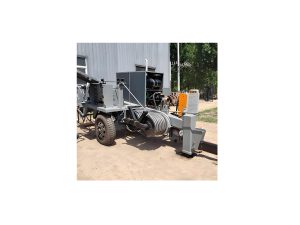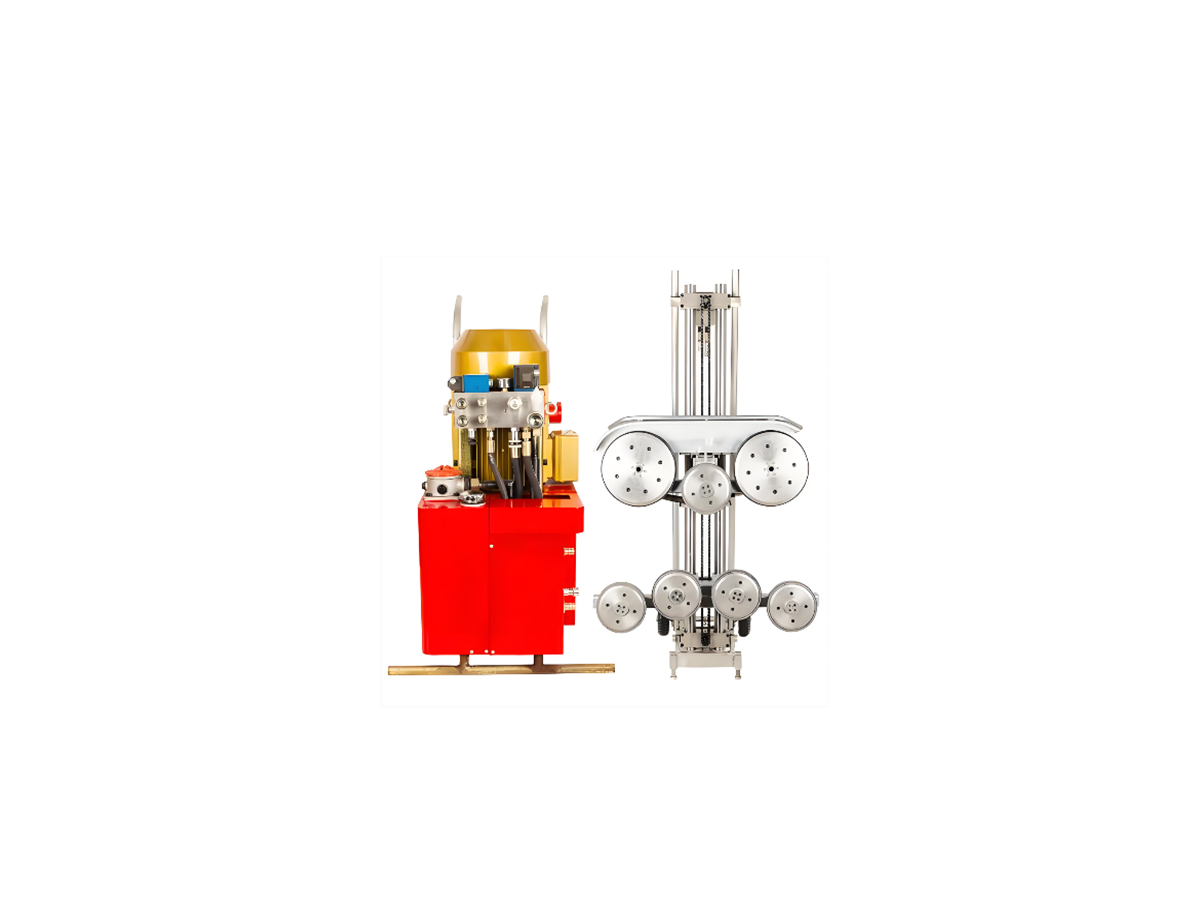

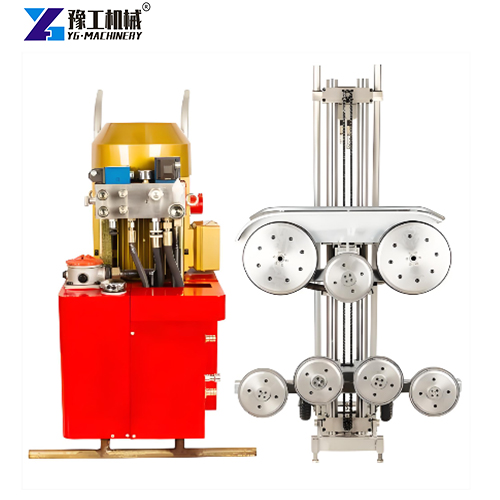
A set of diamond wire cutting saws weighs less than 200 kg, yet can easily cut through concrete bridge piers several meters thick; it operates at under 80 dB, far lower than the 100+ dB of a breaker hammer; its cut surface flatness reaches millimeter level, requiring no secondary finishing. Behind these numbers lies a technological shift taking place in global engineering. As a static cutting device that uses diamond-impregnated wire rope and hydraulic drive, it is gradually replacing traditional blasting and breaker hammer methods, becoming the preferred solution for high-risk projects such as bridge demolition, underwater pile cutting, and wharf renovation.
Wire Rope Saw Parameters
| Wire Saw Wheel Parameters | Hydraulic Pump Station Parameters | ||
| Wire Drive Mode | hydraulic | Rated Output Power | 22/25KW |
| Model Type | HM-40/80 | Working Voltage | 380v 50Hz |
| Minimum Input Power | 25HP/33HP | Hydraulic Pump Station | Gear pump |
| Output Shaft Speed | 350/940/1300r/min | Motor Working Floe | 40-100L/min |
| Maximum Wire Length | 18m | Working Pressure | 15-20Mpa |
| Feeding Method | Fully hydraulic | Oil Tank Volume | 16L |
| Wire Saw Wheel | 64kg | Weight | 98kg |
| Motor Weight | 13kg | Dimension(mm) | 650*550*1150 |
| Cutting Type | Transverse and longitudinal cutting | ||
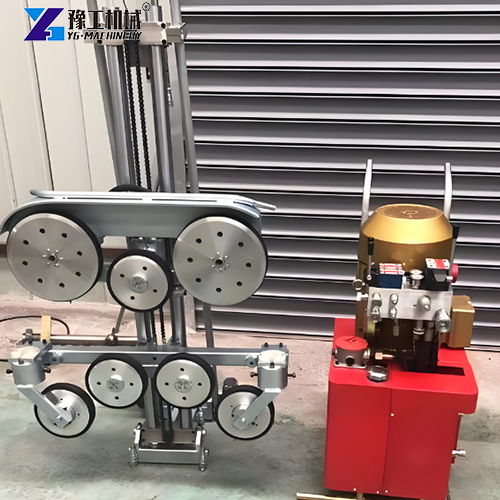
Wire Rope Saw cutting Vs. Traditional Cutting
Compared with breaker hammers, pneumatic picks, or blasting, the diamond wire cutting saw offers overwhelming advantages. It is essentially a static cutting device that completely surpasses traditional methods in the following dimensions:
- Near-zero vibration, ensuring structural safety: Traditional breaker hammers produce violent shock waves, easily causing hidden cracks or even collapse in remaining structures. In contrast, diamond wire cutting saw uses high-speed grinding, with a smooth and stable cutting process, almost no disturbance to retained structures—especially suitable for reinforcement and renovation of bridges, historic buildings, and other high-safety projects.
- High cutting precision and smooth kerf: Traditional methods cannot control the cutting surface, often resulting in a destructive “smash-and-break” outcome. Diamond wire cutting machine cutting enables accurate straight-line cuts—whether transverse, longitudinal, or at irregular angles—with neat and smooth kerfs, eliminating secondary finishing and greatly saving subsequent time and costs.
- Low noise, low dust, green and eco-friendly: Pneumatic picks and breakers often exceed 100 dB, with dust flying everywhere, seriously disturbing residents and harming workers’ health. The wire rope saw operates at very low noise, and the cutting process requires continuous water cooling, which effectively absorbs dust for dust-free operation—ideal for sensitive environments such as city centers, hospitals, or schools.
- Cutting capacity not limited by thickness: Traditional breakers are often helpless against reinforced concrete piers several meters thick, while diamond wire saw rope length can be flexibly adjusted (standard up to 50 meters). As long as the rope can wrap around the object, it can cut through regardless of thickness—something no other traditional tool can match.
- Underwater operation capability, broader applications: Traditional equipment faces power failure or electrical safety risks underwater, but the diamond wire cutting saw is fully hydraulically driven, with the power unit unaffected by water depth. Simply lower the cutting head into the water to cut underwater piles—providing the only feasible solution for underwater repair of wharves and bridges.
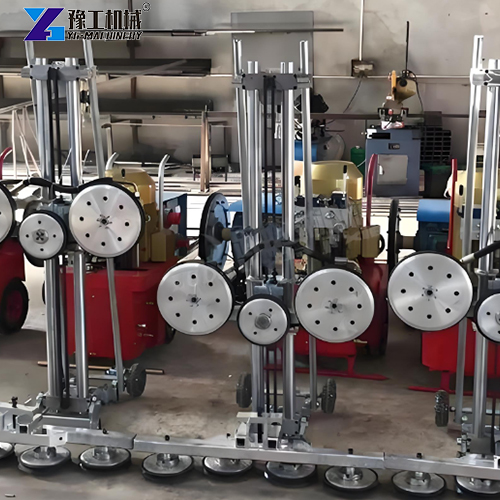
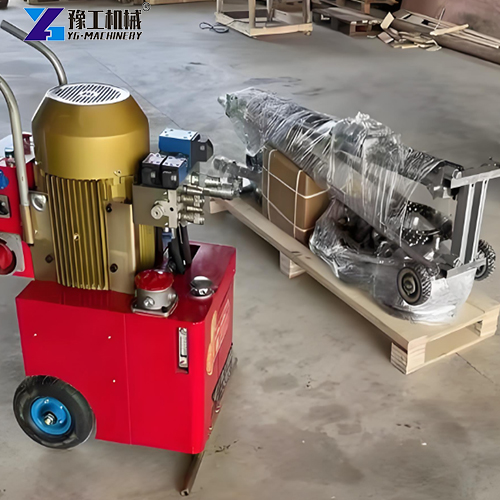
How does the Diamond Wire Cutting Saw work?
In practice, high-pressure oil from the hydraulic pump station drives the hydraulic motor on the main unit, which rotates the drive wheel. The diamond wire saw rope is wound around the drive and driven wheels, then moves in high-speed one-way circulation. The diamond segments on the rope grind against the concrete surface under high pressure, turning it into powder, while water injected through the inlet flushes away the powder and cools the “hot” wire rope to prevent premature failure from overheating. This “cut-grind-discharge” cycle is what allows the equipment to easily cut through piers several meters thick.
How to Choose the Right Diamond Wire Cutting Saw
First, consider the cutting object. For plain concrete, standard wire rope works; for columns full of rebar or high-grade C50 concrete, choose a rope with higher segment hardness and possibly reduce the diamond wire cutting saw’s travel speed.
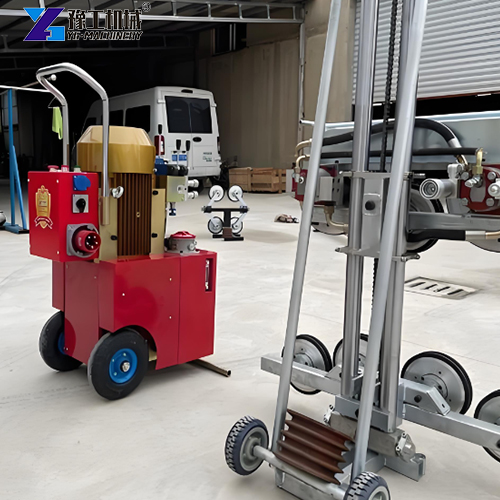
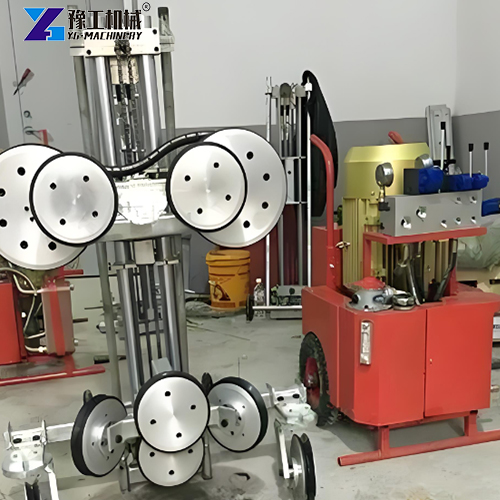
Second, check the matching between the main unit and the pump station. Ensure your carrier’s hydraulic flow is within the 40–100 L/min range. Too low a flow results in weak cutting; too high a flow may cause overheating. Also, the maximum wire length is typically around 18 meters (standard rope coil is 50 meters, cut to length as needed)—choose the rope length based on the cutting object’s cross-section perimeter to maximize efficiency.
How to Extend the Service Life of a Diamond Wire Cutting Saw?
Its consumable—diamond wire rope—is expensive, so proper use significantly reduces operating costs.
First, ensure adequate water cooling. Connect a water pipe securely to the head inlet and maintain continuous flow; never run dry or with insufficient water pressure.
Second, check hose connections. The equipment comes with four 10-meter high-pressure hoses—keep the couplers clean when connecting to prevent dust from entering the hydraulic system and causing valve sticking.
Third, adjust tension as needed. During cutting, the rope loosens due to wear; adjust tension via the driven wheel in time to prevent slipping and abnormal wear on the drive wheel.
Choose YG
YG understands that every project is unique. We not only offer standard configurations (including pump station, frame, hoses, hydraulic pliers, and tool kit) but also provide customized parameter adjustment advice based on your working conditions.
Whether you need to cut gate slabs several meters thick or perform static demolition of underwater piers, our equipment can solve your challenges with high safety and cost-effectiveness. If you have any questions about cutting solutions or equipment selection, feel free to contact the YG team—we will provide one-on-one professional guidance.