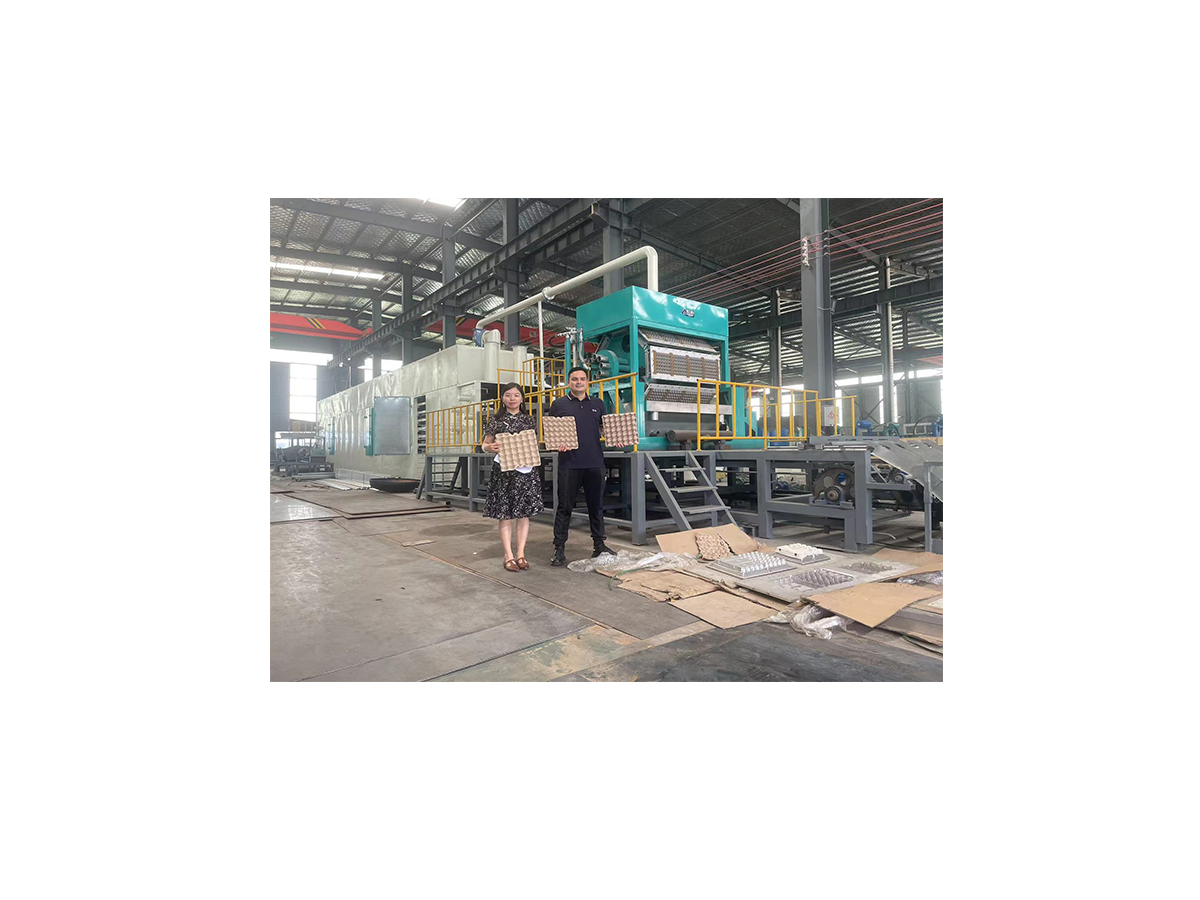

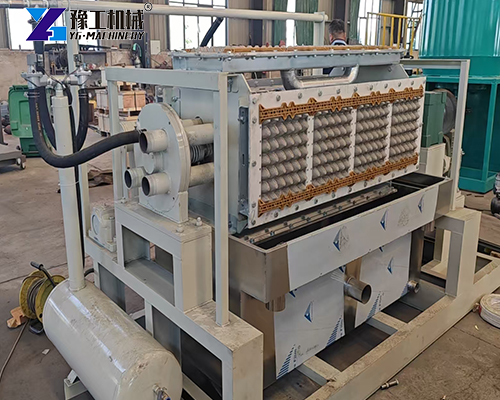
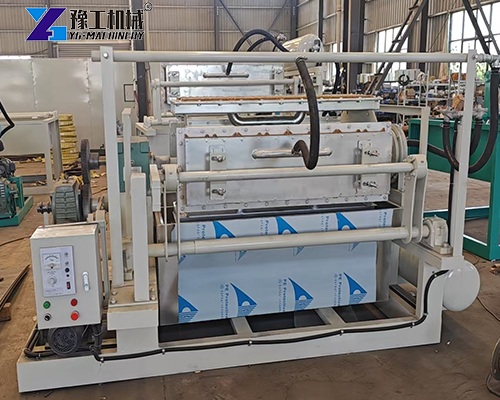
Many customers new to the molded-pulp industry often ask: How much does it cost to set up an egg-tray production line? Investment for an egg tray machine can vary greatly. You may start with the basic YG-1000 flip-mould machine plus natural drying racks, or opt for a high-end drum-type machine with 7000 pcs/h capacity paired with a fully automatic multi-layer drying line. The key is to match a proper drying solution and plant size according to the target output of your egg crate making machine. This article sorts out a clear investment roadmap from four perspectives: equipment selection, mould comparison, production-line composition, and plant layout.
Parameters of YG Hot-selling Egg Crate Making Machine
| Model | Capacity/H | Power/hour | Paper Consumption/H | Water Consumption/H |
| YG-1500 – 4X1 | 1500pcs/h | 38kw | 120kg | 240kg |
| YG-2500 – 3X4 | 2500pcs/h | 55kw | 200kg | 400kg |
| YG-3000 – 4X4 | 3000pcs/h | 60kw | 240kg | 480kg |
| YG-4000 – 4X8 | 4000pcs/h | 95kw | 320kg | 640kg |
| YG-5000 -5X8 | 5000pcs/h | 95kw | 400kg | 800kg |
| YG-7000 -6X8 | 7000pcs/h | 120kw | 480kg | 960kg |
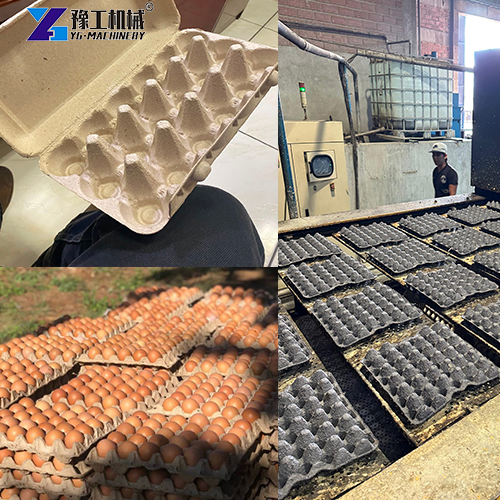
4 Advantages of YG Egg Tray Machine
Cost-effective entry-level option
The YG-1000 flip-mould machine comes at a low price, ideal for newcomers entering the molded-pulp industry. It reaches 1000 pcs per hour. Products dry by natural air-drying with no extra drying investment, making it perfect for market testing.
Clear capacity gradient
Seven models cover output from 1000 pcs/h up to 7000 pcs/h, satisfying small-scale startups, medium-sized factories, and large-volume mass production. Customers for an egg tray maker machine can increase capacity step-by-step as their business grows, avoiding excessive one-time investment.
Very low raw-material cost
An egg tray manufacturing machine runs on waste paper: used books, old newspapers, waste cartons, printing-plant off-cuts, and paper-mill residual pulp are all acceptable. Raw materials are easy to source at low cost and bring decent profit margins.
Wide product range
Beyond egg trays, you can swap moulds to produce egg cartons, coffee cup holders, shoe liners, electronic-product inner packaging, and other pulp-molded goods. One machine opens multiple profit streams.
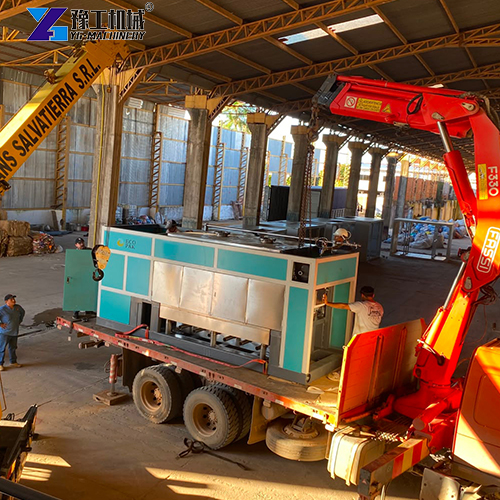
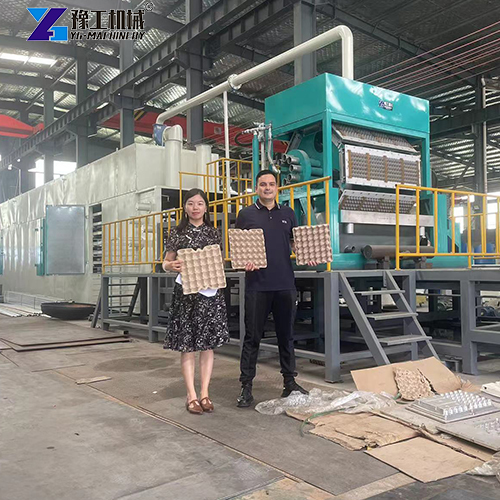
How to Choose the Right Egg Tray Machine Capacity
Take these factors into account when selecting capacity for your egg tray machine:
Investment budget
- Limited budget/market trial: YG-1000 (1000 pcs/h) or YG-1500 (1500 pcs/h) with natural drying for minimum capital outlay
- Medium-level investment: YG-2500-3000 (2500-3000 pcs/h) with brick-kiln or multi-layer drying line
- Large-scale mass production: YG-4000-7000 (4000-7000 pcs/h) equipped with a multi-layer metal drying line
Order demand
Calculate required hourly output based on confirmed or expected monthly orders divided by daily working hours (usually 8-10 hours).
Site conditions
Small flip-mould machines (YG-1000/1500) only occupy 5-6 ㎡ for the main unit and suit compact workshops. Large drum-type machines require supporting drying lines; plant length needs to be at least 40 m for multi-layer drying or 70 m for single-layer drying.
Labour allocation
Flip-mould machines have lower automation and need more workers for drying and collection. Drum-type units paired with automatic drying lines greatly cut manpower needs.
Egg Tray Machine: Aluminium Mould vs Plastic Mould
| Comparison item | Aluminium mould | Plastic mould |
| Service life | Long, wear-resistant and deformation-proof | Relatively short, prone to ageing over long use |
| Moulding precision | High, good dimensional consistency | Moderate; batch-to-batch deviation may occur |
| Cost | Higher | Lower |
| Application | Long-term mass production | Small-batch trial production or tight-budget projects |
| Repair & replacement | Partial repair available | Usually full replacement required |
| Pulp absorption uniformity | Excellent | Good |
Recommendation: Aluminium moulds deliver lower unit cost and stable quality for long-run mass production. Start-ups may begin with plastic moulds to lower startup costs and upgrade to aluminium moulds once orders stabilise.
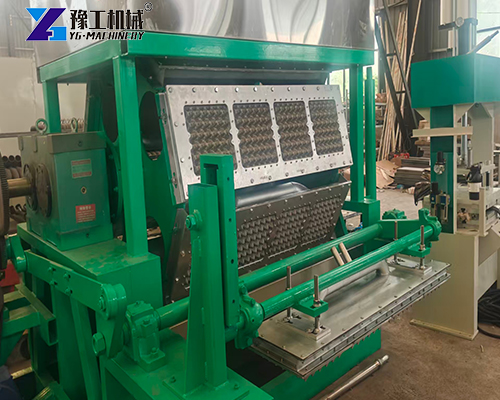
Composition of an Egg Tray Manufacturing Machine Production Line
A complete egg crate making machine production line consists of three main systems.
Pulping system
Waste paper is broken down by a hydrapulper, then screened and refined to make pulp of proper concentration. Main units include a hydrapulper, agitator, pulp pump, water pump, and control cabinet. Vibrating screens and refiners are optional depending on finished-product requirements.
Moulding system
Vacuum suction spreads pulp evenly over forming moulds to create wet blanks. Flip-mould machines work with flip-type forming; drum-type machines adopt multi-face pulp suction plus single-face transfer. This is the core process for an egg tray maker machine.
Drying system
Wet blanks from moulding go through dewatering and drying. Four options are available according to budget and site:
- Natural air-drying: zero energy cost, yet weather-dependent and requiring large numbers of drying racks
- Drying oven: semi-automatic, weather-independent and space-saving
- Brick-kiln drying: low initial investment, flexible fuel options (coal, natural gas, biomass pellets, etc.)
- Multi-layer metal drying line: small footprint, high automation and low energy consumption, yet higher upfront cost
Plant Layout & Basic Requirements for Egg Tray Maker Machine Production Line
Plant-area requirements
| Machine configuration | Moulding-zone footprint | Drying-line footprint | Recommended total plant area |
| Flip-mould machine (1000-1500 pcs/h) + air-drying | ~50 ㎡ | Drying yard 200-500 ㎡ | 300-600 ㎡ |
| Drum-type machine (2500-3000 pcs/h) + brick kiln | ~80 ㎡ | Brick kiln 40-70 m × 3 m | 500-1000 ㎡ |
| Drum-type machine (4000-7000 pcs/h) + multi-layer drying | ~100 ㎡ | Multi-layer line 18 m × 6 layers | 400-800 ㎡ (ceiling height ≥4.5 m) |
Basic site conditions
- Power supply: 380V/50Hz three-phase power; total power ranges from 38 kW to 120 kW
- Water source: process water is recycled. Large water volume is needed for initial pulp mixing; tap water or well water is required
- Drainage: install sedimentation tanks so wastewater can settle and circulate
- Ventilation: good ventilation in drying zones to discharge water vapour
- Flooring: waterproof treatment for moulding and pulping areas
Contact YG
Looking for a reliable egg tray machine? YG offers full-range solutions from 1000 pcs/h to 7000 pcs/h, covering flip-mould and drum-type series together with complete pulping, moulding and drying equipment. Whether you are launching a new business or expanding production, the YG egg tray manufacturing machine can deliver the most cost-effective line solution for you. Contact YG today to receive equipment quotations and plant-layout suggestions.