
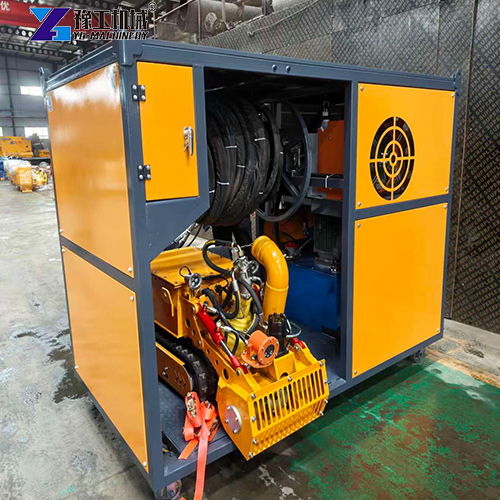
Chile is the world’s largest copper-producing country and a key agricultural and industrial nation in South America. From mining zones in the Atacama Desert in the north, through the Santiago metropolitan area in central Chile, to agricultural irrigation zones in the south, storage tanks, sedimentation basins, wastewater treatment plants, and tailings ponds are spread across the whole country. All these facilities share one common problem: sludge buildup.
Traditional dredging methods either require workers to enter tanks manually or use large excavators with full plant shutdown. Manual tank entry carries risks such as hydrogen sulfide poisoning and oxygen-deficient suffocation. Excavator work demands full water draining and multi-day production stoppage, bringing considerable economic losses. A remote control dredging robot can be lowered through manholes and complete dredging without stopping production or draining water. Operators control the unit remotely on the ground, with zero personnel entering confined spaces throughout the whole process.
In recent years, Chile’s mining and environmental-protection sectors have seen rising demand for automated, remotely-operated equipment. This article presents two real-world application cases of YG remote control dredging robots in Chile, covering municipal wastewater treatment and mining tailings-pond scenarios, respectively.
Remote Control Dredging Robot Specifications
| Model | YG500 Electric | YG600 Electric | YG700 Electric | YG800 Electric | YG900 Electric | YG1200 Electric |
| Robot Dimensions | 1500×500×650 mm | 1500×600×650 mm | 1600×700×650 mm | 1600×850×700 mm | 1650×960×750 mm | 1900×1200×750 mm |
| Slurry Pump Model | 3E-100Z170 | 3E-100Z170 | 4E-250ZJ45 | 4E-250ZJ45 | 4E-250ZJ45 | 4C-200Z125 |
| Cleaning Width | 500 mm | 600 mm | 700 mm | 800 mm | 900 mm | 1200 mm |
| Track Speed | 3–15 m/min | 3–15 m/min | 3–15 m/min | 3–15 m/min | 3–15 m/min | 3–15 m/min |
| Robot Weight | — | — | — | — | — | 500 kg |
| Pump Inlet Size | 3 inch | 3 inch | 4 inch | 4 inch | 4 inch | 5 inch |
| Pump Flow Rate | 100 m³/h | 100 m³/h | 160 m³/h | 160 m³/h | 200 m³/h | 200 m³/h |
| Pump Head | 0–30 m | 0–30 m | 0–25 m | 0–25 m | 0–25 m | 0–25 m |
| Hydraulic Station Dimensions | 2200×1200×1700 mm | 2200×1200×1700 mm | 2200×1200×1700 mm | 2200×1200×1700 mm | 2200×1200×1700 mm | 2120×1240×1200 mm |
| Main Motor Power | 18 kW | 18 kW | 22 kW | 22 kW | 22 kW | 45 kW |
| Hydraulic System Pressure | 0–16 MPa | 0–16 MPa | 0–16 MPa | 0–16 MPa | 0–16 MPa | 0–16 MPa |
| Max Particle Size | 15 mm | 15 mm | 40 mm | 40 mm | 50 mm | 60 mm |
| Winch Speed | 0–10 r/min | 0–10 r/min | 0–10 r/min | 0–10 r/min | 0–10 r/min | 0–10 r/min |
| Standard Hydraulic Hose Length | 50 m | 50 m | 50 m | 50 m | 50 m | 50 m |
| Control System | Wireless Remote Control | Wireless Remote Control | Wireless Remote Control | Wireless Remote Control | Wireless Remote Control | Wireless Remote Control |
| Lighting System | 2× Underwater LED Lights | 2× Underwater LED Lights | 2× Underwater LED Lights | 2× Underwater LED Lights | 2× Underwater LED Lights | 2× Underwater LED Lights |
Case 1: Remote Control Dredging Robot for Sedimentation Basin Dredging
Customer Background
Carlos is the operations manager at a medium-sized wastewater treatment plant in Santiago, the capital of Chile. The plant serves tens of thousands of local residents, with three sedimentation basins and two sections of sewage pipelines. After long-term operation, thick sludge has built up on basin bottoms and inside pipelines. Carlos faced two practical troubles: low dredging efficiency plus workers’ reluctance to perform tank-entry work. Strong hydrogen sulfide odors and complicated ventilation checks made staff worried about health risks.
Construction Challenges
- Basin depth exceeds 8 m; manual entry requires scaffolding and ventilation gear
- Deposits contain activated sludge mixed with gravel and fibrous debris
- The wastewater plant must run continuously; shutdown dredging brings risk of sewage overflow
- Labor recruitment grows harder; young workers avoid confined-space assignments
YG Solution
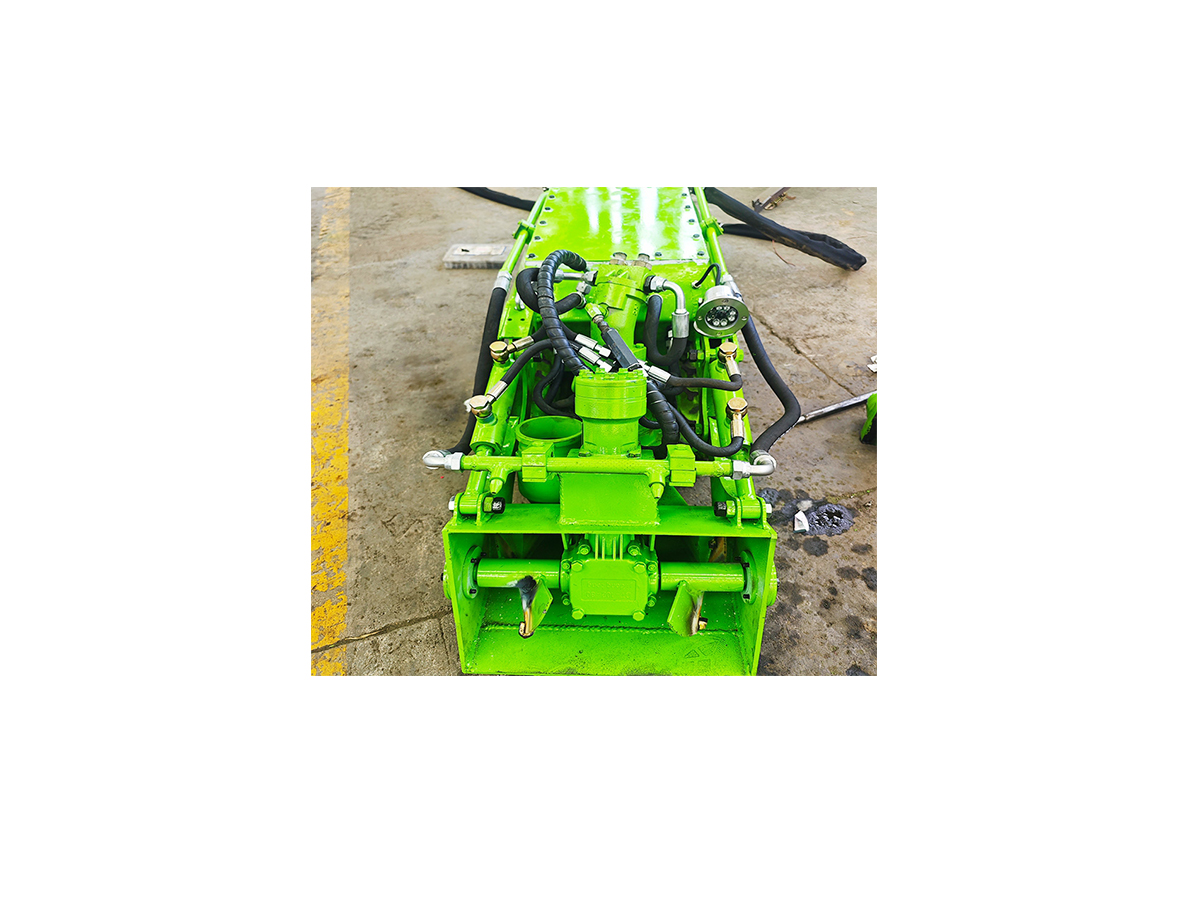
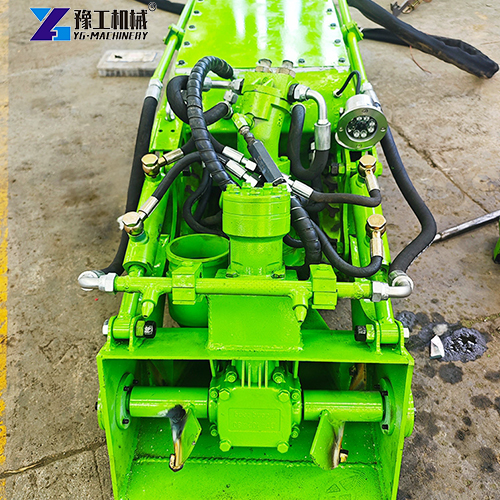
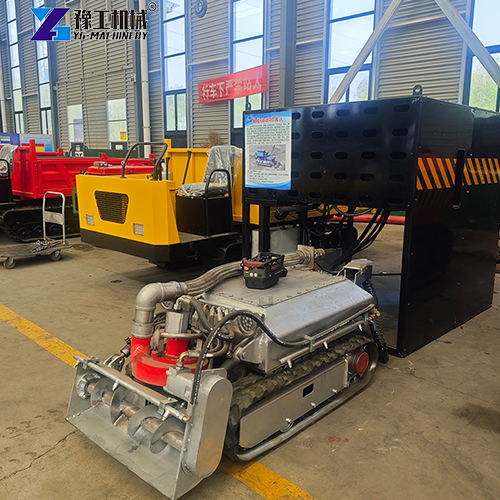
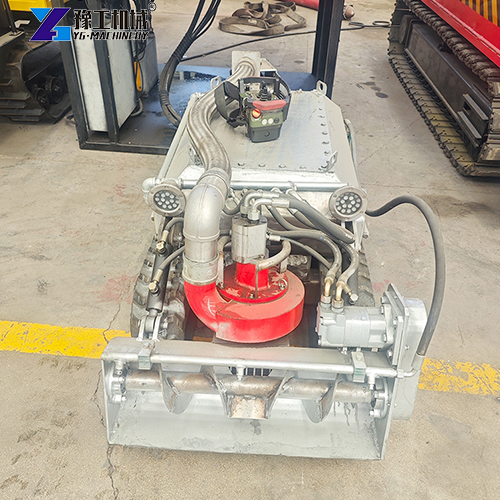
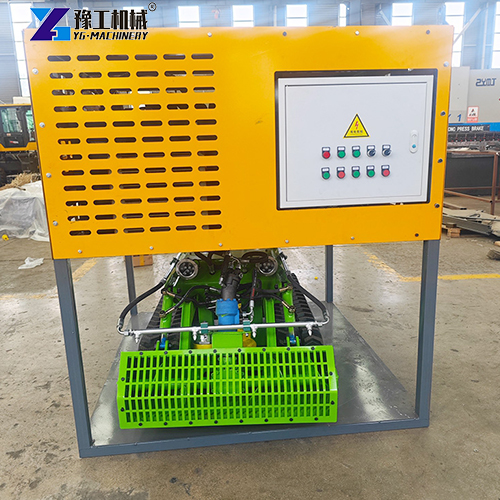
Based on Carlos’ site conditions, the YG team recommended one YG800 remote control dredging robot, fitted with a 4-inch slurry pump (160 m³/h flow rate), underwater camera and wireless remote-control system. The robot was lowered to the basin bottom through the top manhole. Operators watched live feeds on screens inside the ground-level control room and steered the robot for travel and dredging work.
Matching the basin-bottom deposit features, YG supplied interchangeable suction heads and auger crushing heads. Suction heads were used for routine dredging; crushing heads were swapped in for hardened layers and debris.
Project Process
Carlos found YG’s official website via online search. After seeing YG’s equipment export records to France, Australia, Saudi Arabia, and the United States, he submitted an inquiry through the web form.
YG sales replied within 24 hours, collecting full details including basin dimensions, sludge thickness, and power-supply conditions. After three video conferences and solution revisions, YG delivered a full package: YG800 robot, hydraulic power station, 50-meter hydraulic hoses and sewage pipes. Carlos requested an extra underwater camera to observe basin-bottom conditions in turbid water.
Once equipment arrived in Chile, YG delivered hands-on operational training via remote video. Carlos’ team mastered basic operation within two days.
Project Results
- Dredging finished for three sedimentation basins in 3 days; manual work normally takes 7-10 days
- Average daily dredging volume reached around 180 cubic meters
- Basins recovered full effective volume; water pumps run more smoothly
- No personnel entered basins, eliminating exposure to harmful gas
Carlos commented: “YG’s remote control dredging robot runs stably and is easy to learn. Remote monitoring plus auto-navigation make work safer. We no longer worry about finding workers for tank-entry dredging.”
Case 2: Crawler Dredging Robot for Water-supply Facility Dredging
Customer Background
A large copper mine in northern Chile gets process water from a nearby reservoir. This reservoir collects meltwater runoff from the Andes. After sedimentation, water flows through pipelines to the mineral-processing plant for production. The reservoir acts as a critical regulating facility for mine process water. Located in desert terrain, water resources are extremely valuable. The reservoir’s usable volume directly affects mineral-processing continuity and stability. Years of operation left heavy silt and fine particles on the reservoir floor. Effective storage capacity dropped year by year, and higher sediment content accelerated pipeline wear.
Construction Challenges
- This reservoir is the mine’s only water-regulation source; draining for dredging is impossible. Production shutdown would cut off all water supply for the processing plant
- Bottom deposits are mainly fine silt and sand, unevenly distributed, over 1.5 m thick in some spots
- Sited in the Atacama Desert with high evaporation. Conventional drain-and-dredge would waste massive volumes of water
- Uneven reservoir bottom with local pits and slope changes
YG Solution
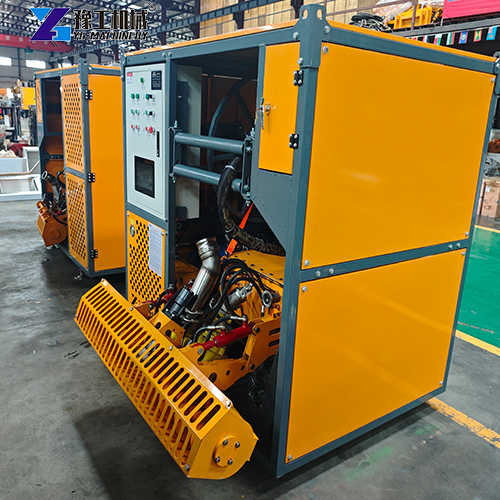
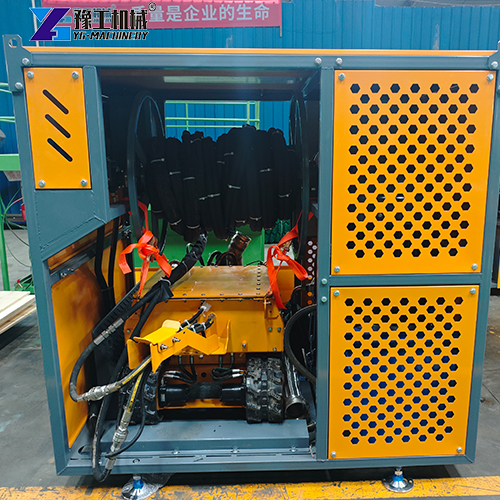
The YG team recommended one YG900 crawler dredging robot, equipped with a 5-inch slurry pump (200 m³/h flow rate), underwater camera and wireless remote-control unit. The robot entered the water via shore ramps or crane lifting. Operators stayed safely on the bank and steered the robot for underwater travel and suction dredging.
Given silt-dominated bottom sediments, YG fitted wear-resistant suction heads and slurry pump liners to resist sand-caused abrasion on pumps and pipelines. Underwater cameras plus lamps helped operators track robot positions and dredging paths. Silt and sand were pumped through sewage hoses to shore-mounted dewatering units. Separated clean water flowed back into the reservoir for reuse, while dewatered dry sand was reused for mine site backfilling.
Project Process
No systematic dredging had ever been done for this reservoir, because draining was impossible and traditional dredging machines could not work underwater. As usable storage kept falling, mine management needed a no-shutdown, no-drain solution.
After collecting reservoir size, water depth, bottom topography, and deposit distribution, YG produced detailed work plans and equipment lists. After internal review, the mine purchased one YG900 crawler dredging robot, together with dewatering equipment and standard 50-meter hydraulic hoses.
After delivery to the mine site, YG provided on-site operational training. Two mine operators learned basic operation and simple maintenance within five days.
Project Results
- After deployment, the robot pumped roughly 150-180 cubic meters of silt and sand per day
- The reservoir kept normal water storage; mineral-plant water supply remained unaffected
- After around four weeks of phased dredging, bottom deposits reduced significantly. Usable reservoir capacity recovered, and pipeline wear improved
- Dewatered silt was used for mine backfilling; separated clean water returned to the reservoir for water recycling
- No staff entered the water during operations, ensuring personnel safety
The mine’s water-resource manager stated: “This crawler dredging robot solved our reservoir silt problem without plant shutdown or water draining. It is simple to operate, runs reliably, and dredging performance meets our expectations.”
FAQs About Remote Control Dredging Robot
Q: How deep a layer of deposits can a sludge cleaning robot handle?
YG series sludge cleaning robot offers a maximum operating depth of 30-90 meters underwater. At maximum 20 m underwater depth, it can handle flowable sludge with 40 % solid content. Actual working depth depends on robot model and hydraulic-hose length. Standard hose length is 50 m; extended hoses can be custom-ordered.
Q: Will the robot scratch or damage tank/basin bottoms?
YG’s sludge cleaning robot adopts a crawler chassis with low ground pressure. Under normal operation, it will not harm concrete basin floors or metal tank bottoms. For tailings ponds lined with anti-seepage membranes, optional steel protective nets and sensors further lower membrane-damage risks.
Q: What are the wearing parts for remote control dredging robot?
Key wearing components include slurry-pump impellers and liners, hydraulic hose connectors, crawler rubber blocks, and sealing rings. Replacement frequency depends on working conditions: higher for hard-sand environments, lower for regular sludge.
Q: What does routine maintenance involve?
After each job, clean the robot chassis and working heads, and check crawler tension. Regularly lubricate hydraulic joints and cutter bearings. Inspect power cables and sealing rings. For long-term storage, drain hydraulic systems and apply anti-rust treatment. YG supplies maintenance manuals and remote technical guidance.
Q: Does YG’s sludge cleaning robot support explosion-proof options?
Yes. YG provides full-unit explosion-proof packages: explosion-proof control systems, explosion-proof motors, and explosion-proof hydraulic assemblies, suitable for petrochemical and other explosion-hazard work sites.
Contact YG
Whether your projects cover municipal wastewater basins, chemical storage tanks, mine tailings ponds, or agricultural irrigation channels, YG can recommend proper robotic tank cleaning equipment configurations matched to real-world site conditions. YG Machinery has six standard models from YG500 to YG1200, with cleaning width 500-1200 mm and pumping capacity 100-200 m³/h. Electric and diesel versions, explosion-proof packages, and custom-voltage options are available.
YG dredging equipment has been exported to Chile, France, Australia, Saudi Arabia, Brazil, the United States, and other countries, and deployed in municipal works, water-environment protection, and industrial sectors.
Contact YG for model selection consultation and return-on-investment analysis. Improve your dredging safety and operational efficiency with a remote control dredging robot.