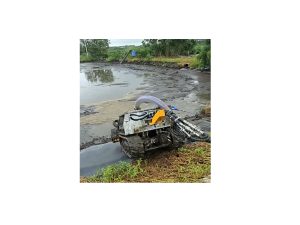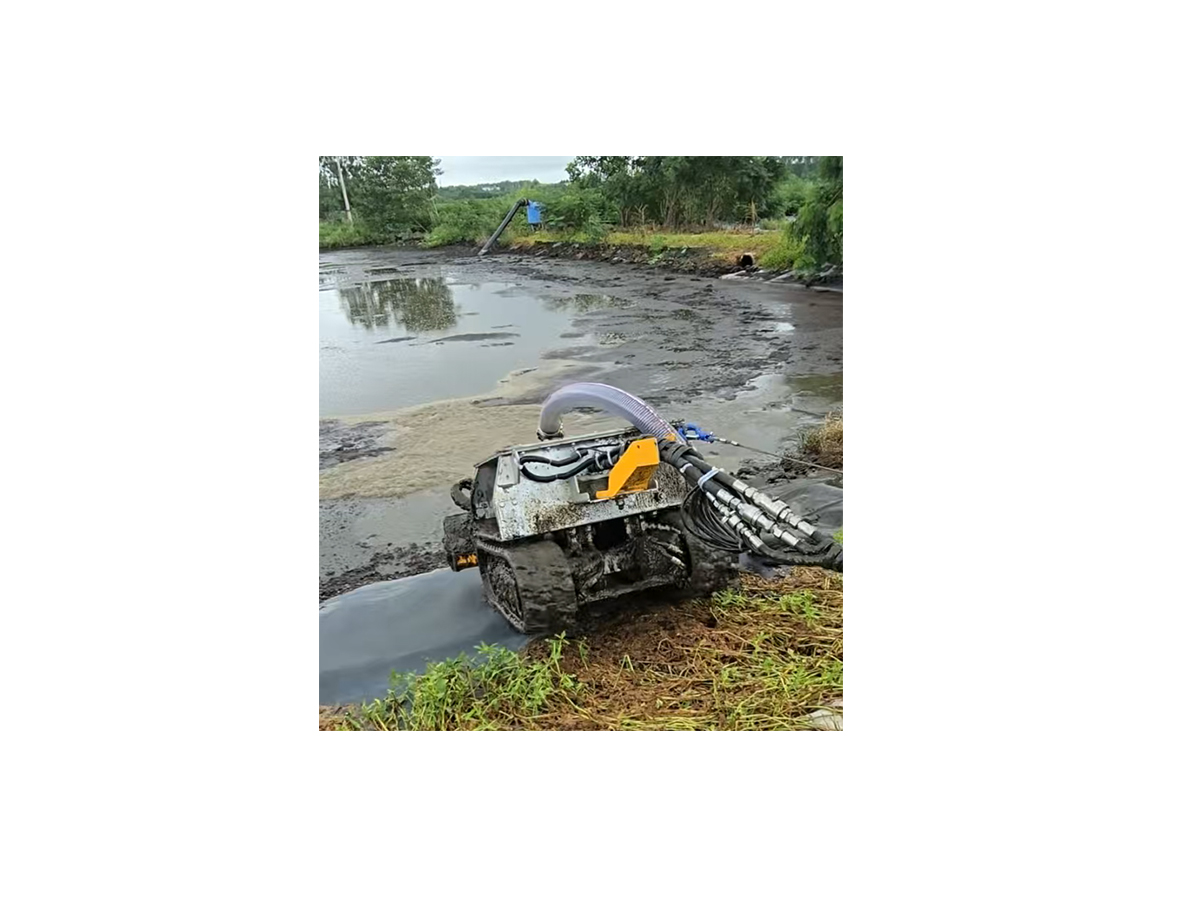

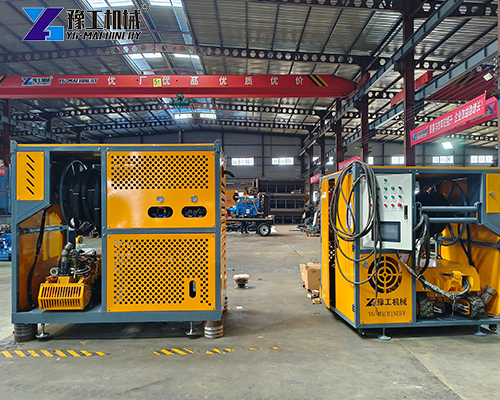
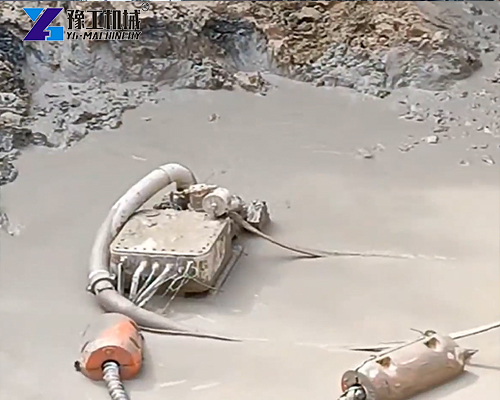
A submersible dredging robot is a complete set of equipment designed for dredging work in underwater, semi-underwater, and confined-space environments. Without operators entering tanks, shafts, or pipelines, it can agitate, cut, crush, collect, suck, and transport sludge, sediment, sand, gravel, sewage, and some solid debris. The medium is transferred to the post-treatment system to realize integrated operations of dredging, conveying, separation, and resource recovery.
Sludge Transport Robot Parameters
| Model | YG500 Electric | YG600 Electric | YG700 Electric | YG800 Electric | YG900 Electric | YG1200 Electric |
| Robot Dimensions | 1500×500×650 mm | 1500×600×650 mm | 1600×700×650 mm | 1600×850×700 mm | 1650×960×750 mm | 1900×1200×750 mm |
| Slurry Pump Model | 3E-100Z170 | 3E-100Z170 | 4E-250ZJ45 | 4E-250ZJ45 | 4E-250ZJ45 | 4C-200Z125 |
| Cleaning Width | 500 mm | 600 mm | 700 mm | 800 mm | 900 mm | 1200 mm |
| Track Speed | 3–15 m/min | 3–15 m/min | 3–15 m/min | 3–15 m/min | 3–15 m/min | 3–15 m/min |
| Robot Weight | — | — | — | — | — | 500 kg |
| Pump Inlet Size | 3 inch | 3 inch | 4 inch | 4 inch | 4 inch | 5 inch |
| Pump Flow Rate | 100 m³/h | 100 m³/h | 160 m³/h | 160 m³/h | 200 m³/h | 200 m³/h |
| Pump Head | 0–30 m | 0–30 m | 0–25 m | 0–25 m | 0–25 m | 0–25 m |
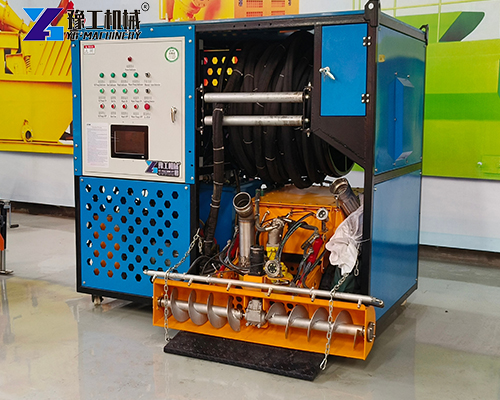
| Hydraulic Station Dimensions | 2200×1200×1700 mm | 2200×1200×1700 mm | 2200×1200×1700 mm | 2200×1200×1700 mm | 2200×1200×1700 mm | 2120×1240×1200 mm |
| Main Motor Power | 18 kW | 18 kW | 22 kW | 22 kW | 22 kW | 45 kW |
| Hydraulic System Pressure | 0–16 MPa | 0–16 MPa | 0–16 MPa | 0–16 MPa | 0–16 MPa | 0–16 MPa |
| Max Particle Size | 15 mm | 15 mm | 40 mm | 40 mm | 50 mm | 60 mm |
| Winch Speed | 0–10 r/min | 0–10 r/min | 0–10 r/min | 0–10 r/min | 0–10 r/min | 0–10 r/min |
| Standard Hydraulic Hose Length | 50 m | 50 m | 50 m | 50 m | 50 m | 50 m |
| Control System | Wireless Remote Control | Wireless Remote Control | Wireless Remote Control | Wireless Remote Control | Wireless Remote Control | Wireless Remote Control |
| Lighting System | 2× Underwater LED Lights | 2× Underwater LED Lights | 2× Underwater LED Lights | 2× Underwater LED Lights | 2× Underwater LED Lights | 2× Underwater LED Lights |
Submersible Dredging Robot Core Technologies & Key Components
A high-efficiency sludge cleaning robot must feature reliable traveling capability, environmental perception, working performance, material conveying capacity, and remote-control function. Different working conditions place varied requirements on equipment waterproofing, explosion-proof performance, corrosion resistance, trafficability, and suction capacity.
Track-type Underwater Travel System
The underwater tracked chassis is one of the core structures of an underwater crawler cleaning robot. Compared with manually-pulled devices or ordinary wheel-type equipment, the tracked chassis offers a larger ground contact area and better trafficability. It can move steadily over sludge, slippery tank bottoms, gravel surfaces, and uneven ground.
The robot’s track travel speed is normally 3-15 m/min, balancing working coverage efficiency and fine-tuned control. The tracked structure is especially suitable for continuous dredging tasks in large-diameter pipelines, sedimentation tanks, sewage tanks, industrial storage tanks, and shallow river sections.
Multi-functional Working Heads
Sediments differ greatly in density, viscosity, particle size, water content, and impurity ratio. Therefore, the submersible dredging robot adopts modular working tools to adapt to complex working conditions.
Common working tools include:
- Suction-agitation head: For loose sludge, flowable slurry, and general sediments.
- Auger rotary-tilling unit: To loosen, agitate, and convey thick sediment layers.
- Auger crushing suction-agitation head: For caked sludge, fibrous winding materials, hard sediments, and complex mixed media.
- Ordinary crushing head: For general consolidated sediment.
- Heavy-duty crushing head: For complex conditions and high-intensity crushing demands; can be used as an all-round configuration.
- Opening-closing shifting arm: For shifting, gathering, and removing debris on tank bottoms.
- Bucket or fork bucket: For collecting gravel, block-shaped debris, and large-particle materials.
- High-pressure water-jet unit: To flush and loosen hard sediments, attachments, and local stubborn blockages.
For auger and crushing parts, regular inspection is recommended according to actual media wear. Under high-frequency continuous operation, inspection and maintenance can be performed every half month.
Suction, Pumping & Conveying System
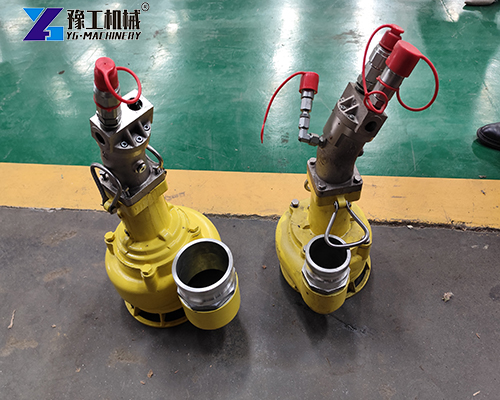
The actual efficiency of the sludge transport robot depends not only on the front-end cleaning performance, but also on medium extraction and conveying capacity. According to sludge fluidity, particle size, conveying distance, and post-processing mode, the following extraction modes are available:
- Self-suction mode
- Pumping mode
- Pushing mode
- Auger conveying mode
- Combined agitation-suction and pumping mode
- Integrated crushing, agitation and suction mode
For flowable slurry media, the system can handle sludge with solid content up to around 40%. Pump flow rates of different models range from 100-200 m³/h, and pump head reaches 0-30 m. The maximum treatable particle size varies by model, ranging from 15-60 mm.
This means when selecting an underwater crawler cleaning robot, you should not only look at robot dimensions or cleaning width. You also need to focus on sludge properties, particle size, sand content, pumping distance, drain-pipe length, post-treatment capacity, and whether there are complex impurities such as fibers, plastics, and stones.
Autonomous Navigation, Positioning & Environmental Perception
In complex tanks, closed vessels, long-distance culverts, or low-visibility underwater environments, operators need accurate equipment status and on-site visuals. underwater crawler cleaning robot adopts the following technologies to improve visualization and remote-control performance:
- LiDAR: For environmental perception, positioning, and obstacle avoidance.
- Underwater visual camera: To observe robot position, sediment status, and working effect.
- Ultrasonic sensors: For close-range obstacle identification and auxiliary environmental perception.
- Underwater LED lighting system: To improve visibility in low-light, turbid, and closed environments.
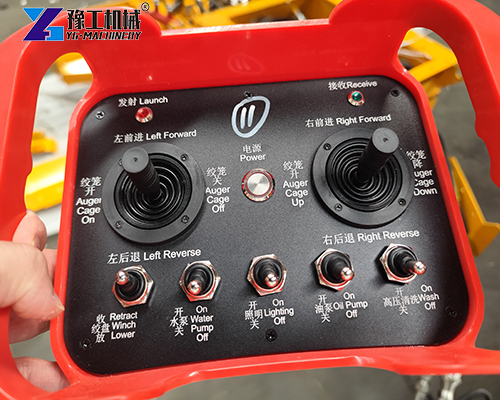
- Wireless remote-control system: For remote operation of robot movement, working-head actions, and working efficiency.
- Control-cabinet display screen: To view equipment parameters, running status, and monitoring footage.
In real-world projects, underwater cameras are a highly practical optional accessory. They allow operators to directly view sludge thickness, working-head posture, obstacle positions, and cleaning results. This improves operation accuracy, reduces rework, and lowers risks of blind-area operation.
Why Choose a Submersible Dredging Robot?
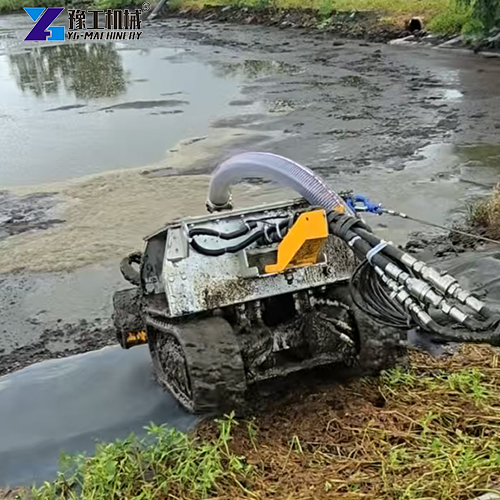
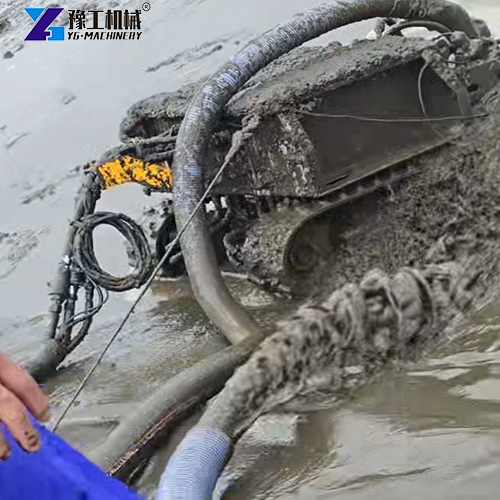
For municipal pipe networks, wastewater treatment plants, chemical storage tanks, rivers, lakes, and industrial tanks, traditional dredging methods such as manual work, suction trucks, excavators, or divers bring high safety risks, incomplete cleaning, long shutdown times, and secondary sludge transportation. Submersible dredging robots deliver safer, more efficient, and eco-friendly dredging via remote control, tracked movement, agitation, crushing, and pipeline conveying.
Municipal Pipe Networks & Inspection Shafts
Traditional manual shaft-entry dredging carries risks of oxygen deficiency, hydrogen sulfide, and flammable gas. Ordinary suction equipment has limited capacity for caked sludge, sand, and garbage on pipe bottoms.
Advantages of sludge dredging robot:
- Operators control the robot remotely outside shafts, reducing human entry into confined spaces.
- The tracked robot can enter large-diameter pipelines, box culverts and inspection-shaft bottoms.
- Cameras, lighting, suction-agitation heads and crushing heads can be fitted for better visualization and cleaning performance.
- Sludge is directly delivered through drain pipes, cutting on-site stacking and secondary transportation.
Wastewater-Treatment-Plant Tanks
Traditional tank cleaning usually requires tank draining or shutdown. Manual cleaning inside sedimentation tanks, aeration tanks, or sludge tanks leads to long construction periods and may disrupt normal wastewater-treatment operations.
Advantages of sludge dredging robot:
- It can realize non-stop or low-shutdown dredging under suitable conditions.
- The robot moves across tank bottoms, covering corners and locally thick sludge areas.
- It completes agitation, crushing, suction, and conveying simultaneously to boost working efficiency.
- Dredged sludge can be fed directly into solid-liquid separation or post-treatment equipment, avoiding sludge dumping on-site.
Chemical Storage Tanks & Hazardous Environments
Sludge inside chemical storage tanks, oil-sludge ponds, and flammable-explosive zones may be toxic, corrosive, flammable, or highly viscous. Manual entry is high-risk, and ordinary equipment may fail to meet explosion-proof requirements.
Advantages of sludge dredging robot:
- Explosion-proof motors, explosion-proof control systems, and hydraulic explosion-proof solutions are available.
- Remote operation reduces human contact with toxic, harmful, flammable, and explosive media.
- High-pressure flushing pumps, augers, and heavy-duty crushing heads can be fitted to handle viscous oil sludge and caked sediment.
- Sealed-pipeline conveyance helps reduce leakage, odors, and secondary pollution.
Rivers, Lakes & Reservoirs
Traditional excavators or large dredging vessels suit large-scale construction, yet require strict site-access conditions. They may disturb bottom sediment and affect local water quality, and lack precision for narrow river sections, sluice stations, and water-intake surroundings.
Advantages of sludge dredging robot:
- Ideal for localized, fine-tuned, and low-disturbance dredging.
- The tracked chassis can enter shallow water, riverbeds, and narrow hydraulic structures.
- It can conduct targeted cleaning at sluice stations, pump stations, water intakes, and local sediment-accumulation zones.
- Sludge is delivered via pipelines to post-treatment units, reducing shore-side stacking.
Industrial Tanks & Production Pipelines
Sludge in industrial sedimentation tanks, circulating-water pools and production pipelines often contains sand, fibers, metal particles, oil stains or block-shaped residues. Ordinary suction equipment is prone to clogging, while manual cleaning disrupts production-maintenance schedules.
Advantages of sludge dredging robot:
- Self-suction, pumping, pushing, or auger-conveying modes can be selected according to media properties.
- Crushing heads, rotary-tilling augers, buckets, and shifting arms can be fitted to handle complex sediments.
- Cleaning, suction, and conveying run in parallel, cutting manual shoveling and transporting work.
- It helps shorten shutdown-maintenance time and improve equipment operational efficiency.
Overall, a dredging robot is more than a replacement for manual dredging. It forms an all-in-one solution integrating “cleaning, crushing, suction, conveying, and separation”. For projects involving confined spaces, deep-water tanks, hazardous media, complex sludge, and reduced-shutdown requirements, the submersible dredging robot provides a safer, more flexible, and eco-friendly dredging solution.
Recommended Regular Maintenance & Spare Parts for Sludge Cleaning Robot
YG sludge cleaning robot adopts a modular design, making routine maintenance clear and easy to inspect. Based on working environment and usage frequency, pay attention to the following components:
- Power-station maintenance parts: Hydraulic oil filters, oil-suction filters, oil-return filters, fuses, and hydraulic-station oil pumps, to keep hydraulic oil clean and the system running stably.
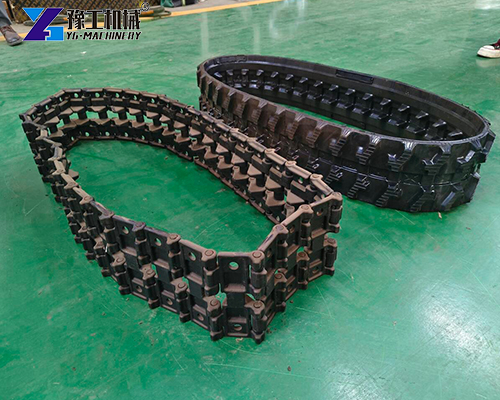
- Robot traveling parts: Rubber tracks and traveling hydraulic motors, ensuring stable robot movement on tank bottoms, culverts, or vessel bottoms.
- Suction and working parts: Pump impellers, plunger pumps and screw motors, which affect sludge suction, conveying, agitation and crushing performance.
Maintenance suggestion: Maintenance cycles depend on medium sand content, particle hardness, working intensity, and daily care. Regular equipment cleaning, filter-element and hydraulic-oil inspection, plus stock-keeping of common maintenance parts, help cut unplanned downtime and guarantee long-term stable operation.
Sales & Custom-built Services for YG Sludge Cleaning Robot
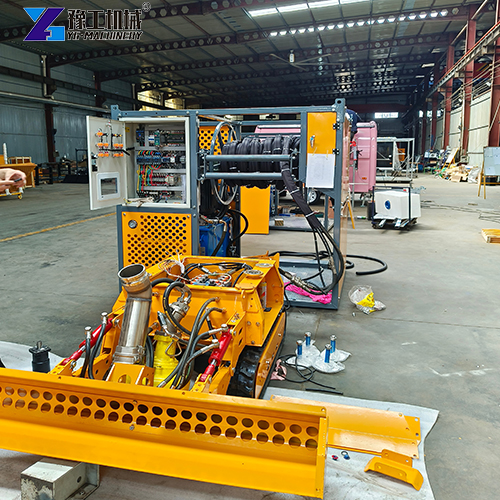
YG underwater crawler cleaning robot offers sales and project-support services for global municipal, water-supply, environmental-protection, industrial-maintenance, and engineering-contracting sectors. When placing orders, customers may submit tank dimensions, inlet width, water depth, sediment type, expected processing capacity, and discharge distance. Our technical team will recommend suitable models and matching configurations. The YG500-YG1200 series covers varied working widths and processing capacities for new project support, existing-facility retrofitting, annual-maintenance equipment procurement, and emergency-rescue dredging tasks.
Besides standard equipment sales, YG also delivers custom-built solutions for specific projects. For example, pipeline length, working heads, power forms, control modes, and post-processing connections can be adjusted according to site conditions. Customers can choose electric- or diesel-powered versions, and add explosion-proof configurations, video monitoring, high-pressure flushing, wireless remote control, and special drain pipelines as needed. For overseas clients and engineering purchasers, please provide on-site photos, tank-or-pipeline drawings, sludge-sample parameters, and local power-supply conditions when making inquiries. This helps confirm equipment configuration, delivery scope, and project suitability more accurately.