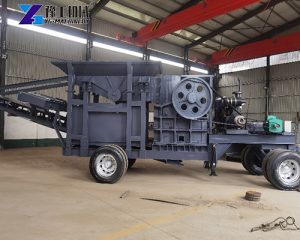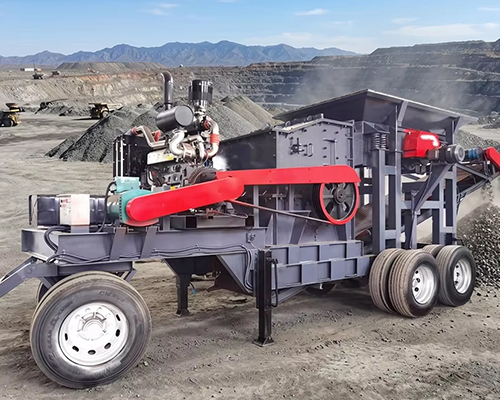

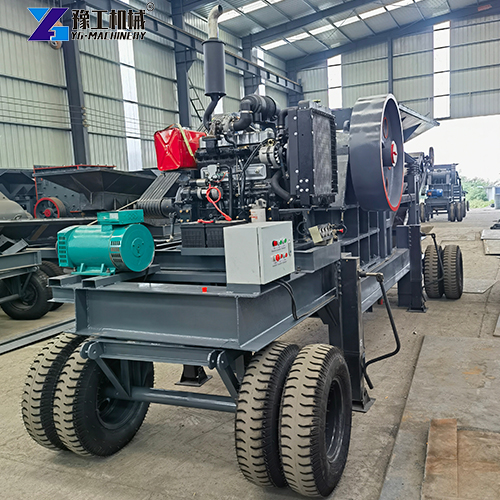
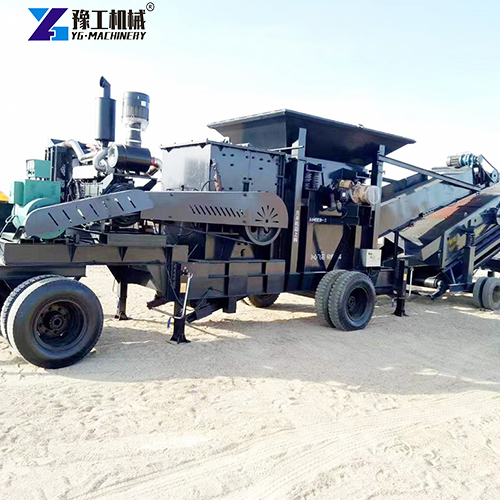
Stationary crushing plants work when materials are delivered to the machine. But at demolition sites, quarry faces, road projects, and remote worksites, hauling raw rock to a stationary crusher is often the highest cost in the whole operation. Mobile stone crushers change this equation — the crushing unit travels to the material, processes it on site, and moves to the next location after work finishes.
If you are looking for a mobile jaw crusher for sale, our YG series mobile jaw crushers have feed opening sizes from 250×400 mm up to 1500×1800 mm, with capacity ranging from 5–1100 t/h. Please share your material type, feed size, target output, and project location to get a suitable equipment recommendation and a competitive mobile stone crusher machine price.
YG Mobile Jaw Crusher for Sale Specifications
| Model | Feeder Opening Size(mm) | Max. Feeding Size (mm) | Outlet adjusting Size(mm) | Capacity (t/h) | Motor Power (kw) | Overall Dimension (mm) |
| YG250x400 | 250×400 | 210 | 25-60 | 5-20 | 15 | 1215x1240x1210 |
| YG400x600 | 400×600 | 350 | 40-90 | 15-60 | 30 | 1700x1750x1680 |
| YG500x750 | 500×750 | 425 | 50-100 | 40-130 | 45 | 2150x1900x1950 |
| YG600x900 | 600×900 | 500 | 60-125 | 90-180 | 55 | 2500x2010x2350 |
| YG750x1060 | 750×1060 | 630 | 60-150 | 110-380 | 110 | 2630x2310x3110 |
| YG900x1200 | 900×1200 | 750 | 95-165 | 220-450 | 132 | 3720x2850x3250 |
| YG1000x1200 | 1000×1200 | 850 | 200-300 | 280-560 | 160 | 3820x2850x3250 |
| YG1200x1500 | 1200×1500 | 1020 | 150-300 | 400-800 | 220 | 4590x3342x3553 |
| YG1500x1800 | 1500×1800 | 1200 | 210-360 | 520-1100 | 280 | 5100x4700x4300 |
In-Stock Models Ready to Ship – See What’s Available
What is a Mobile Stone Crusher?
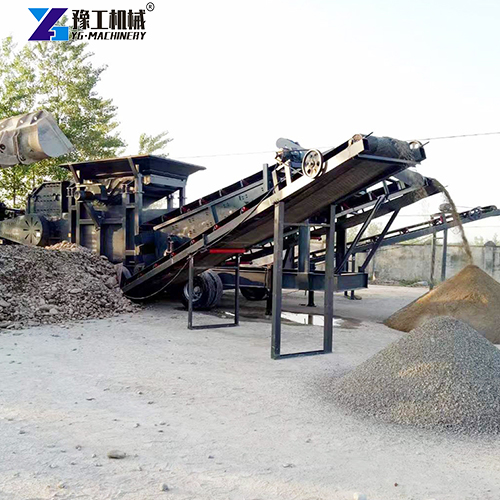
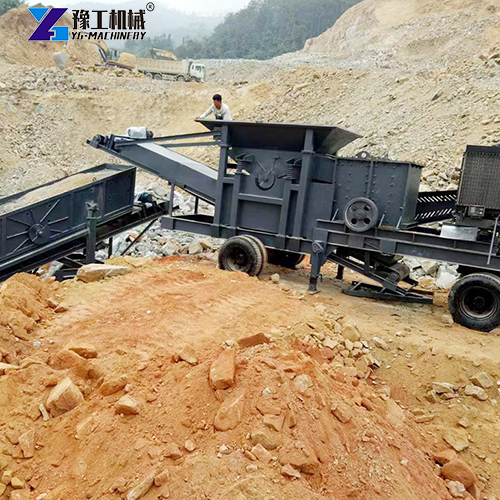
A mobile stone crusher is a flexible, relocatable crushing machine. It can move between mines, quarries, road construction sites, and construction waste recycling yards. Compared with stationary crushing lines, it removes the need to transport raw materials long distances to fixed plants. It cuts transport costs, saves installation space, and helps projects start production faster.
It is commonly used for primary crushing. It takes large raw stones and breaks them down to sizes ready for screening, conveying, or further processing. It is ideal for projects that need frequent relocation, have limited site space, or require fast commissioning.
How Does a Mobile Stone Crusher Work?
The crushing process follows these steps:
- Power transmission. The motor drives the flywheel to turn the eccentric shaft, transferring power from the motor to the crushing action.
- Jaw plate reciprocation. The rotating eccentric shaft makes the movable jaw swing toward and away from the fixed jaw repeatedly. This back-and-forth movement forms the crushing cycle.
- Material crushing.
Material enters the crushing chamber through the feed opening. As the movable jaw closes toward the fixed jaw, the material is subject to multiple forces:
- Compression: direct squeezing between the two jaw plates
- Scrubbing: surface friction from jaw movement
- Attrition: grinding between rock particles
Combined, these forces reduce large rocks into smaller pieces step by step inside the chamber.
4. Discharge. Crushing continues until particles are small enough to pass through the bottom discharge opening. Material meeting the size requirement exits, while larger pieces stay inside for further crushing.
5. Final size control. The discharge gap is adjusted with shims. This simple mechanical method is easy to operate and needs no special tools. It controls the finished product size.
The overall result is a high reduction ratio: rock within the maximum feed size can be crushed down to a controlled output size in one pass through the chamber.
Key Performance Features of YG Mobile Stone Crusher
- Deep crushing chamber with no dead zones. The chamber geometry eliminates areas where material gets stuck. This improves feeding capacity and output, with more chamber volume actively used for crushing.
- High reduction ratio. The combined effect of compression, scrubbing, and attrition delivers a high reduction ratio. Large rocks shrink significantly in one pass, which reduces the number of crushing stages needed for many applications.
- Uniform finished grain size. Crushing action and discharge control work together for consistent output size. Uniform grain is critical when crushed material must meet specs for aggregates, road base, or concrete.
- Special flywheel design for less vibration. The flywheel absorbs vibration during operation for smoother running. Lower vibration means less wear on structural parts and a better working environment.
- Shim-adjusted discharge opening. Gap adjustment via shims is straightforward and requires no special tools. Operators can change settings on site to match product requirements.
- Low operating cost. The design simplifies wear parts and adjustment mechanisms, cutting consumable costs and maintenance time.
- Easy access for inspection and service. Components are laid out for practical maintenance. Liners, jaw plates, and adjustment seats are easy to reach for inspection and replacement.
- Complete model range. Nine models from YG250×400 to YG1500×1800 cover capacities from 5 t/h to 1,100 t/h. This same platform supports small batch jobs and high-volume production.
- Compact transport dimensions. Overall sizes range from 1215×1240×1210 mm (YG250×400) to 5100×4700×4300 mm (YG1500×1800). Small units are easy to move between sites, while large units suit longer fixed-site operation.
- Wide material compatibility. This series handles iron ore, granite, quartz, limestone, river pebble, and basalt — covering hard rock, medium-hard rock, and common construction stone.
Factors Affecting Mobile Stone Crusher Machine Price
The price is not a fixed number; it depends on many variables. Understanding these factors helps you compare quotations properly.
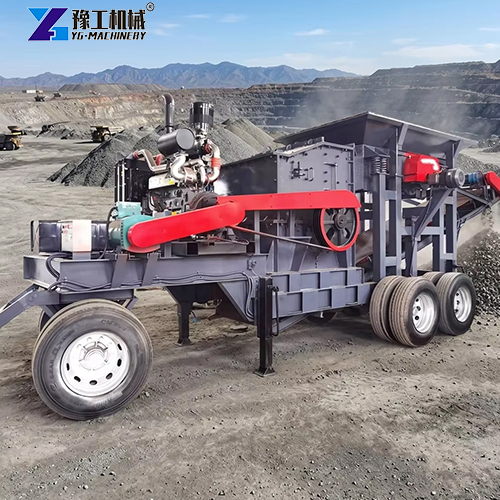
- Model and processing capacity. YG250×400 with a 15 kW motor and 5–20 t/h capacity sits in a different price bracket from YG1500×1800 with a 280 kW motor and 520–1,100 t/h capacity. Your required output decides the model, and the model decides the price.
- Chassis and mobility configuration. Tracked or wheeled chassis, and the level of mobility, affect total cost. Units built for frequent relocation cost more to engineer than machines intended for stationary use.
- Motor power and electrical setup. Motor power across the series ranges from 15 kW to 280 kW. Electrical systems must also match local power supply — voltage and frequency standards differ by country, and non-standard setups add cost.
- Discharge adjustment and control options. There is a cost difference between basic shim adjustment and automatic control systems. Choose automation based on real operational needs instead of automatically selecting the top configuration.
- Feeding and discharging conveyor equipment. A full mobile crushing plant includes feed and stockpile, conveyors. Conveyor length, capacity, and configuration add to the total system cost.
- Wear part specifications. Jaw plate material and liner specs affect both upfront cost and long-term running cost. Higher wear-resistant materials cost more at first but last longer when processing abrasive rock.
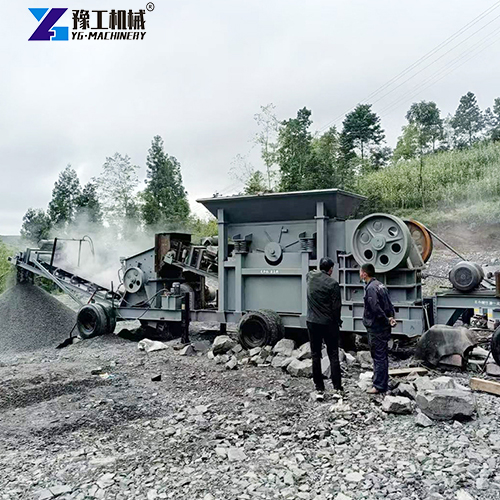
- Shipment and destination. Export orders include freight, packaging, and customs clearance at the destination port. Large and small units require different shipping arrangements. Overall dimensions from around 1.2 m up to over 5 m directly determine container or flat rack requirements.
Speak with Our Product Manager
Application Scenarios of Mobile Crushing Machine
Construction & Demolition Sites:
Concrete, brick, and masonry waste is crushed on site to produce reusable aggregates. This removes landfill transport fees. A mobile crushing machine can work within the site and shift position as demolition progresses.
Quarries & Aggregate Production:
Crushing happens right at the quarry face, shortening haul distances to the primary crusher. For small mines or intermittent production, mobile equipment avoids capital outlay and installation work for fixed plants.
Road & Highway Construction:
Rock and recycled material are crushed at the point of use to make subbase and road base materials. Road projects stretch linearly — the crusher moves forward with the work front instead of hauling material back to a central crushing plant.
Mines & Ore Processing:
This series works with iron ore plus hard rocks such as granite, basalt, and quartz. In-pit crushing reduces haul truck traffic and improves overall mine logistics.
Remote & Hard-to-Access Sites:
When road access is poor or haul distances are very long, bringing the crusher to the site is often the only economical option.
River Channel & Pebble Processing: Pebble and river stone crushing suits on-site processing, as deposits are often scattered along river courses.
Temporary & Short-Term Projects:
Fixed plants are not cost-effective for short jobs lasting only weeks. Mobile equipment can be mobilized, operated, and relocated within the project timeline.
Waste Recycling Operations:
Construction waste is turned into reusable aggregates, turning disposal costs into raw material value.
FAQ about Mobile Stone Crusher
Q: What materials can a mobile stone crusher process?
The YG series handles iron ore, granite, quartz, limestone, river pebble, and basalt — covering hard rock, medium-hard rock, and common construction stone. Feed material must be smaller than the maximum feeding size of the selected model.
Q: Will vibration be a problem during operation?
The special flywheel design reduces vibration for smoother running. Less vibration means less structural wear and a better working environment.
Q: Can I get a custom-configured mobile jaw crusher?
Yes. We can suggest custom setups based on your material type, capacity demand, output size requirements, and site conditions. We can also discuss supporting packages for feeding, screening, conveying, and dust suppression.
Q: Which model should I pick?
Select based on your maximum feed size and target capacity. For example, YG600x900 accepts a max feed size of 500 mm with 90–180 t/h capacity; YG1000x1200 accepts a max feed size of 850 mm with 280–560 t/h capacity.
Get Your Mobile Crushing Machine Quotation Now
Choosing the right mobile crushing equipment helps businesses boost crushing efficiency, cut material hauling costs, and maintain stable aggregate production. Our YG series mobile jaw crusher for sale comes with a full model lineup, heavy-duty build, easy maintenance, and broad material compatibility. It fits quarries, mines, and construction projects.
Share your project requirements, and we will recommend the best model and offer you a competitive mobile stone crusher machine price.