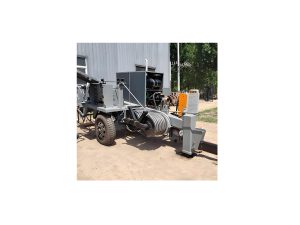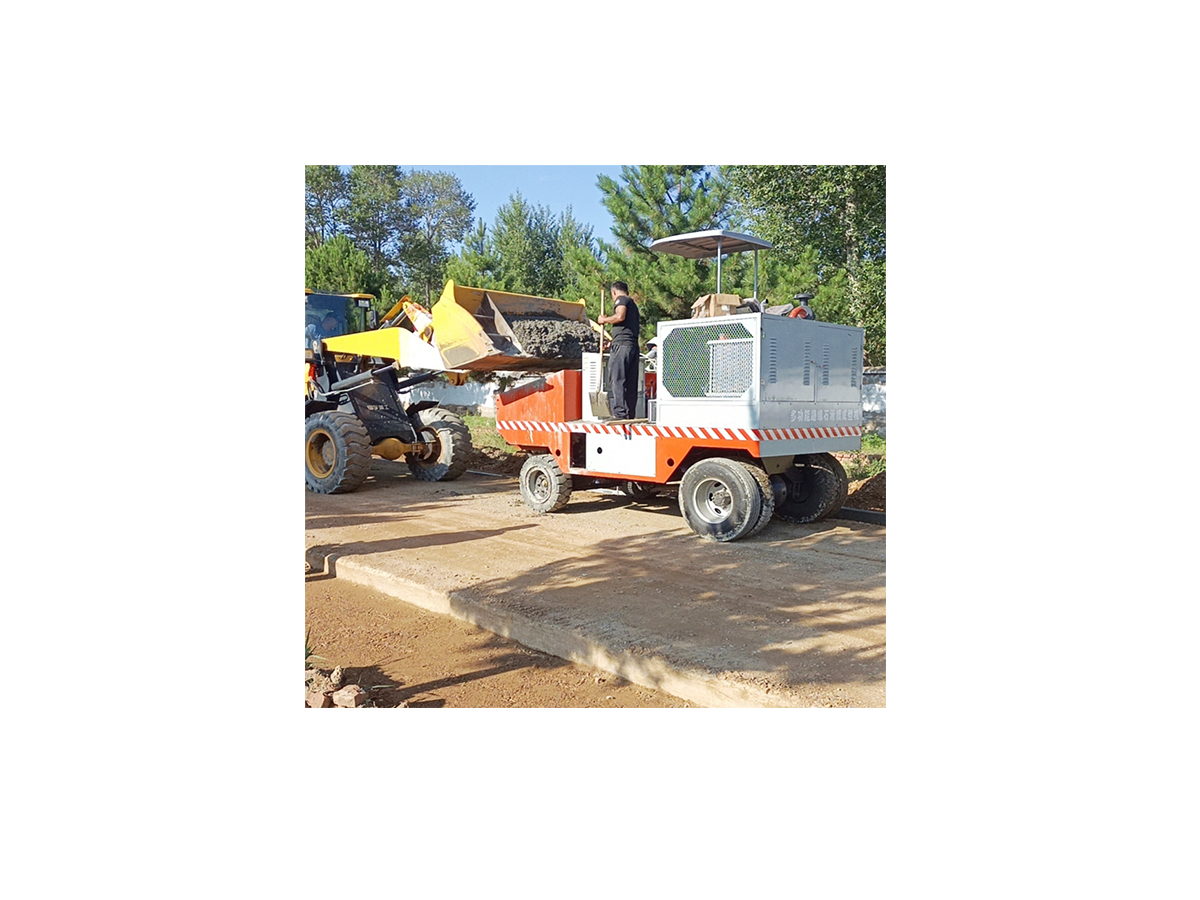

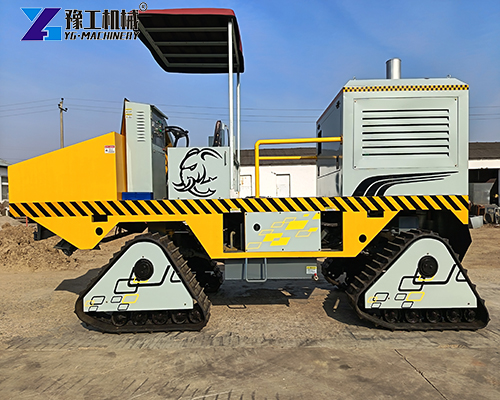
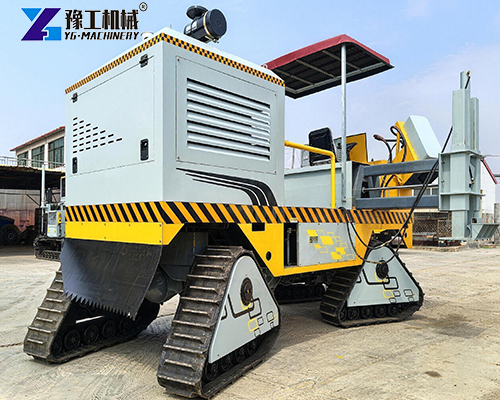
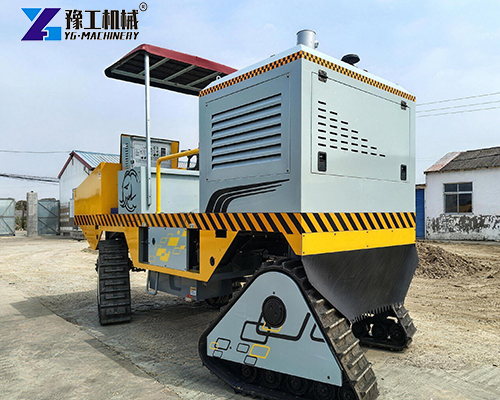
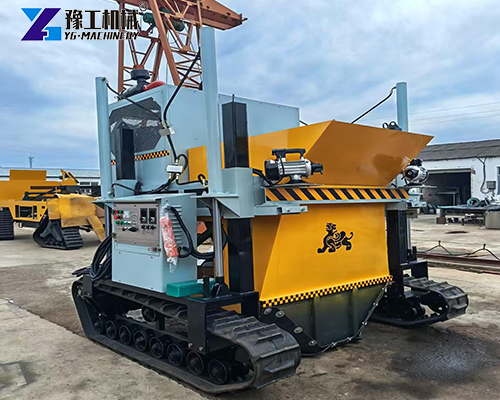
A slipform kerb machine is an automated construction device that casts concrete on-site and forms kerbs continuously in one single pass. It works like a walking 3D printer: constantly feed mixed concrete into the machine, which passes through a forming mold. As the machine moves forward slowly, smooth, joint-free kerbs take shape directly on the road surface. It casts concrete into finished profiles in one go with seamless integration, solid structural integrity, and smooth alignment. More importantly, its daily paving output can exceed 1,500 meters — 3 to 5 times faster than traditional methods, greatly shortening construction schedules and cutting labor costs.
Slipform Curb Machine for Sale Parameters
| Model | YG20 | YG30 | |
| Length*Width*Height | 5200*2400*2800mm | 5200*4100*2900mm | |
| Unladen mass | About 7000kg | The deadweight is greater, the crawler grip is raised, the construction stability is improved, the climbing and sliding formwork flatness, and the slope is free from interference from external factors | |
| Construction scope | Width ≤ 2000mm (road shoulder, ditch), height ≤ 600mm (kerbstone, curbstone) | Width ≤ 2000mm Height ≤ 1100mm | |
| Hopper volume | 1m³ | 0.5m³ | |
| engine | Rated power | 65kw | Inline 4-cylinder turbocharged diesel engine (for high altitude areas, increased power output) |
| Operating voltage | AC380v | ||
| Startup form | Electric start | ||
| Rated speed | 1500rpm | ||
| Heat dissipation form | Water cooling | ||
| Molding method | High-frequency vibrator (suitable for plastic concrete) | Formed shoulders and side ditches have higher strength | |
| Attached vibration motor (suitable for dry, hard concrete) | Can be paved with curbstones and higher curbstone heights | ||
| Automatic leveling system (imported DLS, optional) | Leveling range ±40mm | Imported components, temperature compensation, overvoltage, and overcurrent protection | |
| Steering form | Dual automatic steering system (imported DLS, standard) | Imported components, temperature compensation, overvoltage, and overcurrent protection | |
| Manual steering wheel (hydraulic steering gear) | |||
| Minimum turning radius | 6800mm | ||
| Paving and transfer speed | 1m-10m/min | Frequency conversion speed regulation can achieve a wide range of stepless adjustment of paving and transfer speed | |
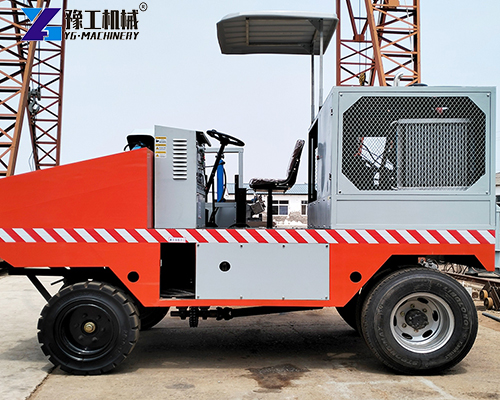
| Travel drive form | Full-time four-wheel drive | When the road slope is ≤5%, a fully loaded 15m3 tank truck can be used for construction, and the slipform machine connection construction can be realized. | |
| Screw feeder drive type | High torque hydraulic gerotor motor | Ensure the continuous feeding of concrete, the screw feeder will not be stuck by large stones, and the concrete will be mixed twice to improve the workability of the concrete. | |
Slipform Kerb Machine Vs Manual Prefab: Which Wins?
Traditional kerb construction follows a two-step process: prefabrication off-site, then on-site installation, which brings several unavoidable drawbacks:
- Numerous joints and easy damage: gaps exist between every precast kerb unit. The units tend to shift and loosen under vehicle loads or temperature changes, leading to high long-term maintenance expenses.
- Uneven alignment: manual assembly cannot deliver smooth curved lines over long distances, especially on bends.
- Long construction period & heavy labor reliance: separate precast yards, transport trucks, and multiple work crews are required; progress is easily disrupted by bad weather and labor shortages.
A slipform kerb machine solves all these problems completely:
- Zero joints: full-length continuous kerbs with superior structural integrity and longer service life
- Flawless smooth alignment for long straight runs and complex curves alike
- Outstanding working efficiency: daily output over 1,500 meters, 3–5 times the speed of conventional precast installation
How Does a Concrete Curb Extruder Handle Tricky Curves?
Curve forming is the most demanding test of a kerb slipform machine’s precision. YG’s reliable solution is the dual automatic steering system:
- Height sensors: monitor machine posture and road undulations in real time, automatically adjusting mold height to guarantee flat top surfaces on finished kerbs
- Slew Sensors: accurately track the machine’s travel direction and automatically correct steering angles against pre-set paths
- The two sensor systems work in tandem to cut steering deviation on curved sections by over 95%
- The imported DLS automatic leveling system includes temperature compensation plus overvoltage and overcurrent protection, enabling stable operation even under extreme weather conditions
Thanks to the precise coordination of these two sensor sets, a slipform kerb machine delivers millimeter-level accuracy even on complicated curved road segments.
Why can’t You Just Look at the height for a Slipform Kerb Machine?
Many buyers only ask “what maximum height can this machine pour?” during model selection, yet height is merely one factor. The actual forming limit of a curb and gutter machine depends on its maximum cross-sectional paving area — calculated as the product of width, height, and depth:
- YG20: Max width ≤2000mm, max height ≤600mm, ideal for standard kerbs, road shoulders, and drainage ditches
- YG30: Max width ≤2000mm, max height ≤1100mm, capable of one-step forming of large structures such as concrete crash barriers
Why is height alone not enough? For two kerbs both 600mm tall, widening the base from 200mm to 400mm doubles the cross-sectional area. This places vastly different demands on the screw feeder, vibration assembly, and overall machine stability. The YG30’s tracked undercarriage and heavier deadweight deliver stronger construction stability to handle taller, wider, and heavier slipforming tasks.
Simple selection guide: Pick YG20 for regular standard kerb jobs; choose YG30 if you need to build crash barriers or large structures taller than 600mm.
What Makes a Curb and Gutter Machine Vibrate Right?
The quality of finished kerbs hinges entirely on concrete compaction. Poor compaction leaves internal voids inside the concrete, which crack easily under freeze-thaw cycles or vehicle impacts down the line. YG adopts a high-frequency vibration system to tackle this issue:
- Optional high-frequency vibrator rods: high-frequency vibration expels air bubbles from concrete, fully blending aggregate and cement paste to achieve high density and structural strength
- Screw feeder driven by high-torque hydraulic gerotor motors: guarantees steady, uninterrupted concrete feeding without jamming from large stones. The feeder mixes concrete a second time during delivery to greatly improve workability
- Works exceptionally well with stiff dry concrete, making hard-to-form dry mixes easy to shape
This is the core competitive advantage of every concrete curb extruder: high-frequency vibration creates dense, strong, and long-lasting kerb profiles.
Frequently Asked Questions About Slipform Kerb Machine
Q1: Can a concrete curb extruder operate on sloped roads? Will it slide downhill?
Yes. All YG units feature an anti-slip self-lock function to hold position steadily on slopes without constant braking. The tracked chassis of YG30 provides stronger traction and superior stability on inclines. When the road gradient is ≤5%, continuous slipforming can be performed alongside fully loaded 15m³ concrete tankers.
Q2: Can the machine form kerbs of any custom shape?
Absolutely. YG offers custom mold services for all kerb profiles. Simply swap molds to produce right-angle kerbs, curved edgings, drainage channels, crash barriers, and more custom structures.
Q3: Does the machine require an external power supply?
No. The unit runs on a built-in diesel engine with AC380V operating voltage and electric startup, perfectly suited for all open-air construction sites.
Q4: What are the differences between the steering systems of YG20 and YG30?
Both models come standard with the imported DLS dual automatic steering system equipped with temperature compensation, overvoltage, and overcurrent protection. A manual steering wheel with hydraulic steering gear is also fitted as backup for both machines.
Q5: How many meters of kerbs can the slipform machine lay per day?
Paving speed is adjustable between 1–7 meters per minute, supporting daily output over 1,500 meters, 3 to 5 times more efficient than traditional precast installation.
Pick the Right Machine to Double Your Kerb Construction Efficiency
Every quality roadway starts with a solid edge barrier, and every reliable kerb relies on a dependable slipform kerb machine that performs consistently on site. At YG, we do not merely manufacture machinery — we build trust. We guarantee your project will finish on schedule, your kerbs will pass inspection smoothly, and you will always reach experienced technical specialists whenever you call. Whether you are paving quiet residential side lanes or rushing to finish a busy highway, we stand by you from model selection and custom mold production to operator training and full after-sales support. Your success is our priority. Feel free to contact us anytime — we are eager to learn about your construction projects.