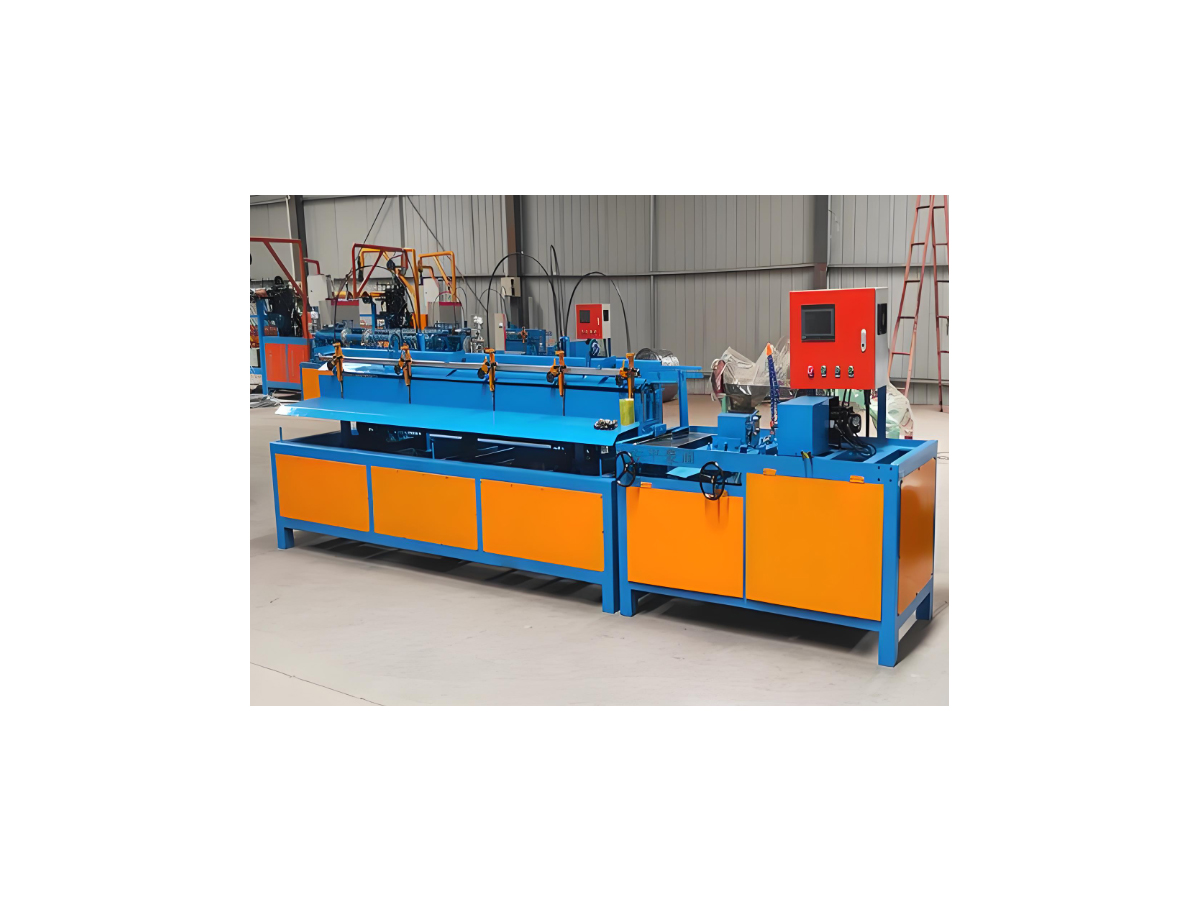

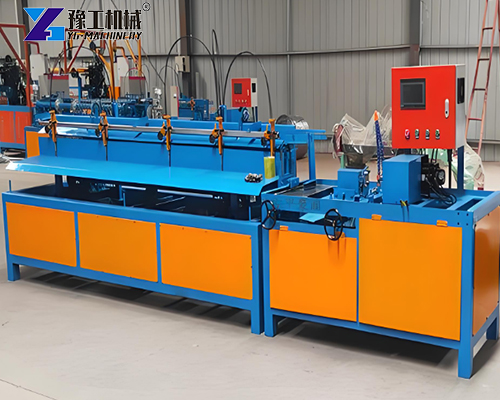
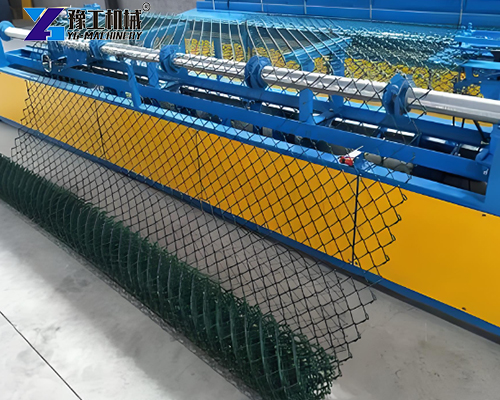
The activity level of the Australian fence market is evident from the fact that there are over 15,000 local fence installers. Whether it’s municipal works, residential housing, or agricultural protection, the demand for chain link fencing runs through almost all construction fields. For equipment buyers who want a piece of this market, what kind of chain link fencing machine to choose directly determines subsequent production efficiency and profit. The YG automatic chain link fencing machine, with its mature fully automatic control technology, flexible width adjustment function, and easy operation training system, has become the top choice for many Australian users in both export and local production.
YG Chain Link Fencing Machine Parameters
| Parameter Name | Parameter Value |
| Capacity | 70-120 M²/Hour |
| Wire Diameter | 1.5-4.5mm single wire (galvanized wire, PVC-coated wire, stainless steel wire, etc.) |
| Hole Size | 25-100mm |
| Width | 1-6m, customized as required |
| Rated Voltage | 380V 50HZ |
Case 1: Capacity Upgrade for a Sports Field Fence Manufacturer in Sydney
Customer background: A company in Sydney specializing in sports field fence production and installation has long provided chain link fencing products for local baseball fields, tennis courts, and rugby fields. As investment in sports infrastructure in Australia continues to increase, the company received fence orders for multiple sports fields, and production capacity pressure gradually grew.
Construction challenge: The customer’s original semi-automatic chain link fencing machine had low production efficiency, producing about 600-700 square meters per day. When multiple projects were running simultaneously, overtime was often needed. At the same time, the customer needed to produce a variety of widths (from 1.2m to 4m). The old equipment took a long time to change specifications—each switch took 1-2 hours—and frequent changes seriously affected overall output.
YG solution: The YG team recommended the fully automatic chain link fence machine for the customer. This equipment has an automatic width adjustment function, and changing specifications takes only a few minutes. The servo motor drive ensures stable operation, and the equipment can run continuously for long periods, helping the customer relieve capacity pressure.
Case process: YG engineers answered the customer’s questions in detail about equipment maintenance, spare parts supply, and Australian voltage adaptation. After two weeks of in-depth communication and comparison with multiple suppliers, the customer finally chose YG. From order placement to the equipment arriving at Sydney port, the whole process took about 45 days.
Results: After the equipment was put into production, the customer’s daily output reached about 1,200-1,400 square meters under stable operation—a significant improvement over the old equipment. What pleased the customer even more was the automatic width adjustment function: specification change time was reduced from the original 1-2 hours to under 10 minutes, greatly increasing production flexibility. The customer reported that this chain link fencing machine runs stably with a low failure rate, and there have been no major downtime issues in the past six months. Based on actual output, the equipment investment is expected to be recovered in about 16 months.
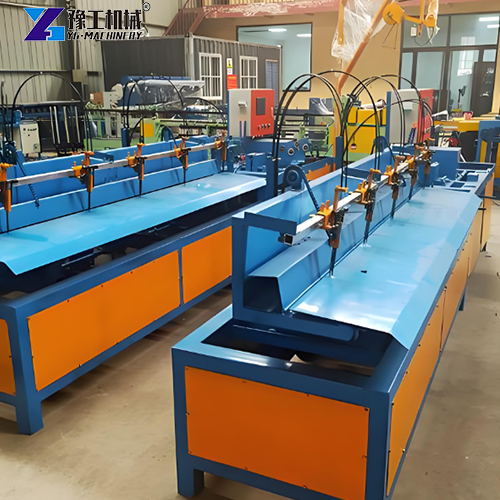
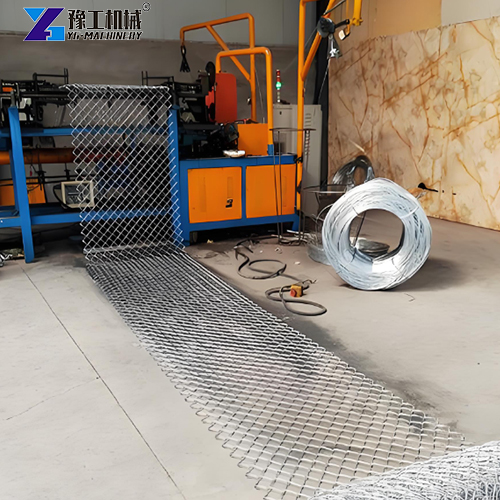
Case 2: A Transformation Choice for a Temporary Fence Supplier for Infrastructure Projects in Melbourne
Customer background: A Melbourne-based company focused on temporary fence rental and sales for construction sites. As Australia’s construction safety regulations become increasingly strict, demand for temporary fencing continues to grow. The company decided to transform from a pure trader to an integrated “production + rental” operator to gain more stable supply and profit margins.
Construction challenge: Australia has strict standard requirements for temporary fencing. AS4687:2022 specifies the minimum safety and performance standards for temporary fencing. The customer needed a chain link fence machine that could stably produce chain link fencing meeting Australian standards, and also required a high level of automation, because local skilled workers are scarce and hiring is difficult.
YG solution: The YG fully automatic chain link fence machine’s PLC control system greatly reduces the technical skill requirements for operators. One worker can operate the entire production line, and the training period is very short—workers can get started after watching the operation video. The equipment uses a single-wire feeding design, reducing threading steps and further simplifying the operation process.
Case process: The YG sales team provided detailed equipment operation videos and technical parameter comparison tables, and arranged a remote site visit with an existing customer. After seeing real production scenes, the customer gained full confidence in the stability and ease of operation of the YG fully automatic chain link fence machine. From the first inquiry to contract signing took one week. YG customized the electrical system to suit Australia’s power grid according to the customer’s requirements and provided complete installation and commissioning guidance.
Results: After the equipment was put into production, the customer successfully transformed from “buying mesh and selling mesh” to “weaving and selling mesh themselves.” Material cost per square meter of fencing was reduced by about 20% compared to external procurement, and profit margins improved significantly. The fully automatic chain link fencing machine runs about 20 hours per day, producing about 1,300-1,500 square meters of high-quality chain link fencing per day. The customer said the greatest value of this chain link fencing machine is its simplicity of operation—new workers mastered it in just two days without needing a technical background. At the same time, the equipment is robust, has few breakdowns, and after-sales service is responsive, allowing him to focus on expanding the rental business rather than worrying about equipment repairs.
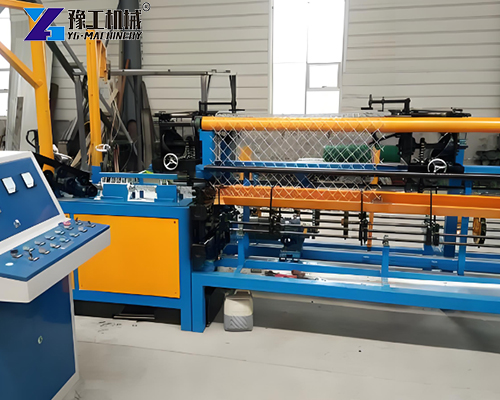
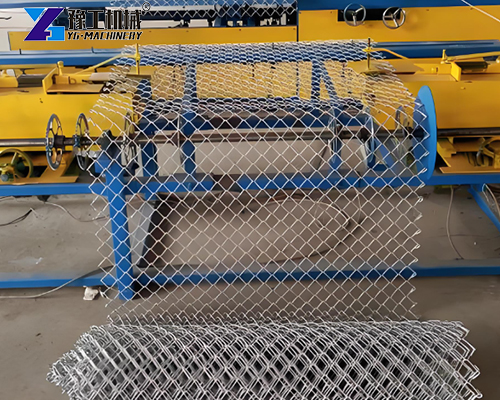
FAQ About Chain Link Fencing Machine
Q: Can one machine produce a mesh of all hole sizes (Mesh Size)?
A: The hole size adjustment range of YG equipment is 25-100mm, covering the hole size requirements of most chain link fencing products on the market. Switching between different hole sizes is very simple—it can be quickly adjusted through the equipment control panel without replacing any parts. However, it should be noted that there is a matching relationship between hole size and wire diameter: the smaller the hole size, the narrower the applicable wire diameter range; conversely, larger hole sizes can accommodate thicker wire diameters. If you have hole size requirements outside this range (such as extra-large hole agricultural fencing or extra-small fine mesh), YG can provide customized solutions based on your specific needs. Please let us know your detailed specifications when requesting a quote.
Q: What are the raw material wire diameter requirements for a chain link fence machine?
A: The YG equipment is suitable for wire diameters ranging from 1.5 to 4.5mm, covering single wire (i.e., single metal wire). Processable materials include galvanized wire, PVC coated wire, stainless steel wire, and other common chain link fencing raw materials. It should be noted that different wire diameters correspond to different hole size ranges—smaller diameters (e.g., 1.5-2.0mm) are suitable for fine mesh with small hole sizes, while larger diameters (e.g., 3.5-4.5mm) are suitable for heavy-duty fencing with large hole sizes. In addition, raw materials must have a smooth surface, no rust, and no obvious bends, to ensure smooth wire feeding and stable equipment operation. If you need to use wire diameters outside this range, YG can evaluate equipment modification options—please contact us in advance.
Q: What are “single-wire” and “double-wire” chain link fencing machines? What’s the difference?
A: “Single-wire” and “double-wire” refer to differences in wire feeding and weaving methods:
- Single-wire type: Uses only one continuous metal wire for weaving, twisting the wire around itself to form mesh openings. YG equipment adopts a single-wire feeding design, which has a simple structure, smooth wire feeding, and a low failure rate. One machine requires only one operator, and it is the mainstream model on the market today.
- Double-wire type: Uses two independent metal wires fed simultaneously; during weaving, the two wires twist around each other to form mesh openings. This structure is relatively complex, with higher equipment costs and maintenance difficulty, and is typically used for producing heavier, thicker-wire chain link fencing products.
YG equipment is based on the single-wire design, balancing production efficiency and ease of operation—making it an ideal choice for export to markets like Australia. If you have special requirements and need a double-wire model, YG can also evaluate and customize based on order conditions.
Q: What is the approximate chain link machine price?
A: Prices vary by configuration (width, automation level, electrical system, etc.). Please contact the YG sales team for a specific quote.
Contact YG
If you are looking for an efficient, stable, and easy-to-operate chain link fencing machine, YG is a trusted partner. We provide one-stop services from equipment selection, installation, and commissioning to after-sales maintenance. Feel free to contact us through the following methods for more product information or a chain link machine price quote.