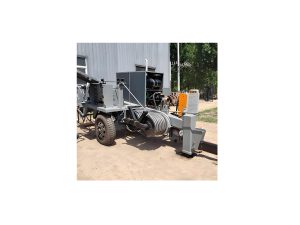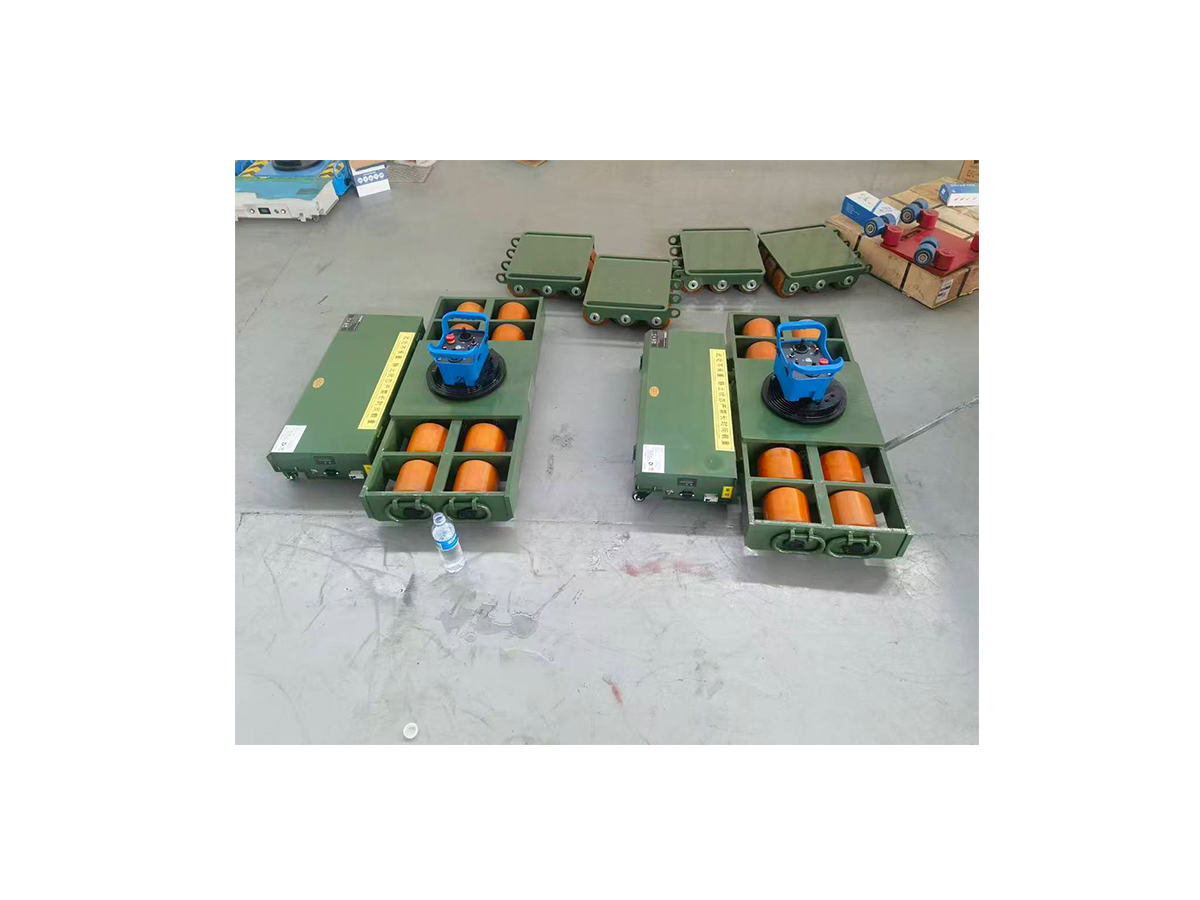

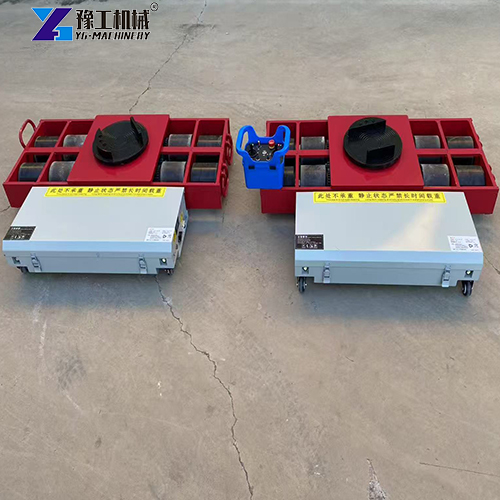
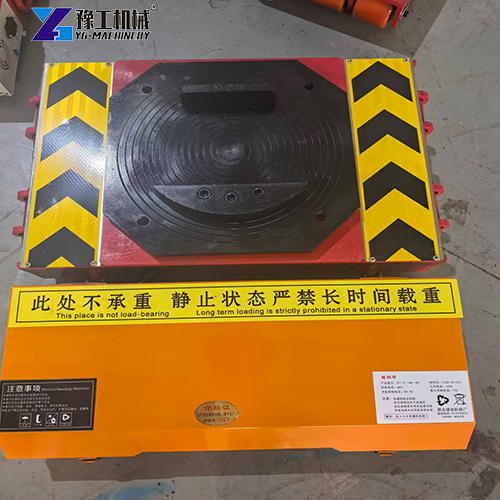
For German manufacturing companies, heavy equipment relocation is more than simply “moving items from point A to point B”. When equipment weighs dozens of tons, workshop aisles are limited, production cannot stop for long periods, and precise positioning at foundation locations is required, traditional forklifts, cranes, and manual roller solutions may face restrictions in terms of space, operator visibility, and personnel safety management.
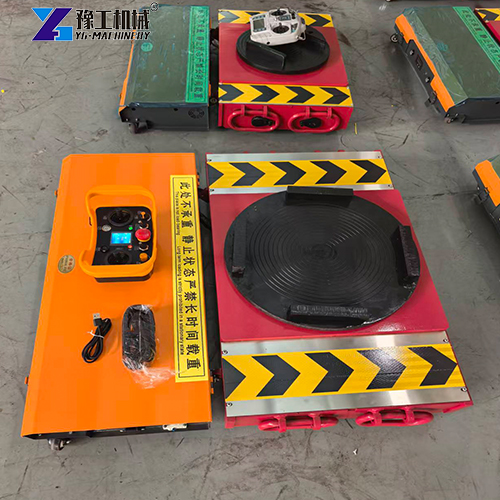
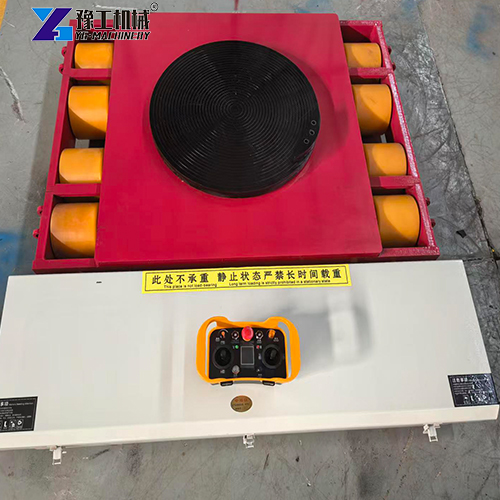
In such scenarios, electric machinery skates serve as an auxiliary moving solution to support low-speed, controlled transport of heavy machine tools, injection molding machines, transformer bases, generator sets, and large tooling. Their applicability depends not only on rated load capacity, but also on equipment center of gravity, load points, floor conditions, gradients, path width, braking requirements, and on-site risk assessment results.
YG Electric Machinery Skates Specifications
| Model | 10T | 20T | 25T | 30T | 40T | 50T | 60T |
| Motor | 500W ×2Brake 104Flange reinforced gearbox | 750W ×2Brake 104Flange reinforced gearbox | 1000W ×2Brake 104Flange reinforced gearbox | 1200W×2 Brake 120 Flange reinforced gearbox | 1500W ×2Brake 120Flange reinforced gearbox | 2000W ×2Brake 120Flange reinforced gearbox | 3000W ×2Brake 120Flange reinforced gearbox |
| Controller | D2T80ADual-channel driver | D2T80ADual-channel driver | D2T100ADual-channel driver | D2T100ADual-channel driver | D2T200ADual-channel driver | D2T200ADual-channel driver | D2T220ADual-channel driver |
| Remote Controller | C7 remote controller | C6/C7 remote controller or industrial remote controller | C7 remote controller | C7 remote controller | C6/C7 remote controller or industrial remote controller | C7 remote controller or industrial remote controller | C7 remote controller or industrial remote controller |
| Battery Spec | 48v 30Ah ternary lithium | 48V 60Ah ternary lithium or LFP | 48V 60Ah ternary lithium or LFP | 48V 60Ah ternary lithium or LFP | 48V 120Ah ternary lithium or LFP | 48V 120Ah ternary lithium or LFP | 48V 120 Ah ternary lithium |
| Working Current | 25A | 60A | 60A | 60A | 120A | 120A | 120A |
| Charging Current | 54.6 | 54.6 | 54.6 | 54.6 | 54.6 | 54.6 | 54.6 |
| Drive Wheel | 80*120×4High-hardness fully imported polyurethane | 90×135×4High-hardness fully imported polyurethane | 90×135×4High-hardness fully imported polyurethane | 90×135×4High-hardness fully imported polyurethane | 140×140×4High-hardness fully imported polyurethane | 140×140×4High-hardness fully imported polyurethane | 140×140×8High-hardness fully imported polyurethane |
| Gear | Luomengtai high-strength gear3-module | Luomengtai high-strength gear3-module | Luomengtai high-strength gear3-module | Luomengtai high-strength gear3-module | Luomengtai high-strength gear3-module | Luomengtai high-strength gear3-module | Luomengtai high-strength gear3-module |
| Plate Material | 10mmQ355 manganese steel plate | 10mmQ355 manganese steel plate | 12mmQ355 manganese steel plate | 12mmQ355 manganese steel plate | 16mmQ355 manganese steel plate | 16mmQ355 manganese steel plate | 16mmQ355 manganese steel plate |
| Traction Weight | 10T | 20T | 25T | 30T | 40T | 50T | 60T |
| Load Capacity | 10T | 10T | 12.5T | 15T | 20T | 25T | 30T |
| Overall Dimension | 500x550x145mm | 670x620x165mm | 670x635x165mm | 740x640x185mm | 810x800x182mm | 810x800x182mm | 1110x800x185mm |
| Disc Flange | 2900MM diameter | 2900MM diameter | 2900MM diameter | 2900MM diameter | 2900MM diameter | 2900MM diameter | 2900MM diameter |
| Travel Speed | 2-10 m/min adjustable | 2-10 m/min adjustable | 2-10 m/min adjustable | 2-10 m/min adjustable | 2-10 m/min adjustable | 2-10 m/min adjustable | 2-10 m/min adjustable |
| Continuous Working Time | 2-3 hours | 3-4 hours | 3-4 hours | 3-4 hours | 4-5 hours | 4-5 hours | 4-5 hours |
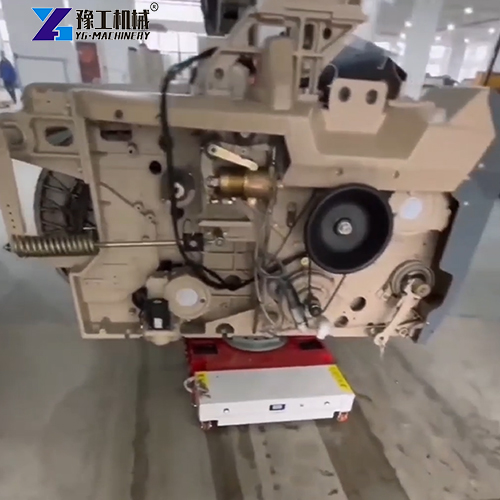
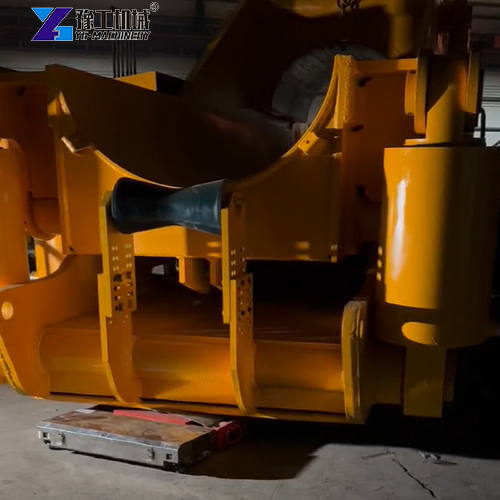
Project Background: Equipment Layout Adjustment at a German Manufacturing Plant
This article takes a medium-sized machinery manufacturer in southern Germany as an example. The enterprise produces precision metal parts and industrial assembly modules, with CNC machining centers, injection molding equipment, test stations, and heavy tooling systems installed in its factory.
With production layout adjustment, the factory planned to reposition multiple heavy machines with zero or partial production shutdown. Equipment to be moved includes:
- One CNC machining center of around 48 tons
- Two injection molding machines weighing 20 to 30 tons
- One transformer or power distribution equipment base weighing roughly 36 tons
- Multiple sets of steel brackets and large tooling modules
The moving route contains common constraints in real industrial environments:
- Narrow aisles between machines, limited clearance on both sides in some zones
- Many existing production lines inside the workshop, leaving no large area for hoisting work
- Gentle slopes between loading zones and factory floors
- Concrete floor joints, partially uneven surfaces, and corners along the path
- The equipment needs low-speed fine direction adjustment and final positioning near foundations
The client hoped to reduce operations requiring multiple workers to push and pull heavy loads at close range, while keeping full control over moving progress, speed, steering, and stopping positions.
Moving Difficulties: Traditional Solutions Cannot Always Meet Site Conditions
Equipment relocation in German factories usually combines forklifts, hydraulic jacks, hoisting gear, and heavy equipment moving rollers. These tools are not replaceable, but more preparation and coordination work will be needed when space is limited, routes are complex, or heavy loads require precise positioning.
Space Requirements for Cranes and Forklifts
Mobile cranes or factory overhead cranes work well for hoisting and vertical lifting tasks. However, confirmation of lifting points, beam conditions, hoisting paths, floor load capacity, and isolation zones is required. Hoisting plans may be restricted when internal aisles are narrow or surrounding machines cannot be relocated.
Forklifts are suitable for short-distance transport in open spaces. But for equipment with a high center of gravity, special bottom structures, or wide bodies, operators must consider sightlines, turning radius, fork support points, and machine stability at the same time. After entering narrow areas, forklifts lack enough steering and positioning accuracy.
Coordination Pressure of Traditional Rollers
Traditional heavy equipment moving rollers can spread machine weight and lower moving resistance on flat floors. When equipment needs to turn, pass ramps or adjust angles repeatedly, many workers are required to cooperate at close range.
This operation mode may bring the following risks:
- Force and moving speed are hard to keep consistent when multiple people push or pull
- Operators may stay close to moving paths, pinch points, or lateral extrusion zones
- Operators need to stop repeatedly, reposition rollers, and realign equipment during steering
- Ramps and uneven floors increase risks of load offset, slipping, or uneven weight distribution
- Frequent communication is needed in final positioning, which breaks work continuity
For this reason, the project team did not treat the electric solution as a full replacement for traditional gear, but as an optional tool for specific routes and working steps.
Solution: Configure Electric Machinery Skates Based on Route and Load Conditions
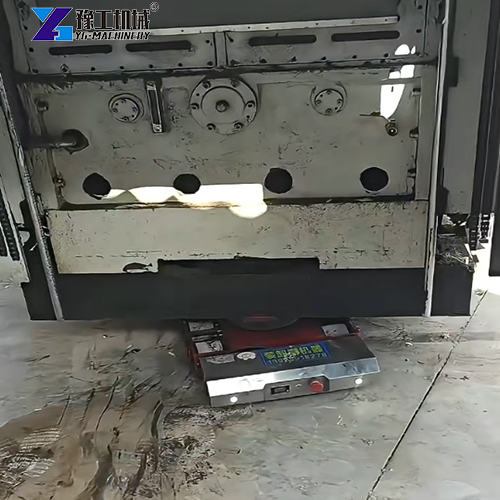
During project planning, equipment supplier YG and the relocation team first confirmed machine weight, center of gravity, bottom load points, floor bearing capacity, path width, gradient, and turning space. Then the team evaluated configurations of electric machinery skates — single unit, master-slave combination, or multi-unit synchronous linkage — according to the dimensions and force status of different machines.
The whole operation plan focuses on these items:
- Whether machine load falls within the rated range and load distribution allowed by the system
- Whether the floor can withstand concentrated pressure from equipment and wheel sets
- Whether the route has ramps, floor joints, obstacles, or clearance limits
- Whether low-speed steering, on-site adjustment, or multi-machine coordination is required
- Whether observers, isolation zones, communication protocols, and emergency stop procedures need to be set up
- Whether operators have finished training on equipment manuals and on-site safety procedures
Remote Operation: Improve Observation Positions Instead of Removing On-site Supervision
In confined spaces, the power unit can be used as a remote controlled load moving dolly. Operators control forward, backward, steering, low-speed travel, and stop via an industrial wireless remote controller.
When line of sight, wireless signal, and route conditions meet requirements, remote control range covers most common in-plant moving routes. Its main advantage is allowing operators to select better observation positions based on moving direction, instead of standing beside the load for continuous close pushing and pulling.
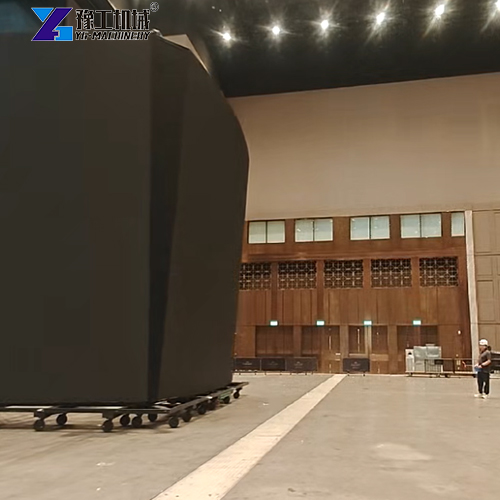
In this sample project, when the 48-ton CNC machining center travelled through narrow aisles, one trained operator controlled movement and another observer monitored rear clearance, wheel passing status, and surrounding obstacles. Temporary isolation zones were set for ramps, corners, and final alignment areas.
This configuration does not mean “single-person operation” works in all scenarios. Staff numbers shall be decided by project managers based on machine weight, route complexity, visibility, working environment, and risk assessment. A remote controlled load moving dolly reduces the need for personnel to stay close to heavy load paths and improves operators’ observation flexibility.
Heavy Loads and Ramps: Evaluate Working Conditions Beyond Rated Tonnage
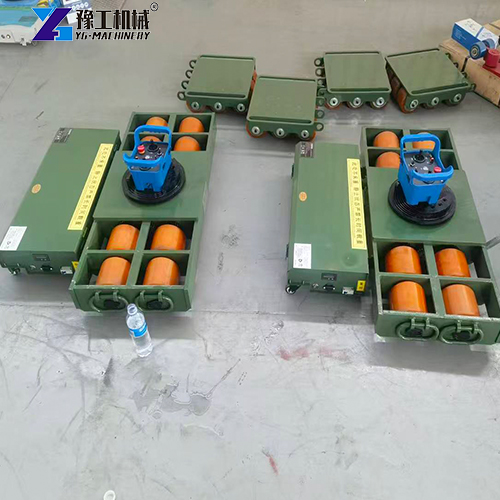
For machines of 30 to 50 tons, the project team assessed the feasibility of moving with modular heavy duty machine moving skates. The overall system load capacity is determined by combinations of drive units and slave modules, rather than only the nameplate tonnage of a single skate.
On sloped sections, moving feasibility mainly depends on:
- Actual machine weight and offset of center of gravity
- Quantity of support points and load distribution on each wheel set
- Gradient, floor friction and surface flatness
- Traction and braking capacity of the drive system
- Moving direction, speed limits, and emergency stop plans
- Influencing factors such as rain, oil, dust, or floor joints
Within applicable ranges defined by the manufacturer, some heavy duty machine moving skates can handle heavy-load transport on mild to medium slopes. The gradient in this example was about 6 degrees. The team completed route inspection, brake verification, and low-speed trial runs before operation.
It needs to be emphasized that 3° to 15° is only a reference range of working conditions applicable to some products or configurations. It cannot be regarded as a guarantee for use under all models, loads, and floor conditions. For projects with steeper slopes, slippery surfaces, high center of gravity, or obvious load changes, further engineering assessment is required. Anti-slip, traction, limiting, or auxiliary fixing measures should be adopted if necessary.
Small-radius Steering: Reduce Repeated Repositioning
In heavy equipment relocation, steering usually takes more time than straight travel. With independent wheel drive and steering control, electric machinery skates support small-radius turning and direction correction in limited space.
If machine structure, load distribution, and floor conditions permit, the system can achieve near-spot turn adjustment. Compared with roller-only solutions, teams can cut cycles of “move forward — stop — reposition rollers — re-align”.
In this case, the CNC machining center required roughly 90° direction adjustment in the final positioning zone. The team split operations into multiple low-speed stages: check machine center of gravity and load points first, adjust steering angles gradually, then fine-tune near the foundation. Fast turning or large corrections were avoided throughout the whole process.
Note: the “small radius” or “near zero turning radius” function is still affected by machine bottom structure, layout between modules, balanced wheel load, and floor flatness. It should be treated as a function improving on-site flexibility instead of an unconditional result for every piece of equipment.
Multi-unit Synchronization: For Extra-long, Extra-wide and Irregular Loads
For transformer bases, steel frames, over-length equipment, or irregular loads with scattered support points, multiple moving modules can run cooperatively under proper system configuration.
In the sample project, the roughly 36-meter-long electrical equipment base adopted multi-point support. Before moving, the team verified bottom structural strength, load point locations, and load ratio of different modules. During transport, the machine travelled through workshop aisles at low speed and completed one-direction adjustment before entering the electrical area.
Multi-unit synchronization cannot automatically eliminate unbalanced load risks. For extra-long or irregular machines, project teams still need to verify:
- Whether module spacing matches the machine support structure
- Whether each load point stays within allowable force range
- Whether communication and synchronization functions between multiple units are inspected
- Whether twisting, tilting, or local stress concentration may happen during movement
- Whether height differences on the route affect synchronous travel of each module
Speak with Our Product Manager
Electric Machinery Skates Typical Applications in German Industrial Scenarios
Factory & Precision Manufacturing
Inside German manufacturing plants, electric machinery skates are used for internal relocation during equipment renewal, production line restructuring, and workshop expansion, such as:
- Relocation of CNC machining centers, processing units, and automated machines
- Transfer of injection molding machines, presses and test equipment
- Low-speed positioning of molds, tooling, fixtures, and large equipment bases
- Machine direction adjustment where factory space is tight
For final alignment work, remote control and low-speed movement help operators observe the relationship between equipment and foundation from safe positions. However, final machine leveling, anchor bolt connection, electrical wiring, and trial run must be finished by qualified professionals following project procedures.
Warehousing & In-plant Logistics
In warehouse and factory logistics environments, electric moving systems apply to:
- Internal transport of heavy molds and tooling
- Positioning of steel coil supports, heavy-duty pallets and large industrial containers
- Internal warehouse equipment adjustment and production material zone reconstruction
- Short-distance transfer of large mechanical parts between assembly zones
For long routes, complex floor conditions, or frequent turning tasks, a remote controlled load moving dolly acts as a supplement to traditional moving methods, helping teams improve sightlines and motion coordination during low-speed operations.
Engineering & Energy Equipment Installation
For engineering installation and energy projects, heavy duty machine moving skates are used for short-distance transport and positioning of transformers, generators, power distribution equipment bases, and prefabricated structural modules.
Such projects usually carry high engineering requirements. Apart from the equipment itself, teams should focus on floor load capacity, support structures, machine center of gravity, ambient temperature and humidity, access aisles, slope conditions, limiting measures, and work permit processes. For high-value electrical equipment and critical infrastructure, project engineers, installation contractors, and safety-responsible parties are recommended to confirm operation plans together before relocation.
Speak with Our Product Manager
Project Observation & Result Presentation
In this sample scenario, the electric moving system mainly replaced some steps that required many workers to push/pull loads closely and reposition rollers repeatedly. Compared with the client’s previous method relying on manual rollers, hydraulic lifting and forklift assistance, the team observed these improvements:
- One operator can complete main travel control, with observers assisting at key positions
- Fewer steps needed for machine direction adjustment in narrow aisles and final positioning zones
- Operators can stand in better observation positions instead of staying beside the load continuously
- Time needed for heavy load movement and preliminary positioning is shortened for defined moving routes
- No cosmetic damage to equipment directly related to moving was recorded during the project; this result only applies to this sample route, machine status, and operation procedures
Decide Solutions Based On Site Conditions, Not Only Rated Tonnage
For German manufacturers, equipment installation engineering teams, and heavy load relocation service providers, electric machinery skates deliver a more controllable moving option for selected heavy-load, short-distance, low-speed, and high-precision positioning jobs.
Its value is not to replace all forklifts, cranes, or traditional rollers. Instead, when moving routes have space limits, frequent direction adjustments are required, personnel cannot stay near heavy loads for long, and machines need fine positioning, it provides an evaluable auxiliary solution for project teams.
Before adoption, confirm machine weight, center of gravity, load points, path gradient, floor bearing capacity, turning space, braking requirements, and on-site safety procedures. With this information, suppliers or technical teams can evaluate suitable module configurations, drive modes, remote control schemes, and technical document requirements, and provide quotations and suggestions closer to real working conditions.